How Long Does 2 Miles Really Take? Surprising Comparisons
2 miles equals 3.22 kilometers (10,560 feet) a distance that appears in daily commutes, fitness routes, and travel planning everywhere. It’s roughly the length of 35 city blocks, the distance from one end of Central Park to the other, or about 3,520 average walking strides. This distance feels short on a highway and surprisingly long on foot.
Whether you’re planning a morning run, estimating your daily commute, or figuring out how far you walked during a city tour, recognizing common 2-mile references gives you an instant reference point. Let’s explore the real-world comparisons that perfectly demonstrate this versatile distance.
Quick Conversion
| 2 Miles | Equals |
|---|---|
| 2 miles | 3.22 kilometers |
| 2 miles | 3,218.7 meters |
| 2 miles | 10,560 feet |
| 2 miles | 3,520 yards |
How Long Does 2 Miles Really Take?
2 miles (3.22 km) stretches farther than most people instinctively think when they’re on foot. It’s exactly 32 laps around a standard 100-meter track, or roughly the distance you’d cover walking through a large airport from one end to the other twice.
For a human-scale reference, most adults walk at a pace of 3 to 4 mph (4.8–6.4 km/h). At that speed, covering Two miles (3.22 km) takes between 30 and 40 minutes of steady, uninterrupted walking about the length of a sitcom episode.
How Long Does 2 Miles Take? (By Different Methods)
Time estimates vary widely depending on how you travel those 2 miles (3.22 km). Here’s exactly how long each method takes in real life.
Highway Driving
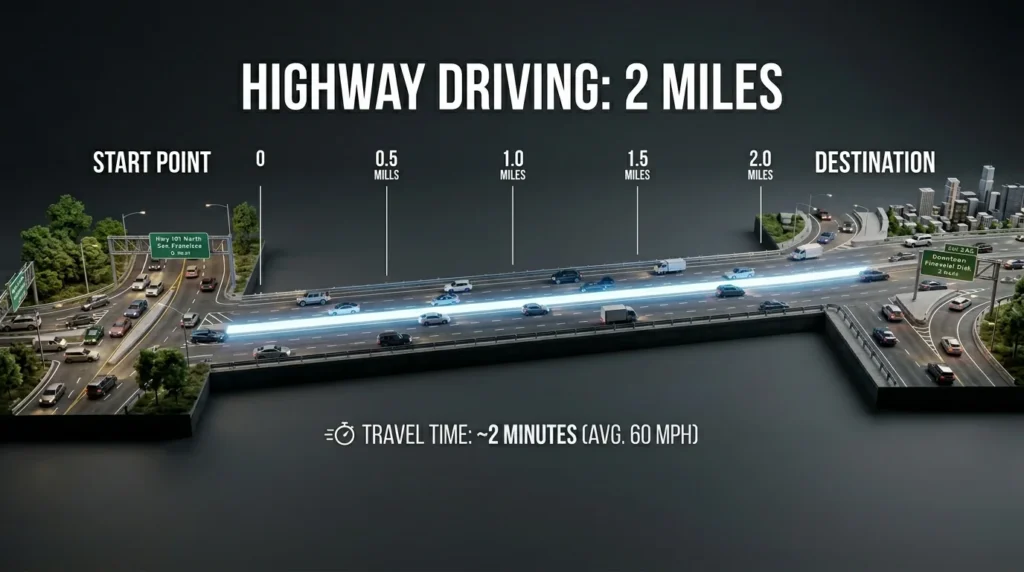
On a highway or freeway with a speed limit of 65 mph (104.6 km/h), you cover 2 miles (3.22 km) in approximately 1 minute and 50 seconds. At a lower freeway speed of 55 mph (88.5 km/h), it takes closer to 2 minutes and 10 seconds. Traffic engineers and transportation planners use these calculations to model highway flow and exit spacing.
Highway driving is the fastest way to cover 2 miles (3.22 km) in everyday life. Most drivers don’t even notice those two miles pass it’s over before a single song finishes playing.
City Driving
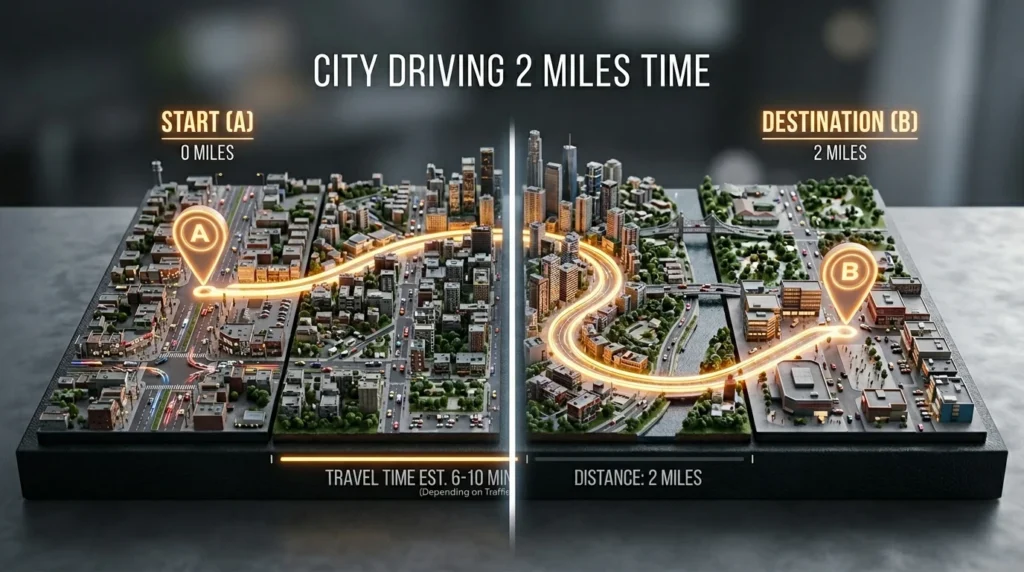
In urban traffic with stop lights, crosswalks, and intersections at an average speed of 20 to 25 mph (32.2–40.2 km/h), driving 2 miles (3.22 km) takes between 5 and 6 minutes. During rush hour when average speeds drop to 10 to 15 mph (16.1–24.1 km/h), that same 2-mile (3.22 km) trip can stretch to 8 to 12 minutes. Urban planners and city traffic engineers calculate these times when designing signal timing and lane configurations.
Commuters who drive short distances in cities know this frustrating reality two miles can take longer than expected on a busy morning. City traffic turns a 2-mile (3.22 km) drive into a surprisingly time-consuming journey.
Casual Walking
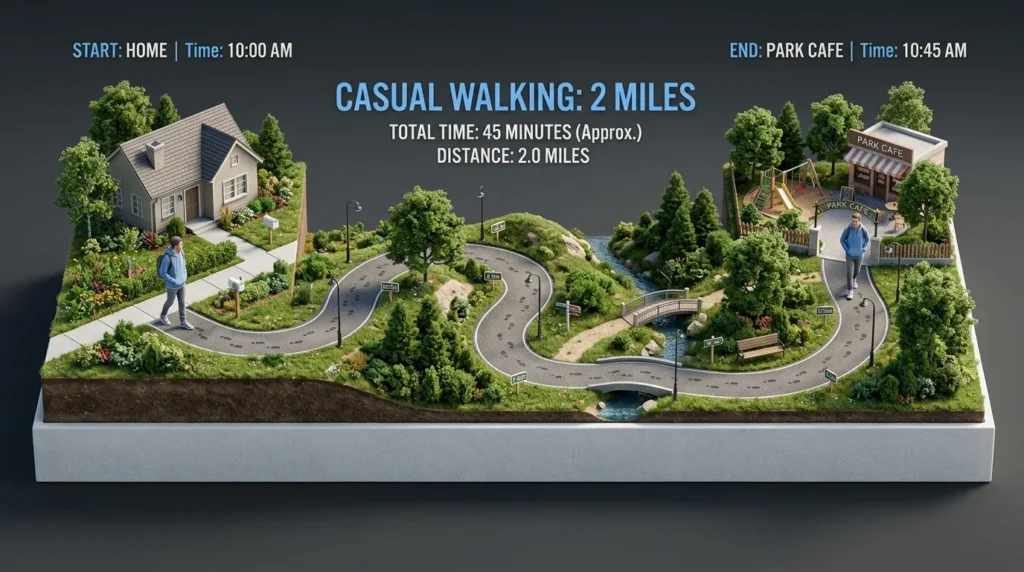
Walking at a comfortable, relaxed pace of 3 mph (4.83 km/h), you cover 2 miles (3.22 km) in approximately 40 minutes. At a slightly brisker pace of 3.5 mph (5.63 km/h), the same distance takes about 34 minutes. Fitness coaches and walking program instructors use the 40-minute estimate as the standard benchmark for a 2-mile casual walk workout.
This is the most common way most people experience 2 miles (3.22 km) in their daily lives. A 40-minute walk through your neighborhood, along a trail, or around a park covers almost exactly 2 miles (3.22 km).
Jogging / Running
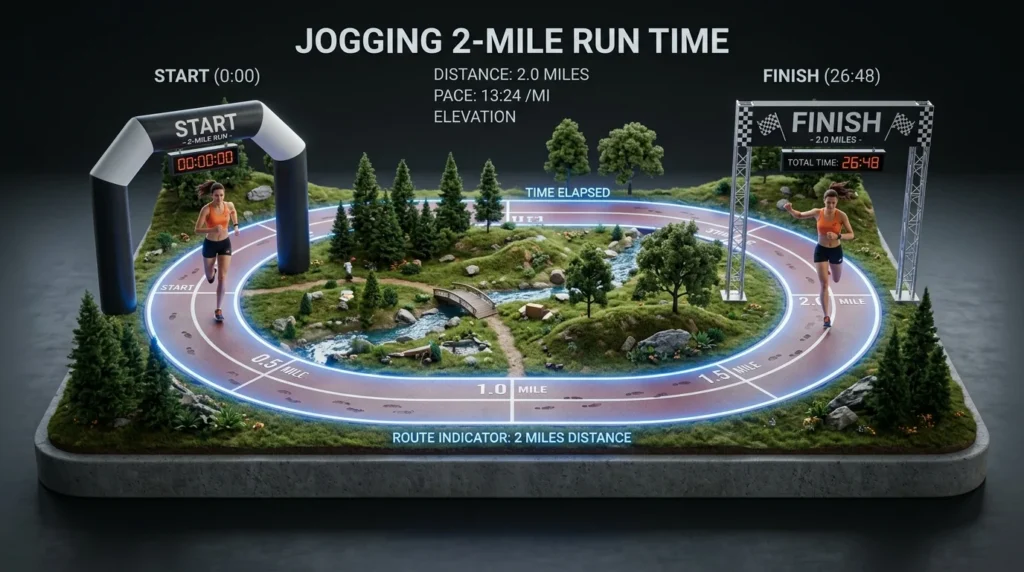
At a comfortable jogging pace of 5 mph (8.05 km/h), you finish 2 miles (3.22 km) in exactly 24 minutes. A faster recreational running pace of 6 mph (9.66 km/h) brings the time down to 20 minutes. Competitive runners pushing 8 mph (12.87 km/h) complete 2 miles (3.22 km) in just 15 minutes. Running coaches and fitness trainers use the 2-mile time trial as a standard fitness assessment tool in military, law enforcement, and athletic testing programs.
The US Army physical fitness test uses a 2-mile (3.22 km) run as its primary cardiovascular assessment. Millions of soldiers, recruits, and fitness enthusiasts time themselves over this exact distance every year.
Cycling (Recreational)
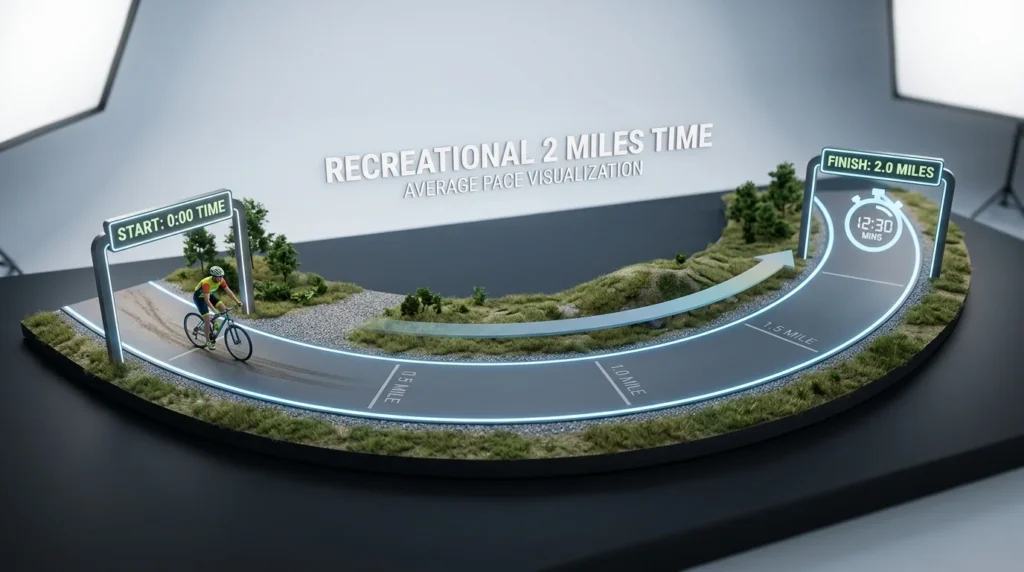
Recreational cyclists riding at a comfortable pace of 12 mph (19.3 km/h) cover 2 miles (3.22 km) in exactly 10 minutes. More casual riders pedaling at 10 mph (16.1 km/h) finish in 12 minutes. Cycling coaches and urban bike planners use 10 to 15 minutes as the standard estimate for a 2-mile recreational bike ride on flat terrain.
Cyclists who commute short distances to work or school cover Two miles (3.22 km) as a daily routine. This 10-minute bike ride is one of the most popular “car replacement” distances for urban cyclists worldwide.
Swimming (Freestyle)
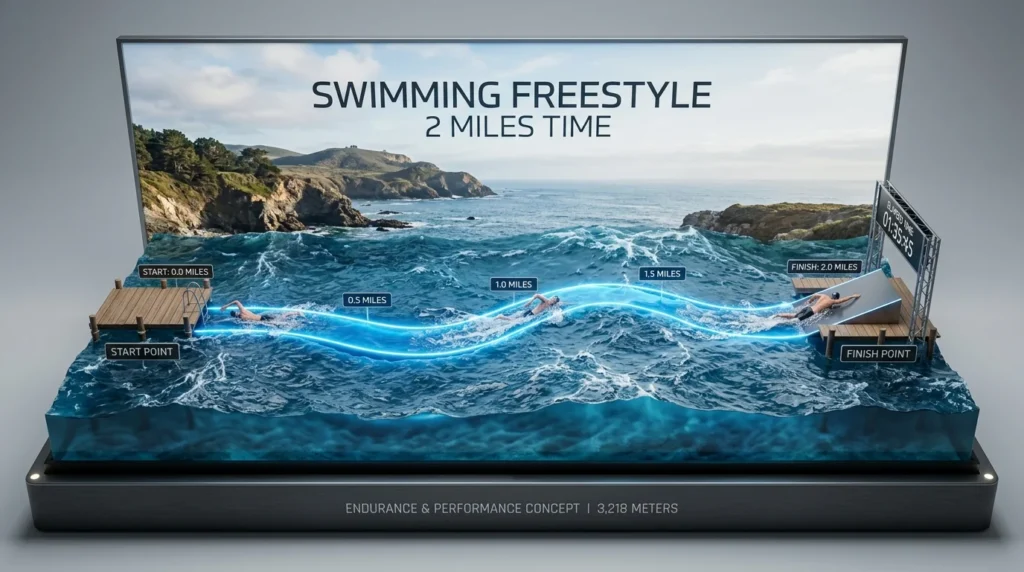
Swimming 2 miles (3.22 km) in a standard 25-yard (22.86 m) pool requires completing 141 laps (282 lengths). At a recreational freestyle pace of 2 mph (3.22 km/h), this takes approximately 60 minutes of continuous swimming. Competitive masters swimmers and open-water athletes target 2 miles (3.22 km) as a long-distance endurance training benchmark.
Open-water swimming events frequently feature 2-mile (3.22 km) courses for intermediate competitors. This distance challenges recreational swimmers while remaining achievable for anyone with consistent training.
What Does 2 Miles Look Like?
Visualizing 2 miles (3.22 km) in real-world contexts makes the distance feel concrete and easy to estimate anywhere.
Famous Landmarks & Locations
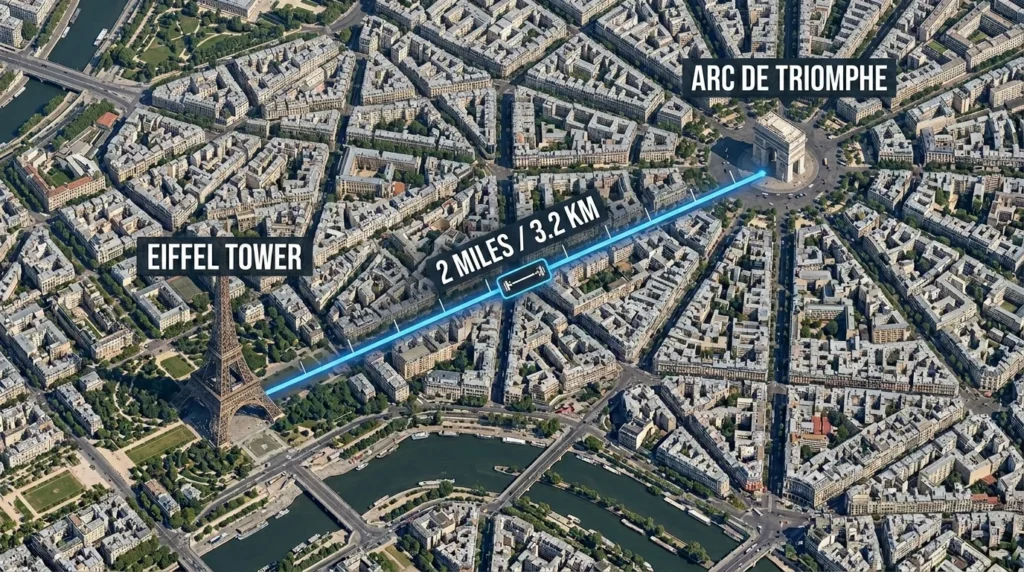
2 miles (3.22 km) is the approximate walking distance across Central Park in New York City from south to north along its longest axis. The Las Vegas Strip stretches approximately 2.5 miles (4.02 km) meaning you cover almost its full length in a 2-mile walk past the major casino hotels. The distance from the Eiffel Tower to the Louvre Museum in Paris is approximately 2 miles (3.22 km) in a straight line a classic tourist walk that takes about 40 minutes on foot.
Travel writers and tour guides frequently describe 2-mile (3.22 km) walking distances between attractions as the “comfortable exploration zone” for city sightseeing. Knowing this distance helps you plan realistic walking itineraries without overestimating what you can cover comfortably.
Sports & Athletic Comparisons
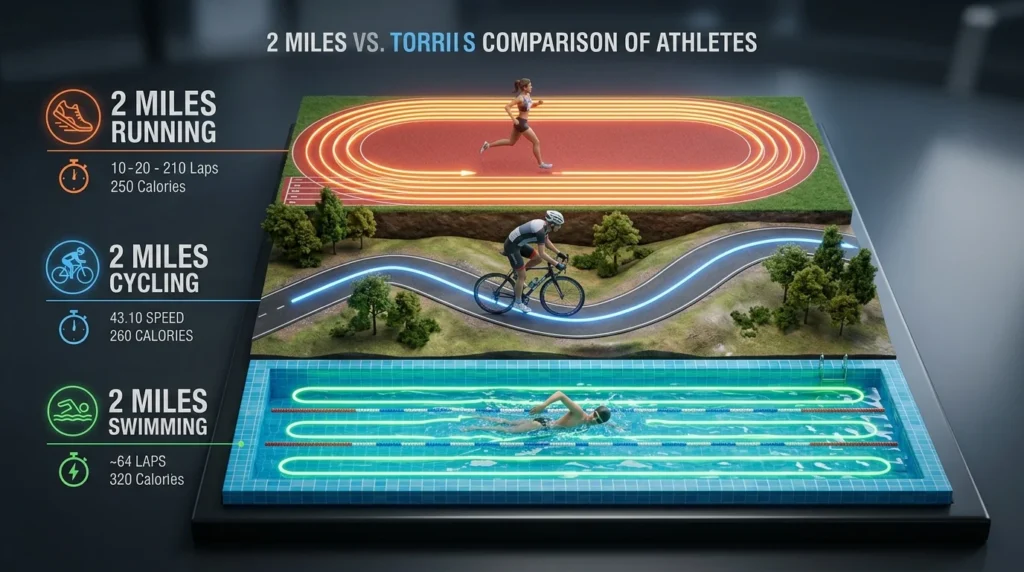
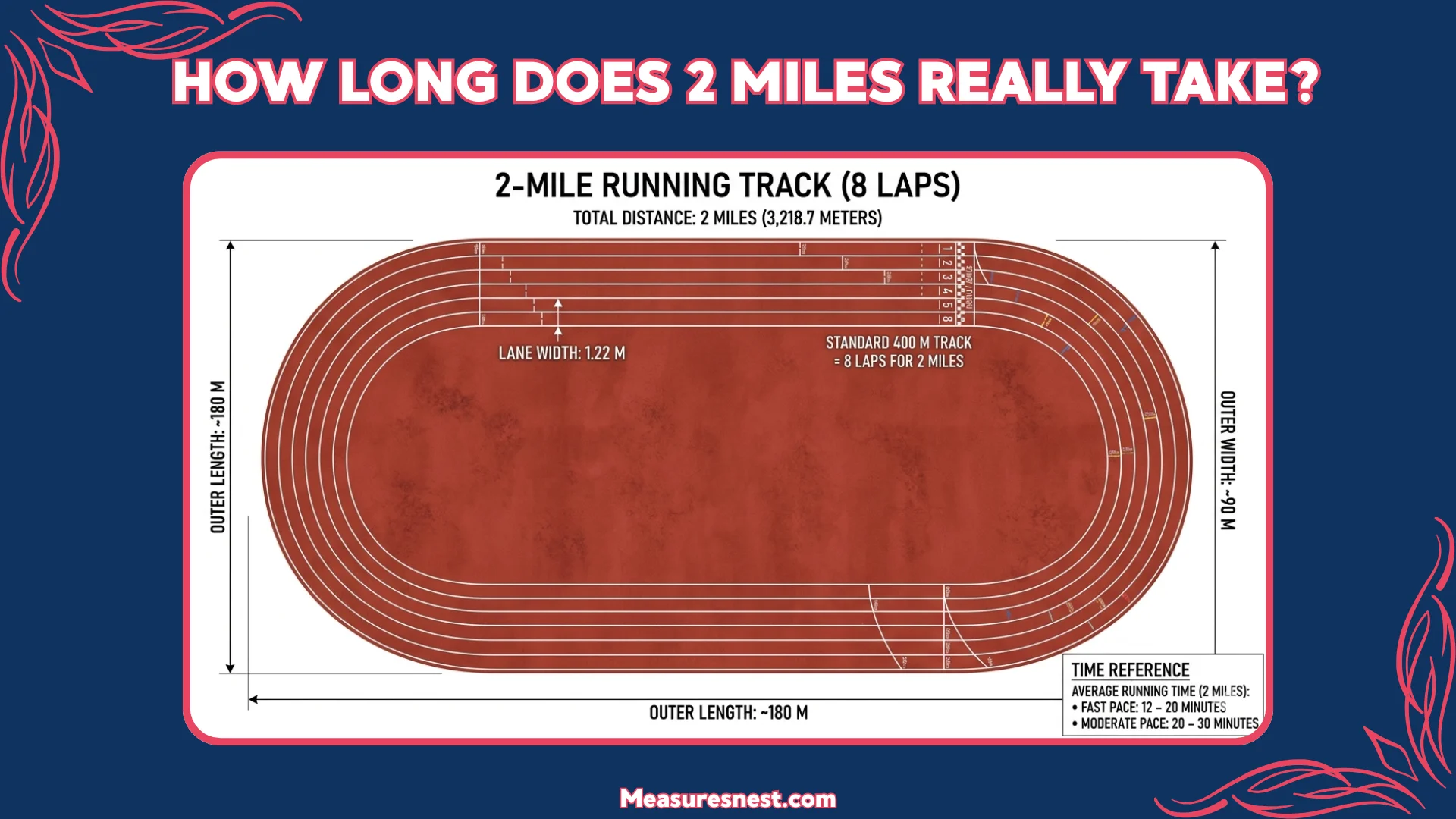
In track and field terms, 2 miles (3.22 km) equals exactly 8 laps around a standard 400-meter (437.4-yard) outdoor track. Competitive cross-country courses for high school athletes typically run between 2 and 3.1 miles (3.22–5 km), placing the 2-mile distance at the shorter end of a standard race. The famous Army Physical Fitness Test (APFT) uses exactly 2 miles (3.22 km) as its timed run distance making it one of the most tested athletic benchmarks in the world.
Track coaches, cross-country runners, and military fitness instructors use 2-mile (3.22 km) benchmarks daily in training programs. Eight laps of a standard track a distance you can visualize immediately on any school or park running track.
How Long Does 2 Miles Really Take When Driving?
Driving 2 miles (3.22 km) feels instant on a highway but surprisingly slow in city traffic. The difference between road types dramatically changes your experience of this distance.
Highway vs City vs Suburban Driving
| Road Type | Average Speed | Time for 2 Miles |
|---|---|---|
| Highway (65 mph / 104.6 km/h) | 65 mph (104.6 km/h) | ~1 min 50 sec |
| Suburban road (35 mph / 56.3 km/h) | 35 mph (56.3 km/h) | ~3 min 25 sec |
| City streets (25 mph / 40.2 km/h) | 25 mph (40.2 km/h) | ~4 min 48 sec |
| Rush hour city (15 mph / 24.1 km/h) | 15 mph (24.1 km/h) | ~8 min |
Highway driving covers 2 miles (3.22 km) in under 2 minutes. City rush hour stretches the same distance past 8 minutes. Suburban roads the most common driving environment for short trips split the difference at about 3 to 4 minutes for a typical 2-mile errand.
What Affects Your 2-Mile Drive Time?
Several real-world factors push your 2-mile (3.22 km) drive time up or down significantly.
Traffic signals add 30 to 90 seconds per light if you hit a red cycle. A 2-mile city route with 6 traffic lights could add up to 9 minutes on your total drive time. School zones, construction, and pedestrian crossings slow average speeds to 15 to 20 mph (24.1–32.2 km/h) and extend your drive further.
Road type and terrain also change your time significantly. Hilly roads reduce average speeds. Two-lane rural roads with slow-moving vehicles or farm equipment can cut average speed to 20 mph (32.2 km/h) or less. Urban one-way systems and forced detours can effectively double the actual distance you drive to reach a destination just 2 miles (3.22 km) away in a straight line.
How Long Does 2 Miles Take Walking or Running?
Walking 2 Miles
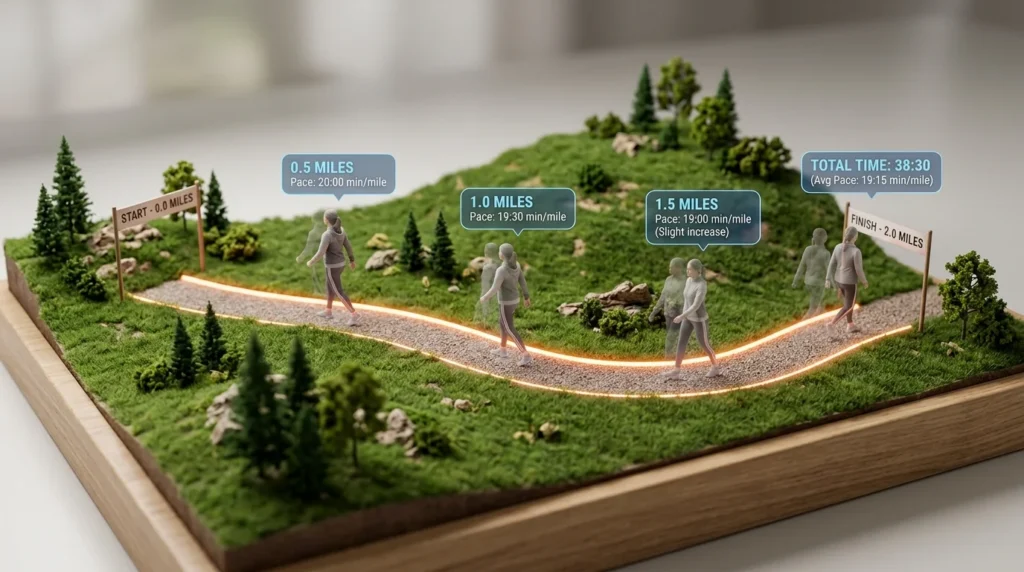
Walking 2 miles (3.22 km) takes between 30 and 45 minutes for most adults depending on pace, terrain, and fitness level.
| Walking Pace | Speed | Time for 2 Miles |
|---|---|---|
| Slow stroll | 2.5 mph (4.0 km/h) | 48 minutes |
| Casual walk | 3.0 mph (4.83 km/h) | 40 minutes |
| Brisk walk | 3.5 mph (5.63 km/h) | 34 minutes |
| Power walk | 4.0 mph (6.44 km/h) | 30 minutes |
A casual 40-minute walk covers exactly 2 miles (3.22 km) and burns approximately 150 to 200 calories depending on your body weight. Health organizations including the American Heart Association recommend 30 minutes of brisk walking daily a habit that covers close to 2 miles (3.22 km) each session.
Hills, uneven terrain, and carrying weight all slow your pace. Add 5 to 10 minutes to your estimate if your 2-mile (3.22 km) route includes significant elevation change.
Running 2 Miles
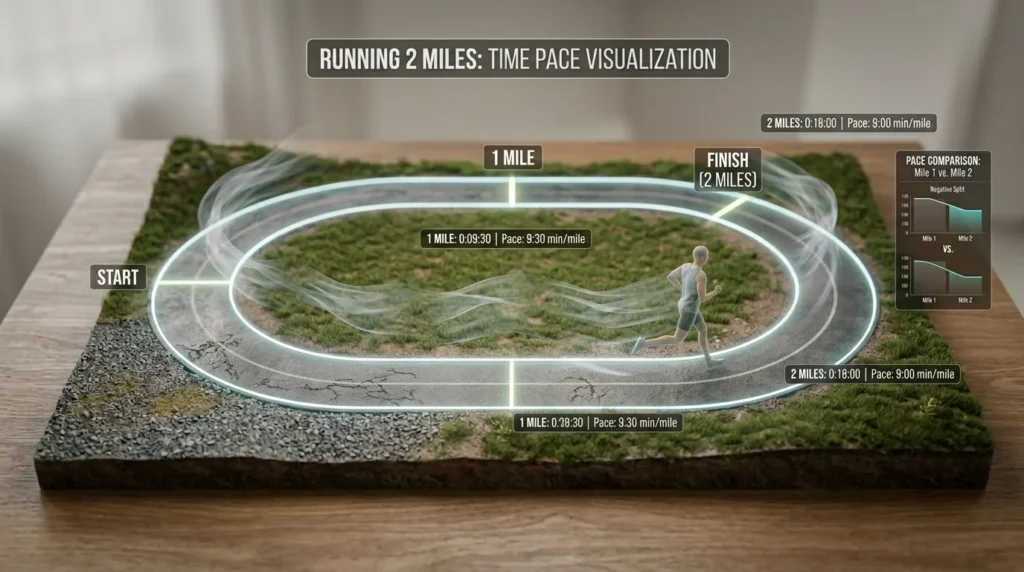
Running 2 miles (3.22 km) takes between 14 and 30 minutes depending on your fitness level and pace.
| Runner Type | Pace | Time for 2 Miles |
|---|---|---|
| Beginner jogger | 12 min/mile (7.46 min/km) | 24 minutes |
| Recreational runner | 10 min/mile (6.21 min/km) | 20 minutes |
| Intermediate runner | 8 min/mile (4.97 min/km) | 16 minutes |
| Competitive runner | 6 min/mile (3.73 min/km) | 12 minutes |
| Elite athlete | Sub-5 min/mile (3.11 min/km) | Under 10 min |
The US Army requires soldiers to completeTwo miles (3.22 km) in under 15 minutes 54 seconds for male soldiers aged 17 to 21 to pass their fitness test. Most beginners starting a Couch to 5K program run their first comfortable 2 miles (3.22 km) in about 24 to 28 minutes after several weeks of training.
Read: How Long Is 19 Inches
Read: How Long Is 18 Inches
Read: How Long Is 59 Inches
Read: How Long Is a Meter
Read: How Long Is 20 Inches
Read: How Long Is 3 Meters
Frequently Asked Questions
How long does it take to drive 2 miles?
Driving 2 miles (3.22 km) takes about 1 minute 50 seconds on a highway at 65 mph (104.6 km/h). In city traffic at 25 mph (40.2 km/h), expect 4 to 5 minutes. During rush hour, the same 2 miles can take 8 to 12 minutes or longer depending on signal timing and congestion.
How long does it take to walk 2 miles?
Walking 2 miles (3.22 km) takes approximately 30 to 45 minutes for most adults. At a casual pace of 3 mph (4.83 km/h), the walk takes exactly 40 minutes. At a brisk 3.5 mph (5.63 km/h) pace, you finish in about 34 minutes.
How long does it take to run 2 miles?
Running 2 miles (3.22 km) takes between 12 and 24 minutes depending on your pace. Beginner joggers typically finish in 24 minutes at a 12-minute-per-mile pace. Competitive runners can complete 2 miles in 12 minutes or less at a 6-minute-per-mile pace.
How many steps is 2 miles?
2 miles (3.22 km) equals approximately 4,000 to 4,500 steps for most adults. The exact count depends on your stride length taller people take fewer steps to cover the same distance. Most fitness trackers count 2 miles as roughly 4,200 steps based on an average 2.5-foot (76.2 cm) stride length.
Conclusion
2 miles appears constantly in your daily life through morning walks, short commutes, running fitness tests, and city sightseeing routes. This versatile distance equals 3.22 kilometers roughly 8 laps of a track, a 40-minute walk, or a 2-minute highway drive depending on how you travel it.
Now that you understand how long 2 miles really takes, you can plan your commute accurately, set realistic running goals, and estimate walking distances during travel. Use these familiar references a 40-minute walk, an Army fitness test run, a Las Vegas Strip stroll, or a 2-minute freeway drive when planning routes, building fitness habits, or exploring new cities for better accuracy and confident decisions every time.