How Long Is 10 Meters? 10 Common Things That Are 10 Meters Long
10 meters equals 32.8 feet (393.7 inches) this length shows up on school roads, construction sites, swimming pools, and harbors around the world every single day. It’s roughly the length of a yellow school bus, the height of a three-story building, or the span of two standard cars parked end-to-end. Once you know what 10 meters looks like, you’ll spot it constantly in the spaces around you.
Whether you’re estimating a distance without a tape measure, visualizing a room extension for a home renovation, or understanding a sports measurement, recognizing common 10-meter references gives you an instant reference point. Let’s explore the everyday objects that perfectly demonstrate this very useful measurement.
Quick Conversion Box
| Measurement | Equivalent Value |
|---|---|
| 10 meters | 32.81 feet |
| 10 meters | 393.70 inches |
| 10 meters | 10.94 yards |
| 10 meters | 1,000 centimeters |
How Long Is 10 Meters?
10 meters equals exactly 32.81 feet roughly two-thirds the length of a standard ten-pin bowling lane. A bowling lane from foul line to head pin measures 60 feet (18.3 meters), so 10 meters takes you just past the halfway point. It’s a distance your eye can judge clearly across a parking lot, a playing field, or a wide room.
Take 12 to 14 large adult walking steps in a straight line. That stride sequence covers almost exactly 10 meters (32.8 feet) for most adults with a stride length of 0.7 to 0.8 meters (2.3 to 2.6 feet). This body-based reference works anywhere you never need a tape measure when your own feet are available.
The 10-meter length appears in competitive diving, sprint start zones, truck and bus engineering, marine vessel classification, and building height standards worldwide. Architects, engineers, divers, and sailors all work with this measurement daily as a core reference in their fields.
Things That Are 10 Meters Long
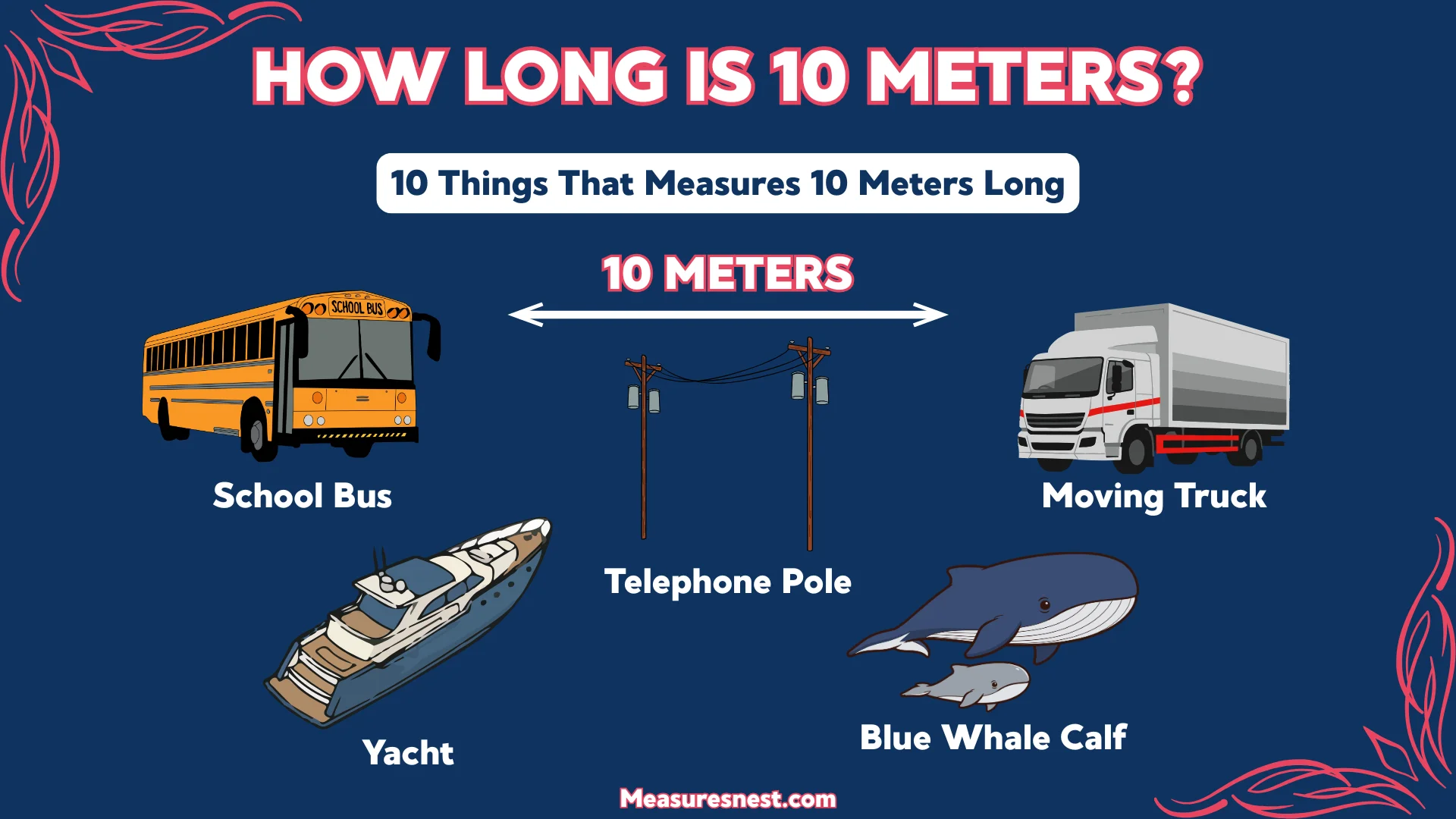
These everyday objects and structures demonstrate exactly how long 10 meters is in real life. From vehicles on your street to buildings in your neighborhood, this measurement appears constantly all around you.
Yellow School Bus
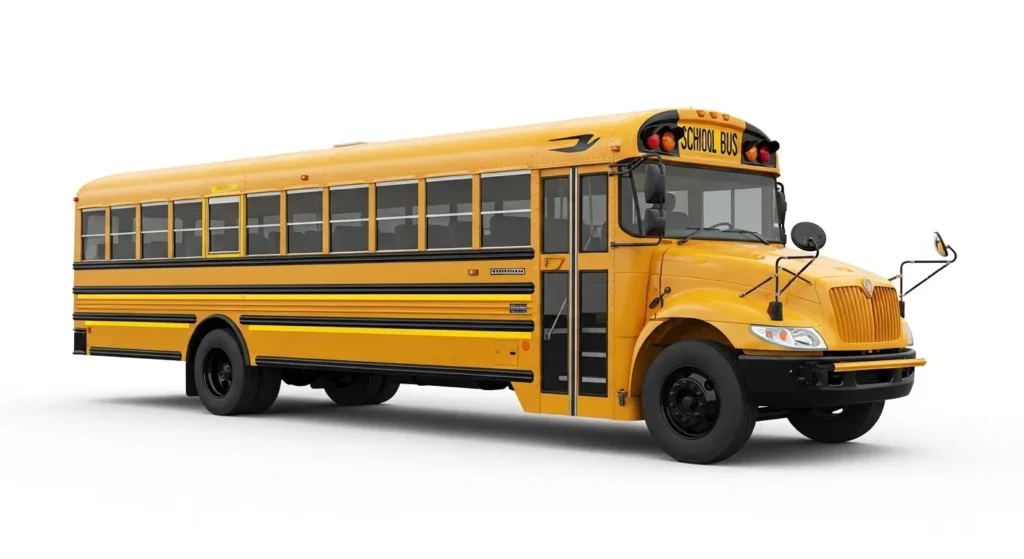
A standard full-size Type C or Type D yellow school bus measures 10 to 12 meters (32.8 to 39.4 feet) in length, with the most common model sitting right at 10 meters (32.8 feet). Bus manufacturers and school transportation departments use this length because it maximizes student capacity while fitting within standard school drop-off zones and turning radiuses. Safety engineers and transit planners specify 10-meter bus lengths precisely to match road design standards in most countries.
Over 480,000 school buses operate daily across the United States alone, making this one of the most visible 10-meter objects in any suburban neighborhood. The next time a school bus passes you, you’re watching a near-perfect 10-meter reference roll by.
Large Moving Truck
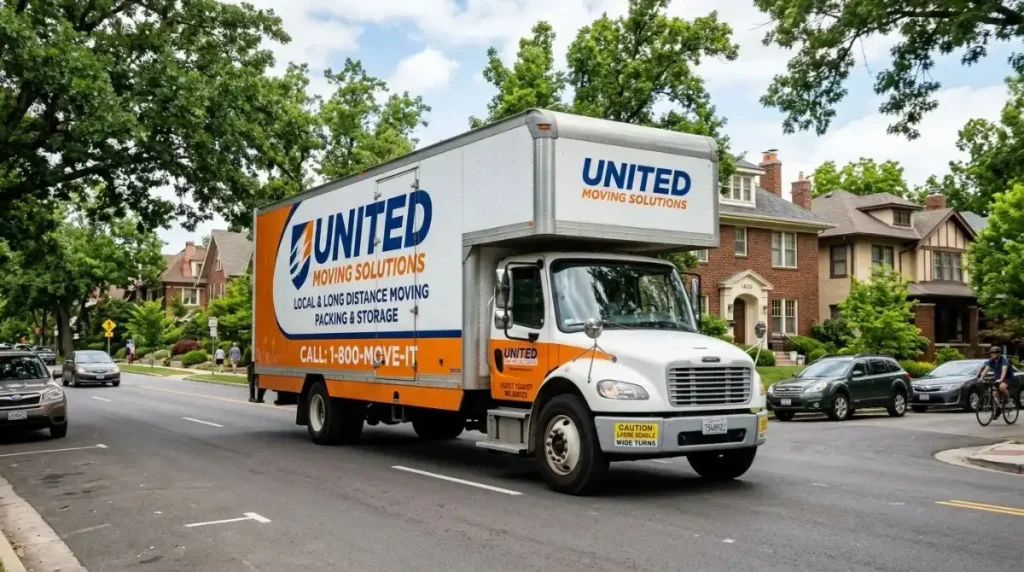
A standard large moving truck — the kind you rent from U-Haul, Penske, or Budget has a cargo box measuring 6 to 7.3 meters (20 to 24 feet) long, but the overall vehicle length including cab reaches exactly 9.7 to 10.4 meters (31.8 to 34.1 feet). Truck rental companies and freight logistics planners design these vehicles to the 10-meter range because it maximizes cargo space while still fitting within standard parking spaces and residential streets. Commercial drivers and moving company coordinators work with these exact dimensions every time they plan a route.
Millions of large moving trucks operate on roads worldwide, and their overall length sits consistently in the 10-meter range. The next time you see one parked on a street, walk alongside it from bumper to bumper you’re measuring exactly Ten meters.
Three-Story Building Height
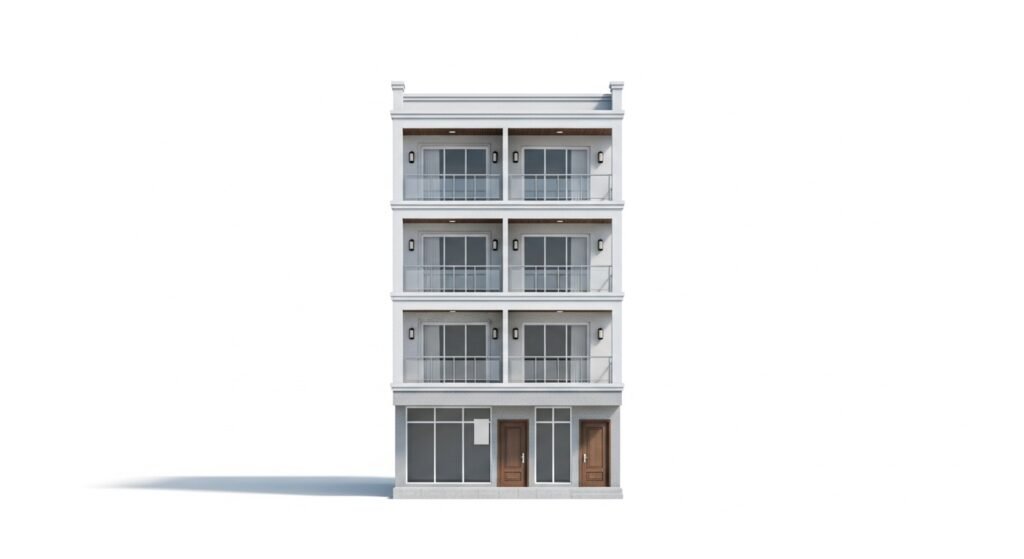
A standard three-story residential or commercial building stands approximately 9 to 11 meters (29.5 to 36.1 feet) tall, with most modern builds targeting exactly 10 meters (32.8 feet) to the roofline. Each floor typically measures 3 to 3.5 meters (9.8 to 11.5 feet) from floor to ceiling, and three stacked floors naturally reach the 10-meter mark. Architects, structural engineers, and building code inspectors use the three-story height as a standard reference because it defines zoning height limits in many residential neighborhoods worldwide.
Building height restrictions in countless cities use 10 meters as the exact cutoff between low-rise and mid-rise zoning classifications. Look up at the nearest three-story building near you its roofline sits almost exactly 10 meters above your head.
Medium Sailing Yacht
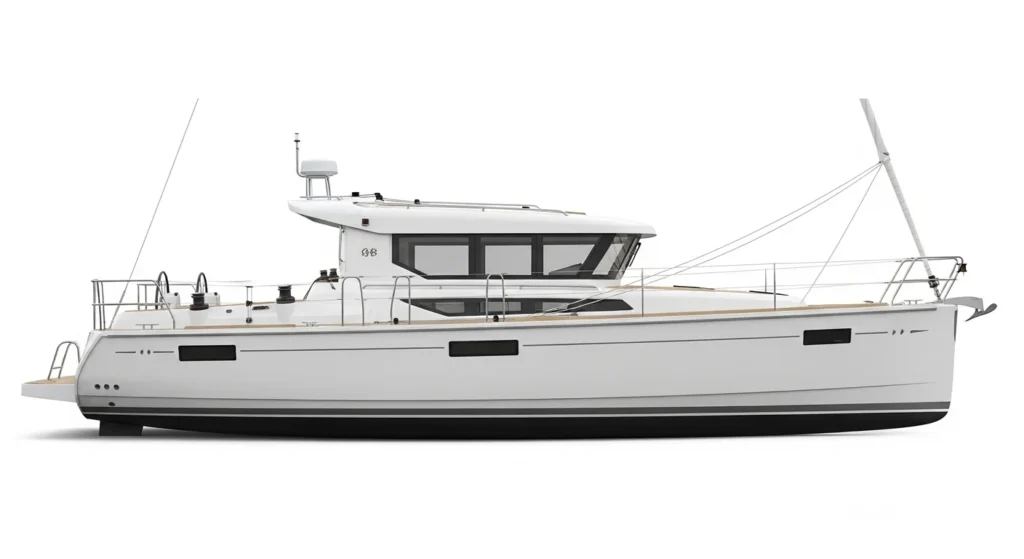
A 10-meter (32.8-foot) sailing yacht sits in the most popular size category for private ocean cruising worldwide. Naval architects and boat builders classify vessels by waterline length, and the 10-meter range is where comfortable offshore cruising begins — large enough for a full cabin, galley, and sleeping quarters for two to four people. International sailing races like the IOR 10-Meter class use this exact length as a defining specification for competitive ocean racing.
Boat registries around the world consistently show the 10-meter range as the most common privately owned yacht size. Walk along any marina pier and you’ll likely see several vessels measuring almost exactly 10 meters from bow to stern.
Telephone or Utility Pole
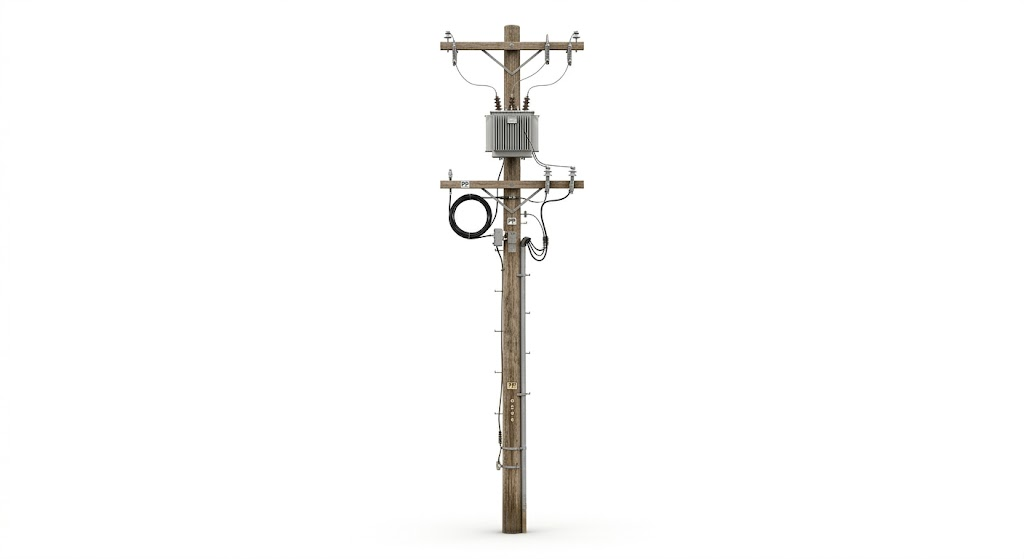
A standard wooden telephone or utility pole stands 9 to 12 meters (29.5 to 39.4 feet) tall, with the most commonly installed residential pole measuring almost exactly 10 meters (32.8 feet) above the ground. Utility companies and telecommunications engineers specify pole heights precisely to maintain required wire clearance above roads and footpaths. Electrical contractors and municipal infrastructure teams work with 10-meter poles as their default installation standard in most suburban and rural neighborhoods.
Over 180 million utility poles stand across the United States, and the vast majority measure right at the 10-meter mark. Glance at any power line pole outside your home the top of that pole sits almost exactly 10 meters above the ground.
Blue Whale Calf at Birth

A newborn blue whale calf measures 7 to 8 meters (23 to 26.2 feet) at birth, but by the end of its first year it reaches approximately 10 meters (32.8 feet) in length already longer than a school bus. Blue whale calves gain weight at the astonishing rate of 90 kilograms (198 pounds) per day during their first months of life. Marine biologists and cetacean researchers use the 10-meter one-year benchmark as a key milestone when tracking juvenile blue whale development and health.
Blue whales are the largest animals on Earth, and their one-year-old calves already reach a length most people find astonishing. Imagining a Ten-meter blue whale calf beside a parked school bus shows you just how perfectly these two objects match in length.
Two Sedan Cars (End-to-End)

A standard mid-size sedan like a Toyota Camry or Honda Accord measures approximately 4.8 to 5 meters (15.7 to 16.4 feet) in length. Park two sedans bumper-to-bumper and the combined length reaches exactly 9.6 to 10 meters (31.5 to 32.8 feet). Parking lot designers, traffic engineers, and urban planners use this two-car measurement constantly when calculating lane widths, parking space depths, and road setback distances.
You can recreate this 10-meter reference in any parking lot using two standard cars. Line them up end-to-end and you’ve built a near-perfect 10-meter measuring stick out of everyday vehicles.
Suburban Driveway Length
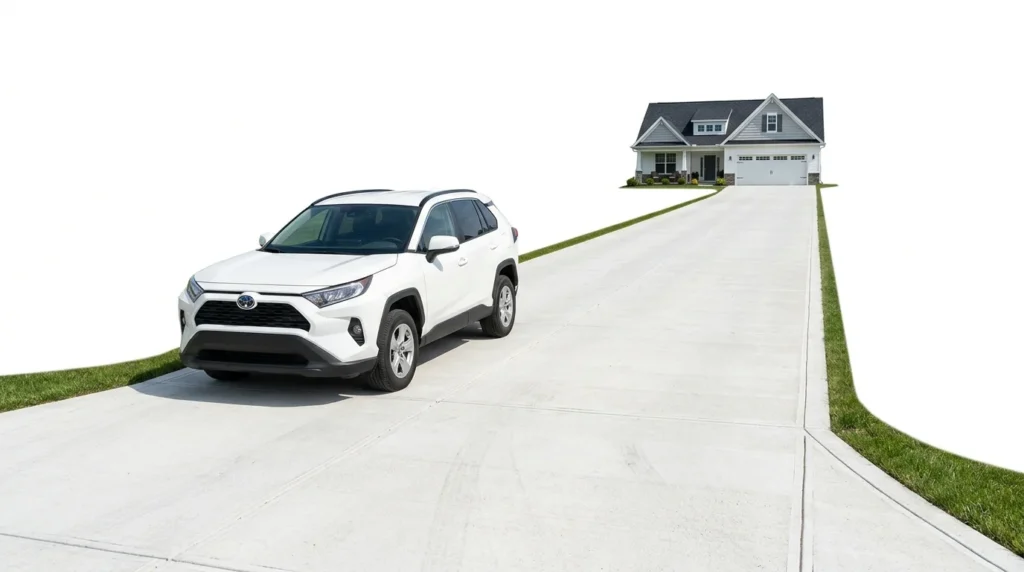
A standard suburban driveway measures 5.5 to 10 meters (18 to 32.8 feet) from the garage door to the edge of the sidewalk or street. Single-car driveways on quarter-acre lots in most US, UK, and Australian suburbs consistently reach 9 to 10 meters (29.5 to 32.8 feet) in length enough to fit two standard vehicles parked nose-to-tail. Landscape architects, concrete contractors, and residential builders use these exact driveway lengths when quoting paving jobs and planning garden borders.
Millions of suburban homes have driveways that land almost exactly at the 10-meter mark. Walk from your garage to the street your own driveway may already be a perfect 10-meter reference right outside your front door.
Width of Three-Lane Road
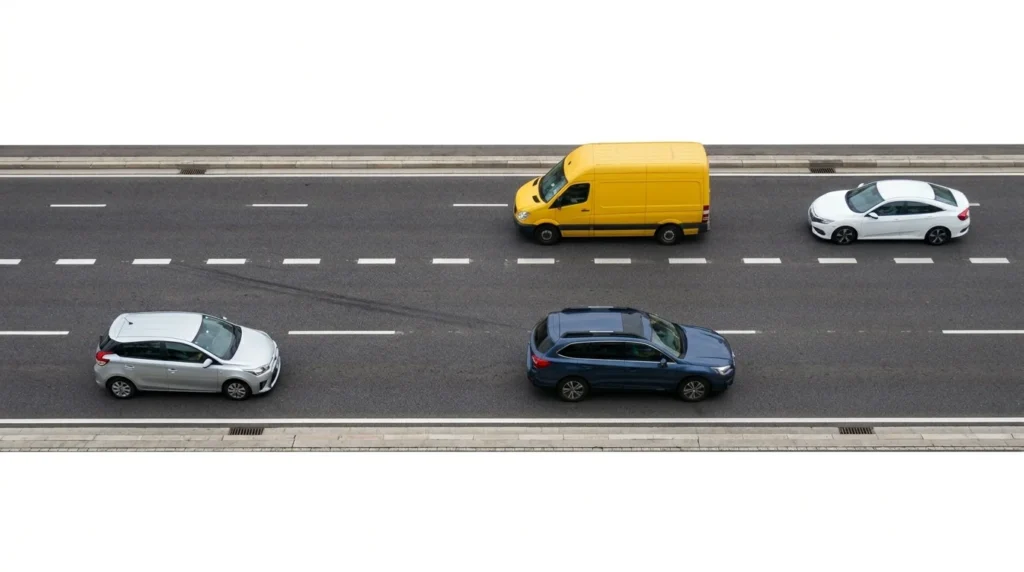
A standard three-lane road with lanes measuring 3.3 to 3.7 meters (10.8 to 12.1 feet) wide spans a total width of approximately 10 to 11 meters (32.8 to 36.1 feet) from curb to curb. Road design engineers and transportation departments specify lane widths in this range because they safely accommodate most vehicles while minimizing the total road footprint in urban areas. Civil engineers and urban planners reference 10-meter road widths constantly when designing intersections, crossings, and traffic calming zones.
Every time you cross a three-lane road, you walk across approximately 10 meters of pavement in one crossing. That familiar distance from one curb to the other is one of the most accessible 10-meter references in your daily environment.
10 Meter Diving Platform
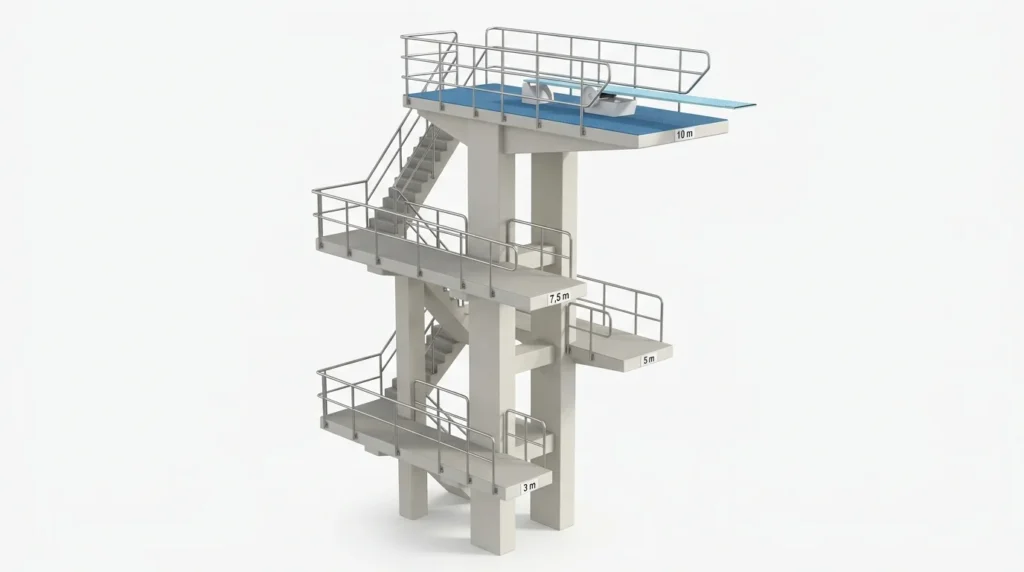
The 10-meter (32.8-foot) diving platform is the highest official competition platform in Olympic and FINA-sanctioned diving events worldwide. Competitive divers launch from this height and reach the water in approximately 1.4 seconds, hitting the surface at speeds of 50 km/h (31 mph). Aquatic facility engineers and Olympic pool designers build the 10-meter platform to exact specifications it must extend at least 1.5 meters (4.9 feet) beyond the pool edge and stand exactly 10 meters (32.8 feet) above the water surface.
Olympic diving has featured the 10-meter platform since the 1904 Games, making it one of the most recognized height references in all of competitive sport. If you’ve ever watched an Olympic diver leap from the top platform, you’ve seen exactly what 10 meters above ground looks like in action.
10 Meters Without Measuring
Yellow School Bus Length Watch a full-size school bus pass or park on your street. Its total length sits almost exactly at 10 meters (32.8 feet). This is the fastest visual reference for 10 meters because school buses appear in virtually every neighborhood every weekday morning.
12 to 14 Large Adult Steps Take 12 to 14 large deliberate steps in a straight line. Each big step covers roughly 0.7 to 0.85 meters (2.3 to 2.8 feet), so 13 steps lands you almost exactly at 10 meters (32.8 feet). This body-based reference works anywhere no tools, no phone, no measuring tape required.
Three-Story Building Height Look up at the nearest three-story building on your street. Its roofline sits almost exactly 10 meters (32.8 feet) above the ground. Once you internalize this height reference, you’ll spot it on buildings, cranes, and scaffolding structures throughout your city every day.
Two Standard Cars End-to-End Park two standard sedans bumper-to-bumper in a parking lot. Their combined length covers 9.6 to 10 meters (31.5 to 32.8 feet). This is a quick and practical reference any time you’re in a parking lot and need to estimate a 10-meter distance without any tools.
10 Meters Matters in Everyday Life
Home renovation and construction planning become more accurate when you understand 10 meters. Knowing this length helps you visualize room extensions, driveway lengths, and fence lines before you spend money on materials or contractors.
Online shopping for large items gets easier when you recognize the 10-meter scale. Furniture, outdoor structures, and vehicles all list dimensions that relate to this measurement spotting Ten meters by eye helps you confirm whether a large purchase will actually fit your space before it arrives.
Sports and recreation become more meaningful when you know the 10-meter benchmark. Olympic diving, swimming sprint starts, and track field marks all use 10 meters as a core measurement understanding it helps coaches, athletes, and sports fans interpret performance data accurately.
Safety and spatial awareness improve when you can estimate 10 meters instantly. Emergency stopping distances, safe crowd spacing, and construction exclusion zones all reference distances in the 10-meter range being able to judge this length by eye helps you make smarter decisions in unfamiliar environments.
Read: How Long Is 57 Inches
Read: How Long Is 1.375 Inches
Read: How Much Is 10 Miles
Read: How Big is 10 Acres
Read: How Long Is 26 Inches
Read: How Long Is 14 Inches
Frequently Asked Questions
How long is 10 meters in feet?
10 meters equals exactly 32.81 feet. To convert meters to feet, multiply by 3.281 so 10 × 3.281 = 32.81 feet. This conversion is useful for construction, sports specifications, and any situation where you’re moving between metric and imperial measurements.
What common object is 10 meters long?
A standard full-size yellow school bus, a three-story building height, and a medium sailing yacht all measure approximately 10 meters (32.81 feet). Two standard sedans parked end-to-end also reach almost exactly 10 meters, making this one of the easiest lengths to visualize using everyday objects.
How many steps is 10 meters?
10 meters equals approximately 12 to 14 large adult steps for most people. This estimate assumes a stride length of 0.7 to 0.85 meters (2.3 to 2.8 feet) per step. Taller people with longer strides may cover 10 meters in 12 steps, while shorter adults typically take 14 steps for the same distance.
How high is the 10-meter diving platform?
The Olympic 10-meter diving platform stands exactly 10 meters (32.81 feet) above the surface of the pool. Divers jump from this height and reach the water in approximately 1.4 seconds at speeds of around 50 km/h (31 mph). It is the highest official competition platform used in Olympic and world championship diving events.
Conclusion
10 meters appears constantly in your daily life through yellow school buses, three-story building heights, utility poles, and suburban driveways. This practical measurement equals exactly 32.81 feet or the combined length of two standard cars parked end-to-end a distance your eyes can judge clearly once you know what to look for.
Now that you recognize common 10-meter objects, you can estimate distances without a tape measure, visualize renovation and construction projects more accurately, and understand sports and safety measurements with total confidence. Use these familiar references a school bus, a three-story roofline, or 13 large walking steps when planning home projects, navigating new spaces, or explaining measurements to others for better accuracy and confident decisions.