How Long Is 500 Feet? 10 Things That Measure 500 Feet Long
500 feet equals 152.4 meters (0.152 kilometers) a distance that shapes skylines, defines city blocks, and sets the scale for everything from cruise ships to skyscrapers. It’s roughly the height of a 50-story building, the length of a medium cruise ship cutting through open ocean, or nearly two full American football fields laid end to end.
Whether you’re estimating distances on a construction site, visualizing a landmark’s true scale, or understanding safe following distances on a highway, recognizing common 500-foot references gives you an instant reference point.
Quick Conversion Box
| 500 Feet = | Value |
|---|---|
| 500 ft | = 152.4 meters (m) |
| 500 ft | = 6,000 inches (in) |
| 500 ft | = 166.67 yards (yd) |
| 500 ft | = 0.0947 miles (mi) |
How Long Is 500 Feet?
500 feet (152.4 m) is a genuinely vast distance — one that takes the average adult roughly 100 to 125 steps to walk at a normal, comfortable pace. It’s exactly one-third of a standard 1,500-foot (457.2 m) runway approach zone and just under the height of many of the world’s most recognized architectural landmarks.
For a human body reference, walking 500 feet (152.4 m) at a brisk pace takes approximately 55 to 70 seconds for most adults. That’s long enough to feel like a real distance but short enough that you cover it on foot dozens of times per day without thinking about it crossing parking lots, walking through airports, and moving between buildings on a large campus.
500 feet (152.4 m) appears constantly in the built environment around you. Engineers, urban planners, architects, and ship designers all work with this measurement regularly it defines minimum building setbacks, ship classification thresholds, urban block lengths, and safe highway spacing rules used around the world every single day.
Things That Measure 500 Feet Long
These real-world structures and scenarios demonstrate exactly how long 500 feet is in real life. From iconic monuments to open water vessels, this measurement shows up constantly in the world’s most recognizable large-scale objects.
Washington Monument

The Washington Monument in Washington D.C. stands exactly 555 feet 5 inches (169.3 m) tall — making it one of the closest and most famous near-500-foot landmarks in the entire world. At 500 feet (152.4 m) you’re looking at the height of the observation windows, just below the very top of the obelisk.
Millions of visitors stand at the base of the Washington Monument every year and look up at a structure almost perfectly defining the 500-foot (152.4 m) scale. It remains the world’s tallest obelisk and the most recognized vertical reference for this measurement in North America.
50-Story Building

A standard 50-story commercial office or residential tower reaches approximately 500 feet (152.4 m) tall when you calculate the average floor-to-floor height of 10 feet (3.05 m) per level. This is the height class that defines a “major skyscraper” in most city skylines tall enough to dominate the surrounding buildings but not yet in the supertall category.
Cities like Chicago, Houston, and Dubai feature dozens of buildings in exactly this 500-foot (152.4 m) height class defining their distinctive skylines. Next time you look up at a 50-story tower, you’re seeing 500 feet (152.4 m) of steel and glass rising directly above you.
Medium Cruise Ship
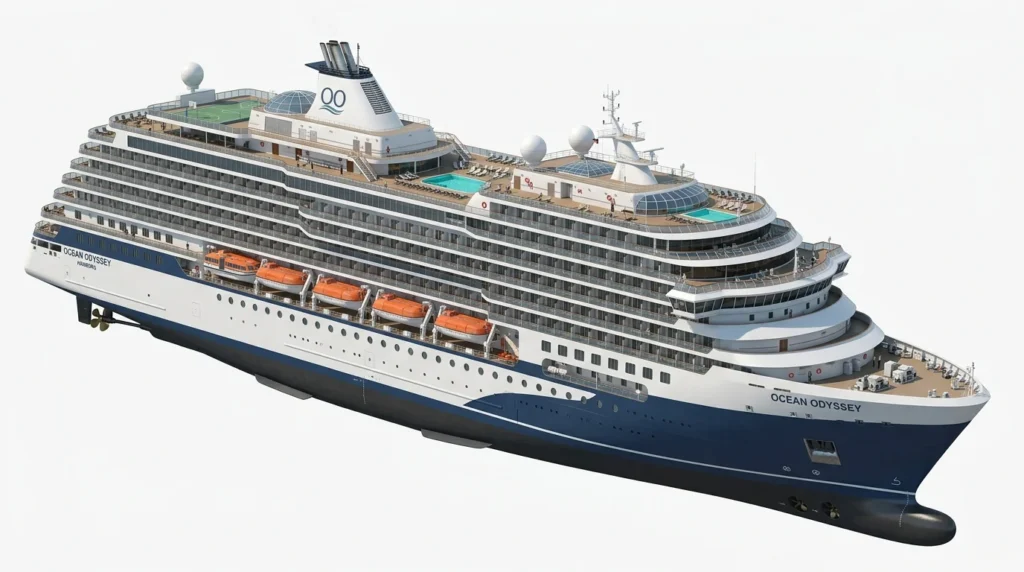
A medium-sized cruise ship carrying between 1,000 and 2,000 passengers typically measures between 450 and 550 feet (137.2 to 167.6 m) in length, with the most common mid-tier vessels sitting almost exactly at 500 feet (152.4 m). At this length, the ship spans nearly two city blocks and requires specialized harbor tugboats and experienced dock pilots to maneuver safely into port.
Cruise passengers who walk the full length of a 500-foot (152.4 m) ship from bow to stern on the open promenade deck feel this measurement in a memorable, physical way. It’s one of the most immersive and impressive real-world experiences of exactly how far 500 feet (152.4 m) truly extends.
Two City Blocks

In most American cities built on a standard grid system, a single city block measures approximately 250 feet (76.2 m) from one intersection to the next — making two consecutive city blocks together equal almost exactly 500 feet (152.4 m). Urban planners, civil engineers, and city traffic designers use the 500-foot (152.4 m) two-block distance constantly when planning pedestrian crossing times, bus stop spacing, and emergency vehicle access routes.
Two city blocks at 500 feet (152.4 m) is a distance most city dwellers walk multiple times every day without registering it consciously. It’s the most practical and repeatable real-world way to feel this measurement under your feet in any urban environment.
1.67 Football Fields
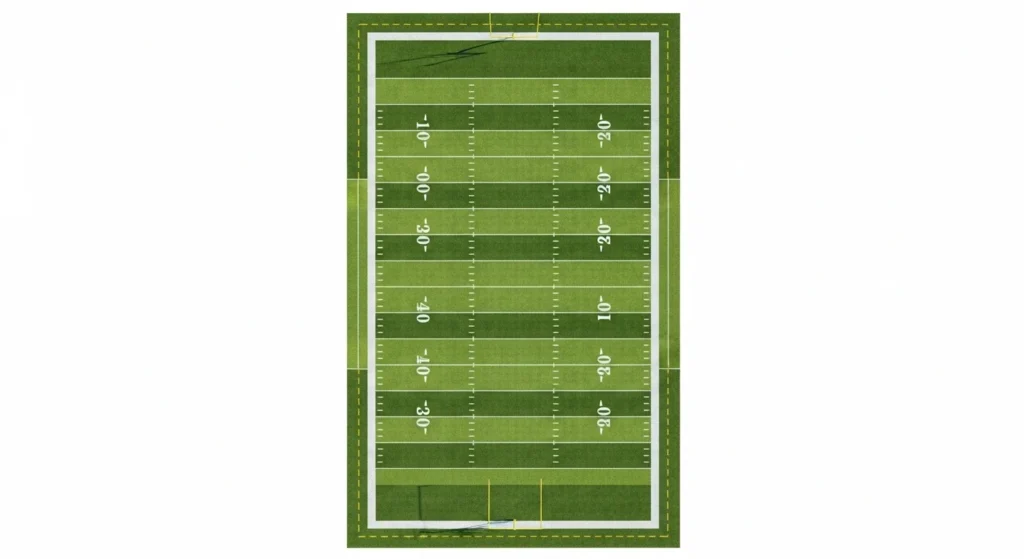
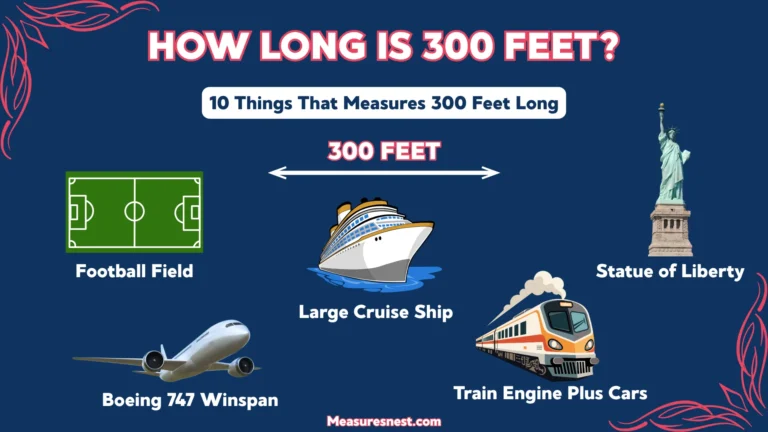
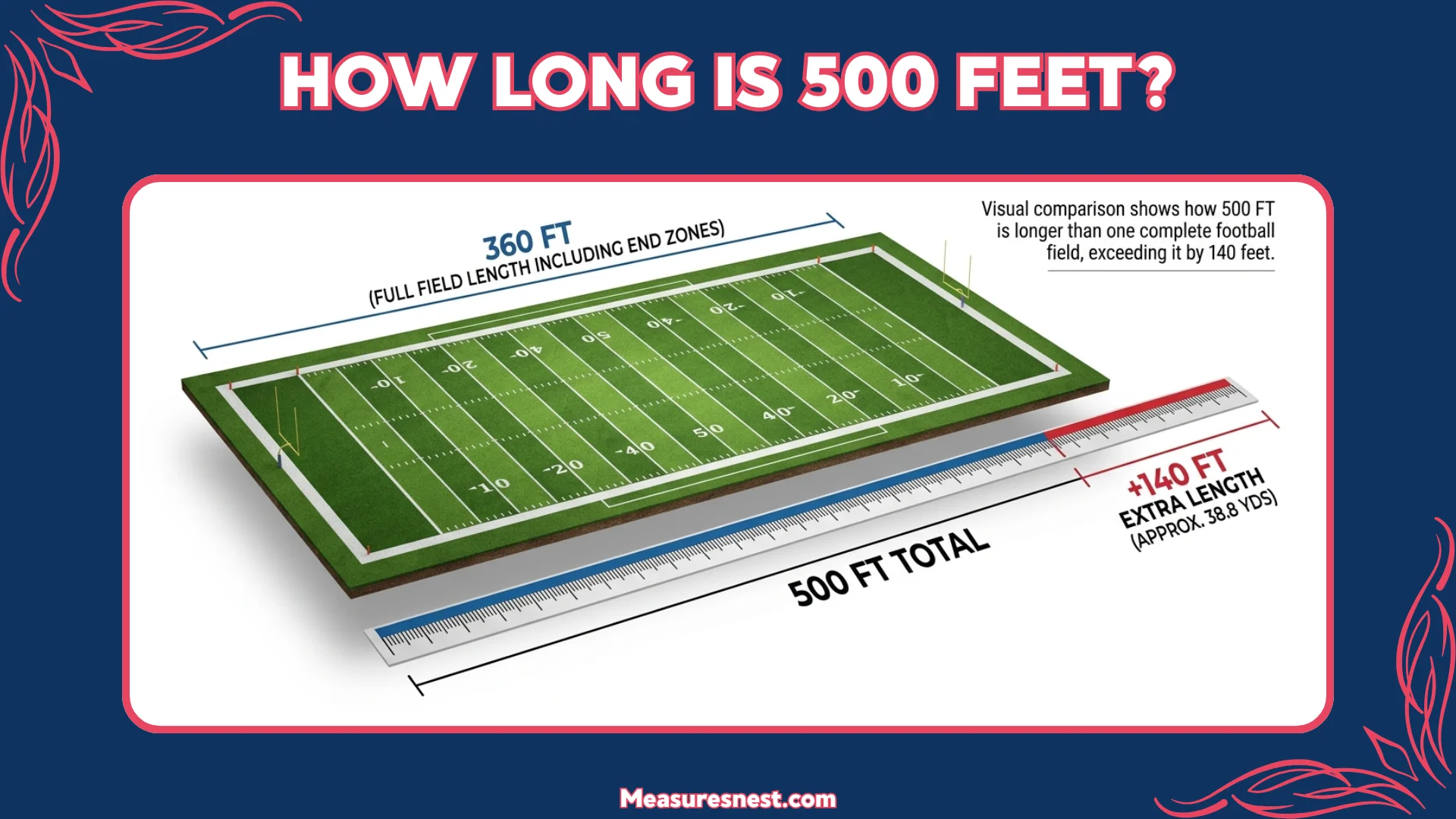
An American football field measures exactly 300 feet (91.4 m) from end zone to end zone, meaning 500 feet (152.4 m) equals exactly one field plus two-thirds of a second field laid end to end. Sports fans who watch games in person at a stadium can use the visible field markings to mentally extend one and two-thirds lengths in either direction to picture this distance perfectly.
Most people who’ve watched even a handful of football games can visualize a full field immediately making the 1.67-field (500-foot / 152.4 m) comparison one of the most universally useful distance references available. It’s a simple, sports-grounded way to make 500 feet (152.4 m) click instantly.
Large Cargo Vessel
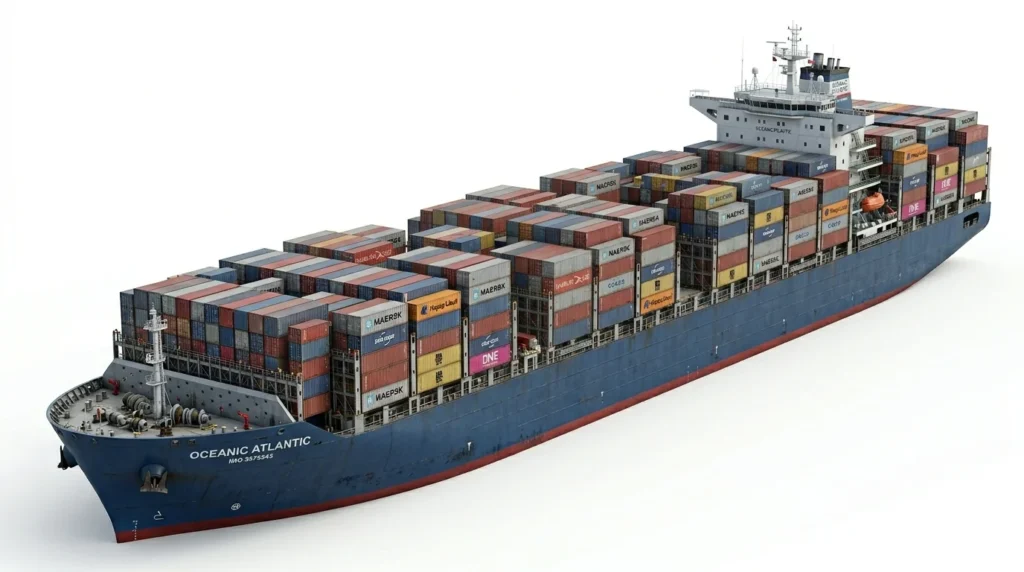
A large oceangoing cargo vessel the kind that transports containers, bulk grain, steel coils, or vehicles between major international ports — regularly measures between 490 and 560 feet (149.4 to 170.7 m) in length, with many standard Panamax-class cargo ships sitting right at 500 feet (152.4 m). At this length, the vessel can carry thousands of metric tons of freight across open ocean in a single voyage.
Cargo ships at 500 feet (152.4 m) are the backbone of global trade moving everything from electronics to grain to automobiles across every major ocean route. Next time you see a container ship passing through a harbor, you’re watching 500 feet (152.4 m) of floating infrastructure in slow, powerful motion.
Oil Tanker (Medium Size)
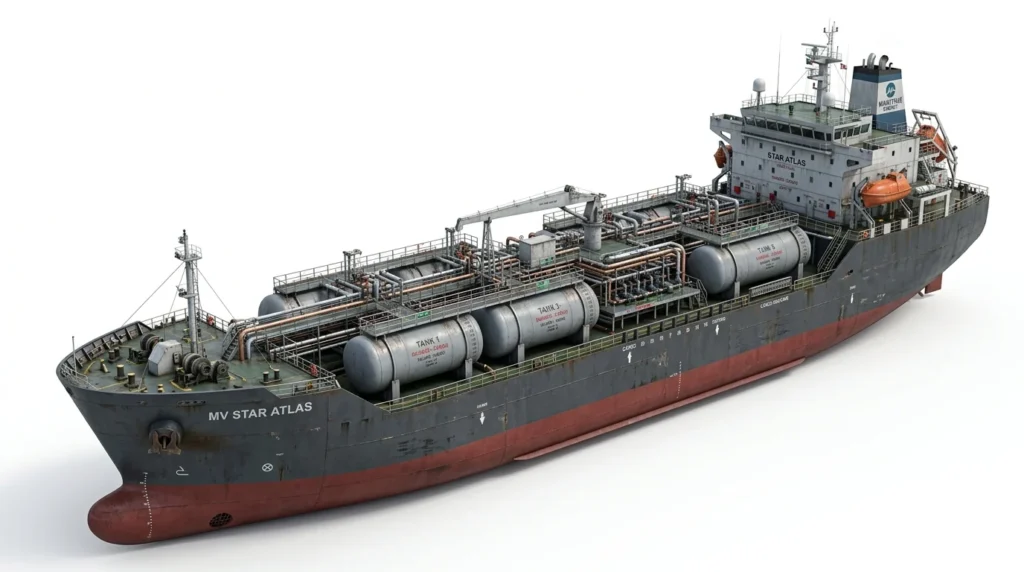
A medium-sized crude oil tanker — classified in the shipping industry as an Aframax or smaller Suezmax vessel measures between 450 and 600 feet (137.2 to 182.9 m), with many mid-range models measuring almost exactly 500 feet (152.4 m) in length. These tankers carry between 80,000 and 120,000 deadweight tons of crude oil across major global shipping routes.
Medium oil tankers at 500 feet (152.4 m) are a constant presence on the world’s major shipping lanes, fueling the global energy supply from refineries to distribution terminals. Their length makes them one of the most dramatic floating demonstrations of exactly how far 500 feet (152.4 m) extends on open water.
Highway Following Distance
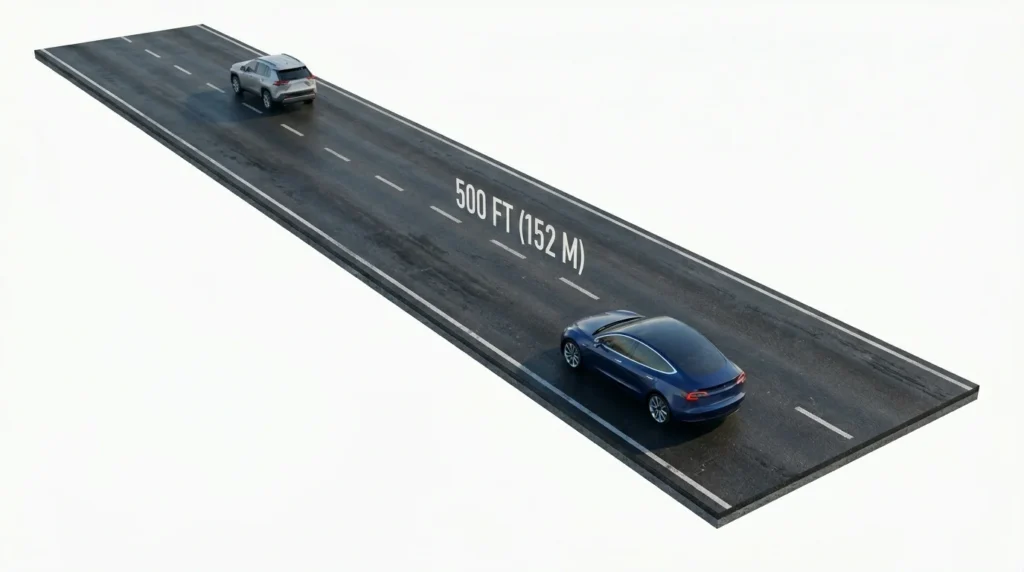
At highway speeds of 60 miles per hour (96.6 km/h), traffic safety authorities recommend a following distance of approximately 264 to 528 feet (80.5 to 160.9 m) between vehicles placing the safe recommended gap at roughly 500 feet (152.4 m) at the upper end of this range.
Most drivers dramatically underestimate how far 500 feet (152.4 m) actually looks on a highway when traffic is moving fast. Understanding this measurement could be one of the most genuinely life-saving applications of knowing exactly how far 500 feet (152.4 m) extends in a straight line ahead of you.
Tall Apartment Complex
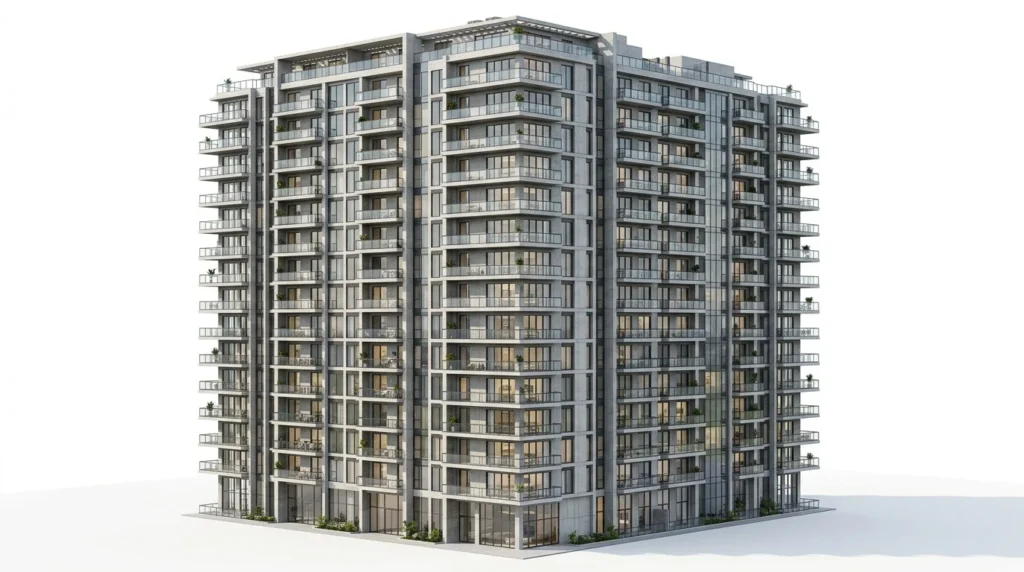
A large-scale residential apartment tower with 45 to 50 floors of units reaches approximately 500 feet (152.4 m) from ground to rooftop, depending on ceiling heights and floor spacing. Buildings in this height class appear in major cities from New York and London to Singapore and Dubai, housing hundreds of families in a single vertical structure.
Residents living on the upper floors of a 500-foot (152.4 m) apartment tower experience this measurement as the distance between their home and street level every single day. It’s one of the most personally felt demonstrations of this scale for anyone who lives or works at height in a major city.
Naval Destroyer
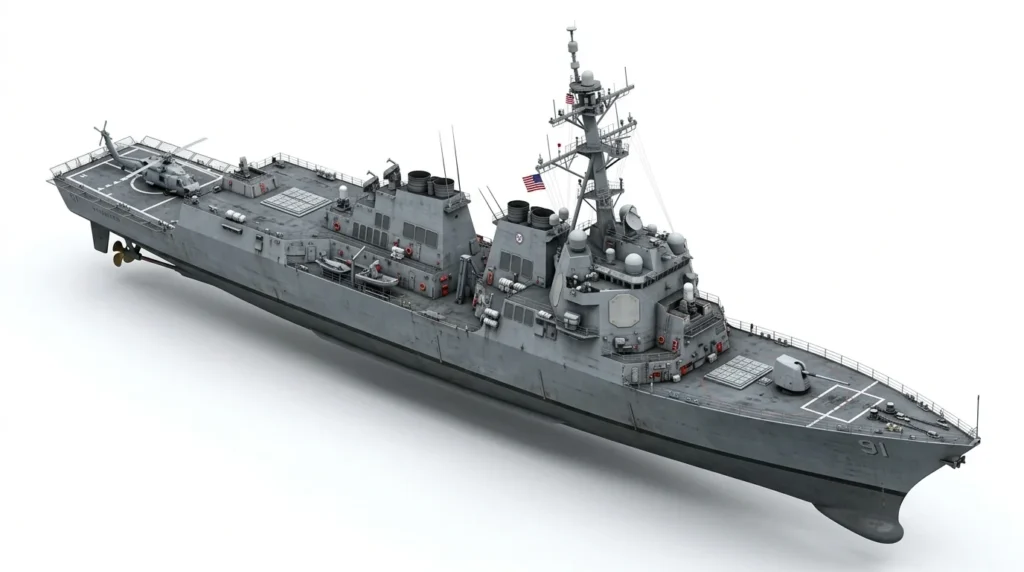
A modern naval destroyer one of the most capable and widely deployed warship classes in the world measures between 450 and 530 feet (137.2 to 161.5 m) in length, with many frontline vessels including the US Navy’s Arleigh Burke-class destroyer measuring approximately 505 feet (153.9 m) long. At this length, the destroyer combines high-speed maneuverability with a heavy weapons and sensor load across its full hull.
Naval destroyers at approximately 500 feet (152.4 m) long represent the precise balance between firepower, speed, and ocean range that makes them the most versatile surface combatant in any modern fleet. Seeing one alongside a dock makes the 500-foot (152.4 m) scale immediately, powerfully obvious.
500 Feet Without Measuring
🚶 Count Your Steps The average adult walking stride covers approximately 2.5 feet (0.76 m) per step. To walk 500 feet (152.4 m), you need almost exactly 200 steps at a normal pace. Count two hundred steps from your front door and you’ll land almost perfectly on the 500-foot (152.4 m) mark every time.
🏙️ Walk Two City Blocks In most American cities, walking two standard city blocks from one traffic light to the next, twice covers almost exactly 500 feet (152.4 m). Any time you’re in a grid-pattern downtown area, two blocks gives you an instantly available, always-accurate reference for this distance right under your feet.
🏈 Picture Football Fields Visualize one complete American football field (300 feet / 91.4 m) and then imagine adding two-thirds of a second field beyond the end zone. That combined image one full field plus most of a second equals exactly 500 feet (152.4 m). Sports fans find this the fastest mental image for getting this distance right in any open space.
🏢 Look Up at a 50-Story Building Find any major city skyscraper and count the floors to roughly 50 levels. That roofline above the 50th floor sits almost exactly 500 feet (152.4 m) above the street where you’re standing. Architects and real estate professionals use this building-height visualization constantly when explaining large vertical distances to clients and investors.
500 Feet Matters in Everyday Life
Construction and engineering projects become safer when you understand 500 feet. This measurement defines building height classifications, setback requirements, and airspace restriction zones knowing it helps engineers, site managers, and inspectors apply the correct codes to their work from day one.
Driving safely on highways improves when you recognize this distance. A safe following distance of approximately 500 feet (152.4 m) at highway speed gives you critical reaction and braking time internalizing this measurement makes it easier to maintain proper spacing and reduce rear-end collision risk in fast-moving traffic.
Maritime and port planning becomes clearer when you picture 500 feet. Cargo ships, oil tankers, cruise vessels, and naval destroyers all cluster around this length understanding it helps shipping professionals, port designers, and logistics planners make faster, more accurate decisions about berth capacity, tug requirements, and channel clearances.
Urban navigation and spatial planning improve when you use 500 feet as your anchor. Two city blocks, a major skyscraper’s height, or a famous monument all sit at or near this benchmark making it one of the most useful everyday distance references for anyone working in architecture, urban design, or city emergency management.
Read: How Long Is 9 Inches?
Read: How Long Is 30 Meters?
Read: How Long Is a Meter?
Read: How Long Is 12 Inches?
Read: How Long Is 30 Inches?
Read: How Long Is 40 Inches?
Frequently Asked Questions
How long is 500 feet in meters?
500 feet equals exactly 152.4 meters (0.1524 km). It’s a significant distance long enough to take most adults about 60 to 70 seconds to walk at a brisk pace. Internationally, this measurement falls squarely in the range used to classify mid-size ships, tall buildings, and major urban blocks worldwide.
What is the best real-world reference for 500 feet?
Two city blocks in a standard American grid city equal almost exactly 500 feet (152.4 m) and provide the most accessible daily reference for this distance. Alternatively, the Washington Monument at 555 feet (169.3 m) gives you a world-famous visual anchor just slightly above this mark. The height of a 50-story building or the length of a medium cruise ship both sit almost perfectly at 500 feet (152.4 m) as well.
How many football fields equal 500 feet?
500 feet (152.4 m) equals exactly 1.67 American football fields laid end to end. A standard NFL field measures 300 feet (91.4 m) from end zone to end zone, so 500 feet (152.4 m) equals one complete field plus two-thirds of a second field. This is one of the most instantly relatable comparisons for sports fans trying to visualize this distance quickly.
How long does it take to walk 500 feet?
At an average walking speed of 3 miles per hour (4.8 km/h), covering 500 feet (152.4 m) takes approximately 55 to 70 seconds for most adults. People who walk faster cover it closer to 50 seconds, while a leisurely pace stretches it toward 80 seconds. You cross this distance dozens of times per day in parking lots, corridors, and city streets without realizing it.
Conclusion
500 feet appears constantly in your daily life through 50-story skyscrapers, medium cruise ships, naval destroyers, and the two city blocks you walk between intersections. This impressive measurement equals 152.4 meters roughly the height of the Washington Monument’s observation level or the length of nearly two American football fields stretched end to end.
Now that you recognize common 500-foot references, you can estimate large distances confidently, understand building and ship scale instantly, and apply safe highway spacing without guessing.