Bowling Lane Dimensions: Size, Height & Diameter 2026
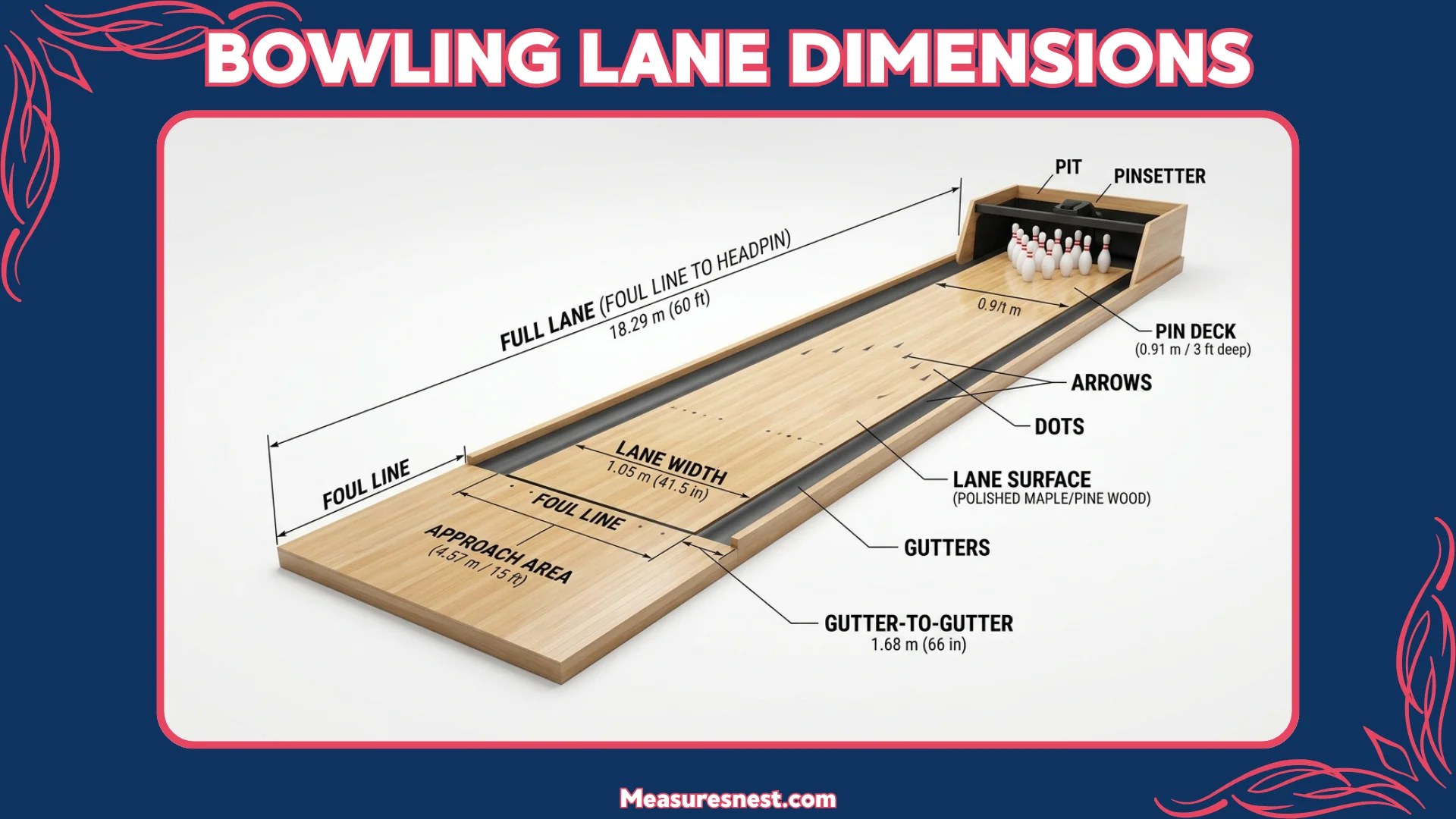
Bowling lane dimensions are precisely standardized a regulation lane measures 60 feet long (18.29 m) from the foul line to the head pin, appearing in every certified bowling center across the USA and around the world. Add the approach area and you’re looking at a total lane length of roughly 80 feet (24.4 m) from back wall to pin deck.
Whether you’re designing a bowling alley, practicing your technique, or simply curious about the sport’s measurements, knowing common bowling lane dimensions gives you an instant reference point.
Quick Conversion Box
| Measurement | Value |
|---|---|
| 60 feet (foul line to head pin) | 18.29 meters |
| 41.5 inches (lane width) | 105.4 centimeters |
| 15 feet (approach area length) | 4.57 meters |
| 8.5 inches (bowling pin diameter) | 21.6 centimeters |
How Long Is a Full-Size Bowling Lane?
A regulation bowling lane measures exactly 60 feet (18.29 m) from the foul line to the center of the head pin. Add the 15-foot (4.57 m) approach area behind the foul line and the 2.5-foot (0.76 m) pin deck at the far end, and the total lane length reaches approximately 78 feet (23.77 m).
Your normal walking stride covers about 2.5 feet (0.76 m). Walking the full length of a bowling lane from the back of the approach to the pins would take you about 31 steps.
Bowling lanes appear in recreation centers, sports complexes, dedicated bowling alleys, and even cruise ships. The United States Bowling Congress (USBC) certifies every regulation lane to these exact dimensions before competitive play begins.
Bowling Lane Width
A regulation bowling lane measures exactly 41.5 inches (105.4 cm) wide about the width of a standard front door plus 5.5 inches (14 cm). The lane includes gutters (channels) on each side that measure 9.25 inches (23.5 cm) wide. The total width from gutter edge to gutter edge reaches 60 inches (152.4 cm) exactly 5 feet.
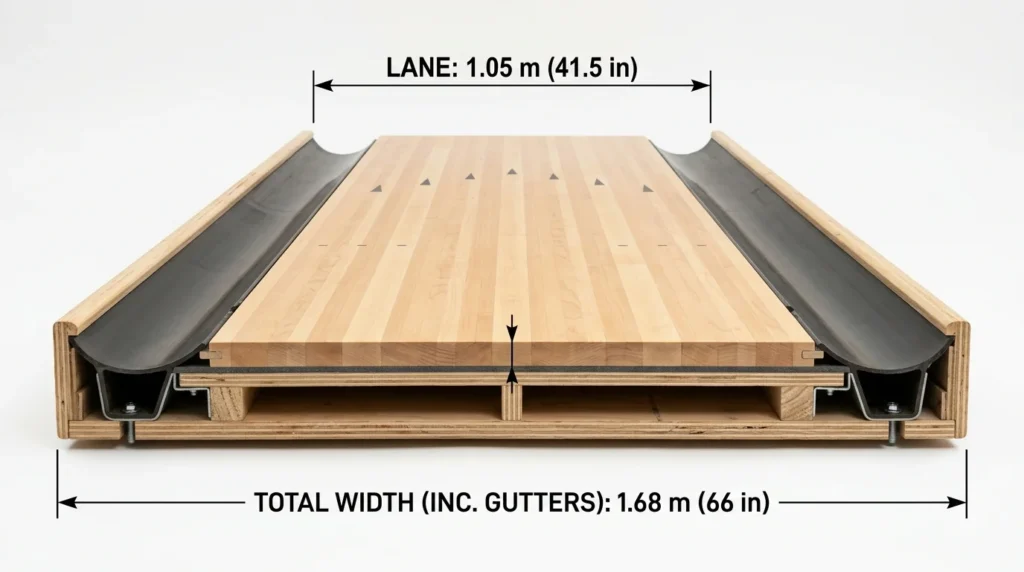
The actual playing surface the part between the gutters stays consistent at 41.5 inches (105.4 cm). This gives a bowling ball with a standard diameter of 8.5 inches (21.6 cm) plenty of room to travel. Lane technicians and USBC officials measure lane width precisely during certification to ensure fair and consistent play.
| Lane Zone | Width | Centimeters |
|---|---|---|
| Playing Surface | 41.5 in | 105.4 cm |
| Left Gutter | 9.25 in | 23.5 cm |
| Right Gutter | 9.25 in | 23.5 cm |
| Total Width (gutter to gutter) | 60 in | 152.4 cm |
Approach Area Dimensions
The approach area is the flat zone behind the foul line where you walk and release the ball. It measures exactly 15 feet (4.57 m) long bout the length of a standard mid-size car. The approach must be at least 15 feet (4.57 m) long under USBC regulations, though many centers build approaches at 16 feet (4.88 m) for extra comfort.
The approach is the same width as the lane 41.5 inches (105.4 cm) plus the gutter areas on each side. Bowlers use a series of approach dots built into the surface as alignment guides. These dots sit at 12 feet (3.66 m) and 15 feet (4.57 m) from the foul line to help you line up your starting position consistently.
The foul line itself is a black line exactly 1 inch (2.54 cm) wide that separates the approach from the lane. Crossing or touching the foul line during delivery results in a foul — your throw counts but the pins knocked down do not. Electronic foul detection systems monitor this 1-inch (2.54 cm) boundary in all USBC-certified centers.
| Approach Feature | Measurement | Centimeters |
|---|---|---|
| Approach Length (minimum) | 15 ft | 4.57 m |
| Approach Width | 41.5 in | 105.4 cm |
| Front Approach Dots | 15 ft from foul line | 4.57 m |
| Rear Approach Dots | 12 ft from foul line | 3.66 m |
| Foul Line Width | 1 in | 2.54 cm |
Height, Tilt, and Surface Specifications in Bowling Lanes
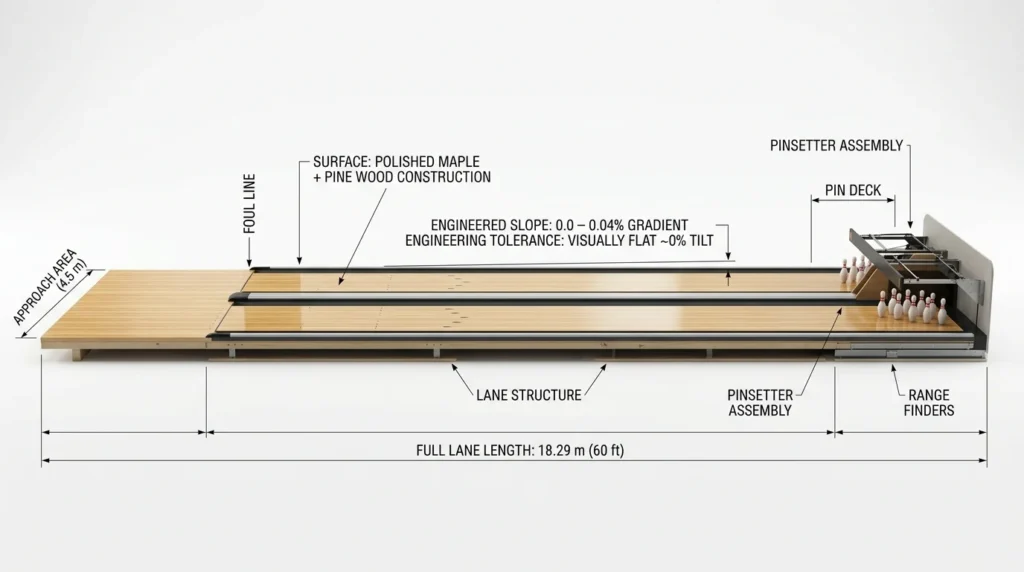
A bowling lane is not perfectly flat. The USBC allows a maximum tilt (slope) of 40 thousandths of an inch (1.016 mm) per foot along the lane’s length. That means over the full 60 feet (18.29 m), the lane surface can vary by no more than 2.4 inches (6.1 cm) from end to end.
The lane surface sits at exactly floor level the same height as the approach area. There is no raised platform or step down at the foul line. The entire playing surface from the back of the approach to the pin deck maintains a seamless, level transition so bowlers feel no height change during their delivery.
The pin deck — the area where the pins stand sits at the same level as the lane. Each pin rests in a pre-marked spot, with the head pin positioned exactly 60 feet (18.29 m) from the foul line. The pit behind the pins drops down about 24 inches (61 cm) below lane level to catch fallen pins safely.
Lane surfaces consist of either wood or synthetic materials. Wood lanes use pine in the main body and maple at the approach and pin deck areas. Synthetic lanes use a laminated material that measures approximately 0.5 inches (1.27 cm) thick.
| Surface Specification | Measurement | Centimeters |
|---|---|---|
| Max Length Tilt (per foot) | 0.040 in | 0.1016 cm |
| Max Width Tilt (per foot) | 0.040 in | 0.1016 cm |
| Synthetic Surface Thickness | ~0.5 in | ~1.27 cm |
| Pin Deck Drop (pit) | ~24 in | ~61 cm |
| Total Lane Level Change (max) | 2.4 in over 60 ft | 6.1 cm over 18.29 m |
Other Key Bowling Lane Markings and Features
Bowling lanes contain a precise system of markings that guide every shot you take. The range finders (arrows) are seven triangular markers embedded in the lane surface at 15 feet (4.57 m) past the foul line. Most bowlers aim at these arrows rather than the pins — they’re much easier to target at close range.
The dots on the lane (also called guide spots) appear at 7 feet (2.13 m) past the foul line. These seven dots align directly with the seven arrows further down the lane. Together, the dots and arrows create a targeting grid that bowlers use to adjust their angle and improve accuracy.
The breakpoint — where a hook shot starts curving toward the pins — typically occurs around 45 feet (13.72 m) from the foul line. This leaves 15 feet (4.57 m) for the ball to curve into the pocket. Understanding this geometry helps serious bowlers choose the right starting position on the approach.
The pin spots mark exactly where each of the 10 pins stands. The head pin (Pin 1) sits at the center of the lane, exactly 60 feet (18.29 m) from the foul line. Each pin spot is 12 inches (30.5 cm) from the adjacent pin spot giving the full triangular pin formation a base width of 36 inches (91.4 cm).
| Marking | Distance from Foul Line | Centimeters |
|---|---|---|
| Lane Dots (guide spots) | 7 ft | 2.13 m |
| Arrows (range finders) | 15 ft | 4.57 m |
| Breakpoint Zone | ~45 ft | ~13.72 m |
| Head Pin (Pin 1) | 60 ft | 18.29 m |
| Pin-to-Pin Spacing | 12 in | 30.5 cm |
| Pin Formation Base Width | 36 in | 91.4 cm |
Bowling Lane Dimensions Anywhere (No Ruler Needed!)
👟 Your Walking Steps Your average walking stride covers about 2.5 feet (76.2 cm). Count out 24 steps from a starting point that gets you to roughly 60 feet (18.29 m), the exact length of a regulation bowling lane. Try this in a parking lot or long hallway to feel how far a bowling ball actually travels on every throw.
🚪 A Standard Front Door A standard US interior door measures 36 inches (91.4 cm) wide. A regulation bowling lane playing surface is 41.5 inches (105.4 cm) wide just 5.5 inches (14 cm) wider than that door. Visualize your front door lying flat on the floor: that’s essentially the width of the lane your ball travels down.
🍔 A Fast Food Tray A standard fast food serving tray measures about 14 × 18 inches (35.6 × 45.7 cm). Line up three trays end-to-end along the width of a bowling lane and they nearly fill it — helping you see how compact 41.5 inches (105.4 cm) really is. The gutter on each side adds another 9.25 inches (23.5 cm) of width beyond the trays.
🚌 Four School Buses A standard school bus measures about 35 feet (10.67 m) long. Two school buses parked nose-to-nose reach 70 feet (21.3 m) just slightly more than the full lane length of 60 feet (18.29 m). Next time you see a parked school bus, picture just under two of them laid end-to-end to visualize a complete bowling lane.
Bowling Lane Dimensions Matter in Everyday Life
Bowling alley design becomes easier when you understand lane dimensions. Knowing that each lane needs 60 inches (152.4 cm) of total width including gutters helps architects plan how many lanes fit in a given building footprint.
Shopping for home bowling equipment goes more smoothly when you know standard lane measurements. You can instantly judge whether a practice mat, lane conditioner, or training aid matches regulation dimensions before buying.
Sports performance improves significantly when you understand lane markings and distances. Knowing the arrows sit at exactly 15 feet (4.57 m) from the foul line helps you build a repeatable targeting routine that raises your average score consistently.
Safety planning for recreation facilities becomes more precise when you know lane height and surface specs. The USBC’s maximum tilt tolerance of 0.040 inches (1.016 mm) per foot ensures every certified lane stays flat enough to prevent unexpected ball behavior and reduce player injury risk.
Read: Kitchen Island Dimensions
Read: Can Koozie Dimensions
Read: Kitchen Trash Can Dimensions
Read: Dollar Bill Dimensions
Read: White Claw Can Dimensions
Frequently Asked Questions
How long is a regulation bowling lane?
A regulation bowling lane measures exactly 60 feet (18.29 m) from the foul line to the center of the head pin. Including the approach area, the total length from the back of the approach to the pin deck reaches about 78 feet (23.77 m). The USBC certifies every competition lane to these exact measurements.
How wide is a bowling lane?
The playing surface of a bowling lane is exactly 41.5 inches (105.4 cm) wide. Adding the gutters on each side brings the total width to 60 inches (152.4 cm) — exactly 5 feet. Each gutter measures 9.25 inches (23.5 cm) wide on both the left and right sides.
How far are the arrows from the foul line?
The seven targeting arrows (range finders) sit exactly 15 feet (4.57 m) past the foul line. The lane dots (guide spots) are closer at 7 feet (2.13 m) from the foul line. Most experienced bowlers aim at the arrows rather than the distant pins for more accurate and consistent targeting.
What is the diameter of a bowling pin?
A standard bowling pin has a maximum diameter of 4.766 inches (12.1 cm) at its widest point. The pin stands 15 inches (38.1 cm) tall and weighs between 3 pounds 6 ounces and 3 pounds 10 ounces (1.53 to 1.64 kg). Each pin spot is spaced 12 inches (30.5 cm) from the next, giving the full 10-pin formation a base width of 36 inches (91.4 cm).
How long is the approach area on a bowling lane?
The approach area measures at least 15 feet (4.57 m) long from the back edge to the foul line. Many bowling centers extend the approach to 16 feet (4.88 m) for extra comfort. The approach matches the lane and gutter width exactly so bowlers have a seamless, consistent surface for their delivery.
Is a bowling lane flat or does it slope?
A bowling lane is nearly flat, but the USBC allows a maximum tilt of 0.040 inches (1.016 mm) per foot of length. Over the full 60 feet (18.29 m), this means the surface can vary by a maximum of 2.4 inches (6.1 cm) from end to end. This tiny slope is undetectable to most bowlers but is measured precisely by lane technicians during certification.
Conclusion
Bowling lane dimensions appear constantly in your daily life through sports design, recreation planning, equipment sizing, and athletic training. This precisely standardized measurement system from the 60-foot (18.29 m) playing length to the 41.5-inch (105.4 cm) lane width defines every fair, consistent, and competitive bowling experience you’ll ever have.