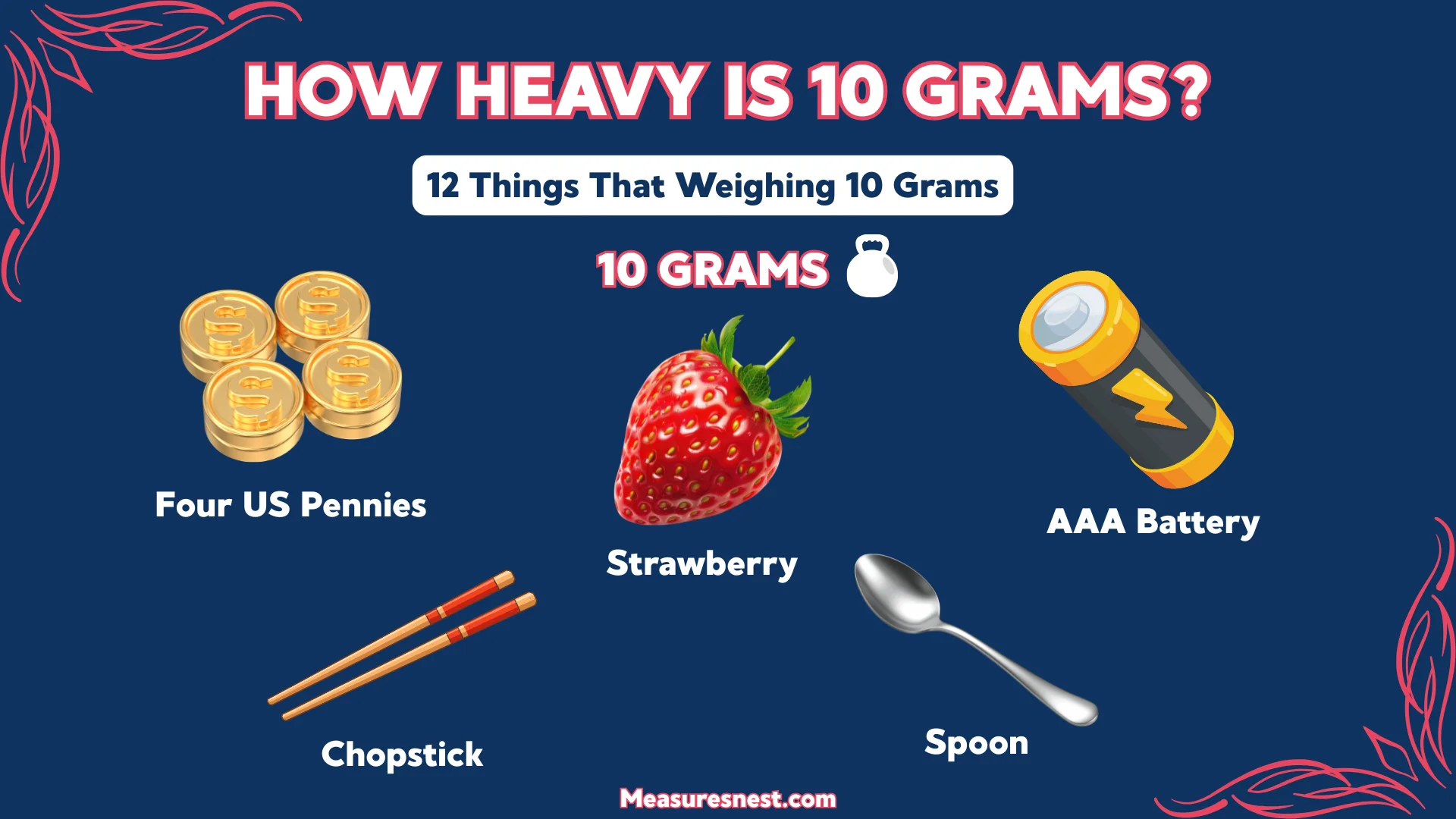
How Heavy Is 10 Grams? 15 Daily-Use Items That Weigh 10 Grams
10 grams equals 0.35 ounces (oz) a weight so light it barely tips a kitchen scale, yet you interact with it constantly through coins, kitchen tools, and everyday food portions. It’s roughly the weight of four US pennies stacked in your palm, two teaspoons of granulated sugar measured into your morning coffee, or a single AAA battery pulled from a TV remote.
Whether you’re measuring ingredients without a scale, understanding a medication or supplement dosage, or simply curious about the tiny objects you handle every day, recognizing common 10-gram references gives you an instant reference point.
10 Gram Conversion Chart
| 10 Grams = | Value |
|---|---|
| 10 grams | 0.353 ounces |
| 10 grams | 0.01 kilograms |
| 10 grams | 10,000 milligrams |
| 10 grams | 0.321 troy ounces |
How Heavy Is 10 Grams?
10 grams (0.35 oz) is exactly ten times the weight of a single dollar bill or paperclip light enough to rest in your palm without noticing, but heavy enough for a kitchen scale to read clearly. Picture four US pennies stacked in a neat column: that small tower in your hand weighs almost exactly Ten grams (10,000 milligrams).
For most people, 10 grams feels like the lightest thing you’d consciously notice the weight of when picking it up. Grab a single AAA battery from your remote that slight resistance you feel against your fingers as you lift it is exactly what 10 grams (0.01 kg) feels like in real life.
Things That Weigh 10 Grams
These everyday items demonstrate exactly how heavy Ten grams is in real life. From kitchen staples to pocket items, this weight shows up consistently in the objects you reach for and use every single day.
Four US Pennies
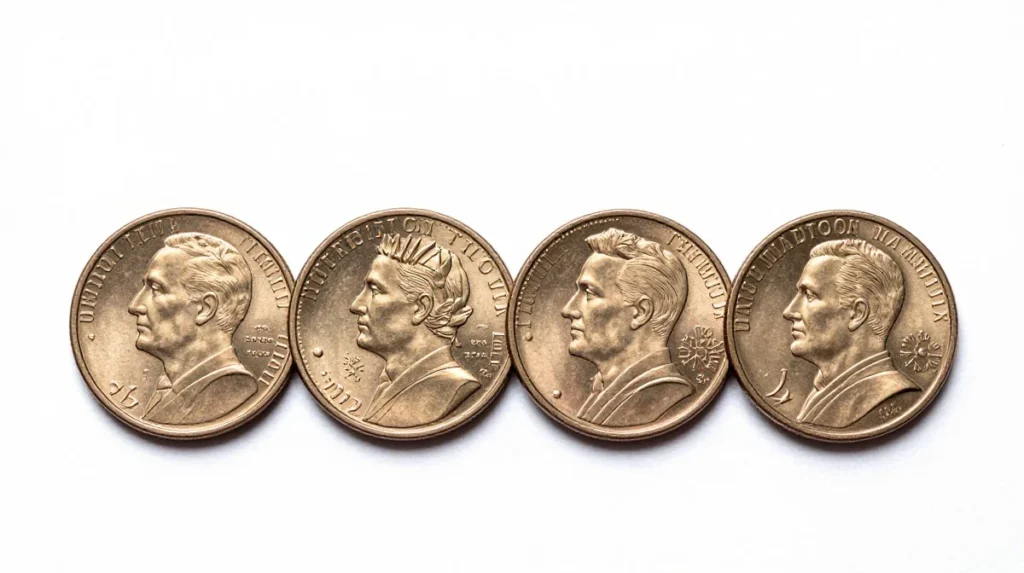
Four US pennies weigh almost exactly 10 grams (0.35 oz) combined each penny weighs precisely 2.5 grams (0.088 oz), and four of them multiply out to exactly 10 grams (10,000 mg). The US Mint produces every penny to this precise weight standard using a zinc core with a thin copper plating, keeping the weight consistent across every coin.
You carry this 10-gram reference in your pocket or coin purse every single day without thinking about it. Reach into your change and pull out four pennies right now — that small handful of coins in your palm weighs exactly Ten grams (0.35 oz).
Two Teaspoons of Granulated Sugar
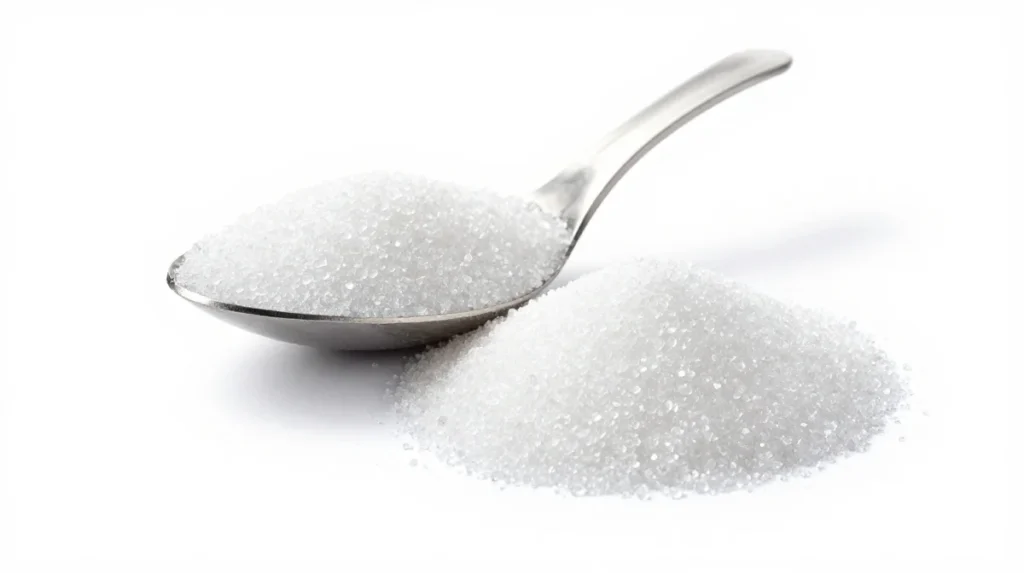
Two level teaspoons of granulated white sugar weigh approximately 10 grams (0.35 oz) — a measurement bakers and nutritionists use constantly when calculating calories and sweetness ratios. Each level teaspoon of granulated sugar weighs approximately 4 to 5 grams (0.14 to 0.18 oz), making two teaspoons a perfectly reliable 10-gram (10,000 mg) reference for your kitchen.
Home bakers and coffee drinkers measure sugar by the teaspoon in kitchens worldwide every single morning. Scoop two level teaspoons of sugar from your sugar bowl right now that small white pile on your spoon weighs exactly 10 grams (0.35 oz).
Single Wooden Chopstick
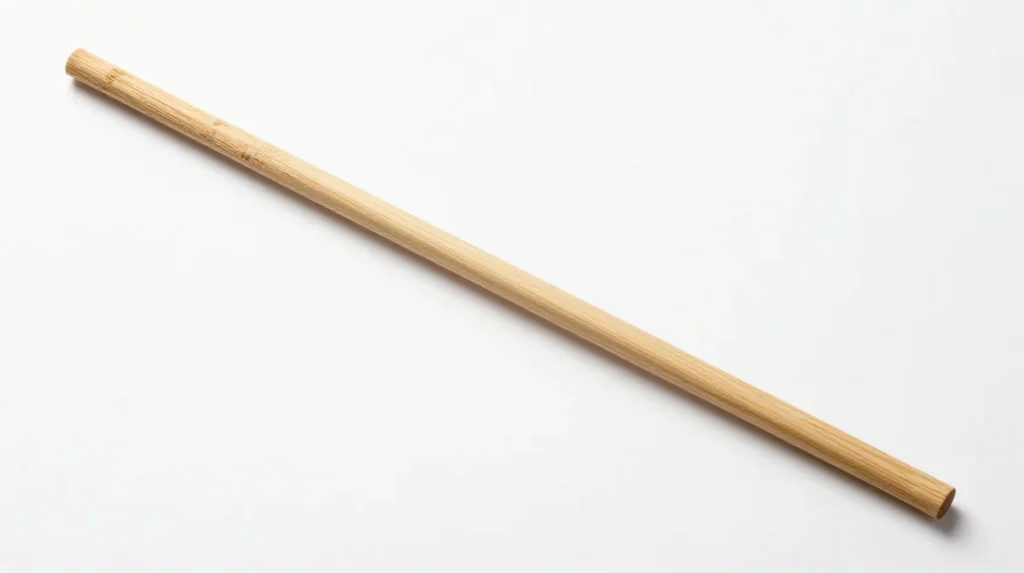
A single wooden disposable chopstick weighs approximately 10 grams (0.35 oz) most of that weight distributed along its tapered length of about 9 inches (22.9 cm). This consistent weight comes from the birch or bamboo wood used in standard disposable chopstick manufacturing, which stays remarkably uniform across production batches.
Billions of disposable wooden chopsticks are used at restaurants and takeout meals worldwide every single day. Pull apart a pair of disposable chopsticks the next time you order Asian food one of those sticks in your hand weighs almost exactly Ten grams (0.35 oz).
Ten Standard Paperclips
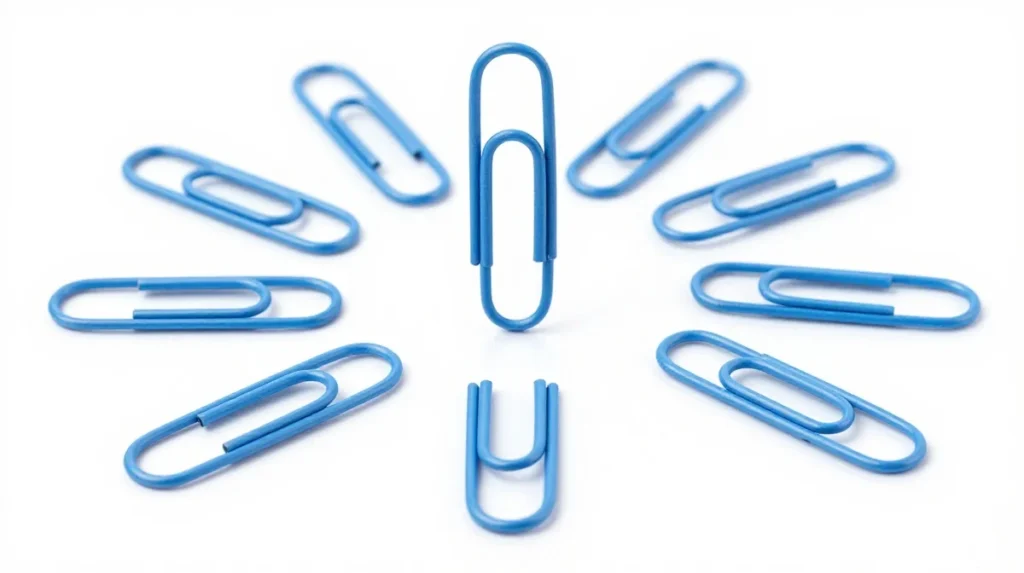
Ten standard metal paperclips combined weigh approximately 10 grams (0.35 oz) — since each individual Gem-style paperclip weighs almost exactly 1 gram (0.035 oz). This makes a small handful of ten clips one of the most convenient and precise improvised weights you’ll find in any office or home desk drawer.
Paperclips sit in virtually every desk drawer, office, and school supply kit around the world and get used every single day. Count out ten standard clips from your desk drawer right now that small cluster of metal in your palm weighs exactly 10 grams (0.35 oz).
AAA Battery
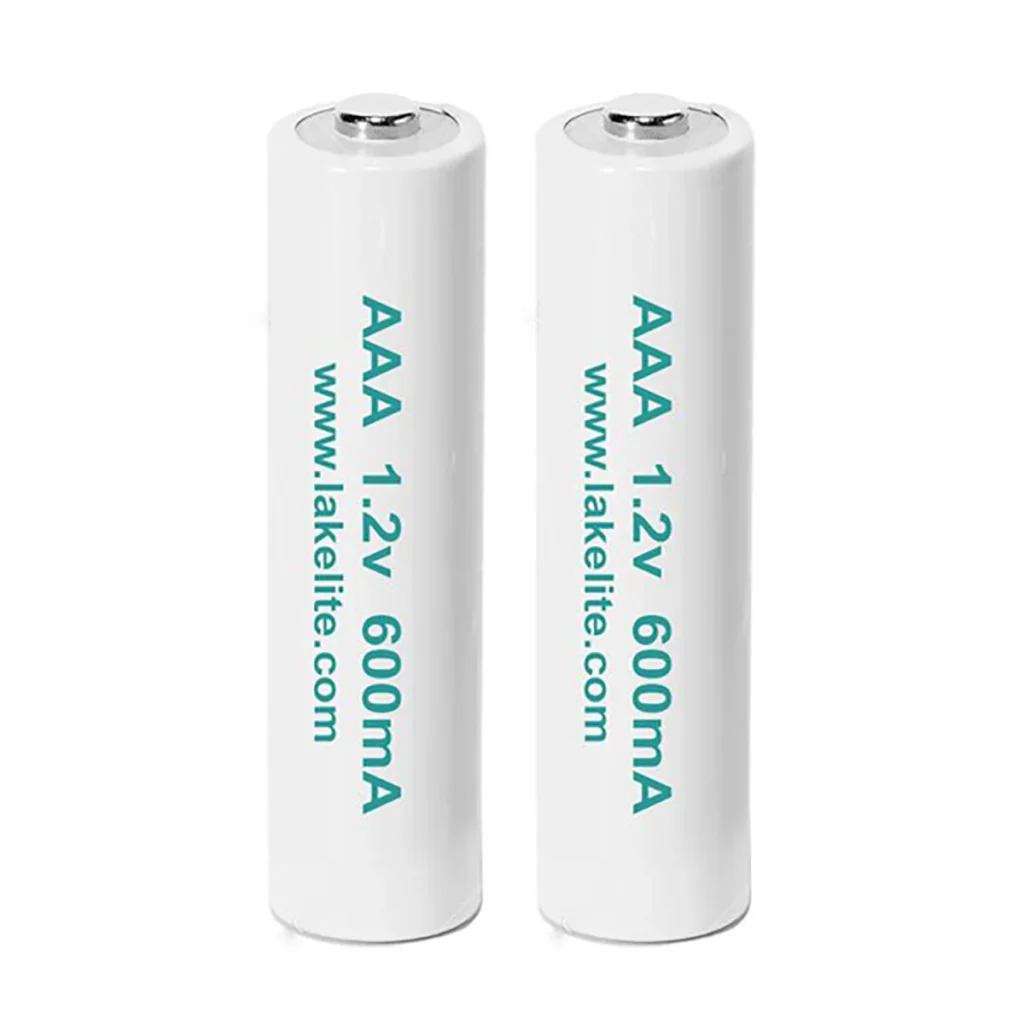
A standard AAA battery the slim cell that powers remote controls, small flashlights, and wireless computer mice — weighs approximately 11.5 grams (0.41 oz), landing very close to the 10-gram (0.35 oz) mark. Some lighter alkaline AAA models come in right at or just below 10 grams (10,000 mg) depending on the brand and chemistry used.
AAA batteries power devices in virtually every home and office on earth and get replaced by consumers millions of times every week worldwide. Pull a single AAA out of your TV remote or flashlight — that slim little cylinder in your fingers weighs right around 10 grams (0.35 oz).
Two Tablespoons of Water
Two tablespoons of water weigh almost exactly 30 grams (1.06 oz) — but two teaspoons of water, or approximately 10 ml (milliliters) of water, weigh precisely 10 grams (0.35 oz). This works because 1 milliliter of water equals exactly 1 gram by the definition of the metric system, making 10 ml of water a perfectly accurate 10-gram (10,000 mg) reference.
This ml-to-gram water relationship is one of the most useful conversions in cooking, medicine, and laboratory science worldwide. Measure exactly 2 teaspoons (10 ml) of water into a small cup what you poured weighs precisely Ten grams (0.35 oz), confirmed by the metric system itself.
Small Steel Spoon
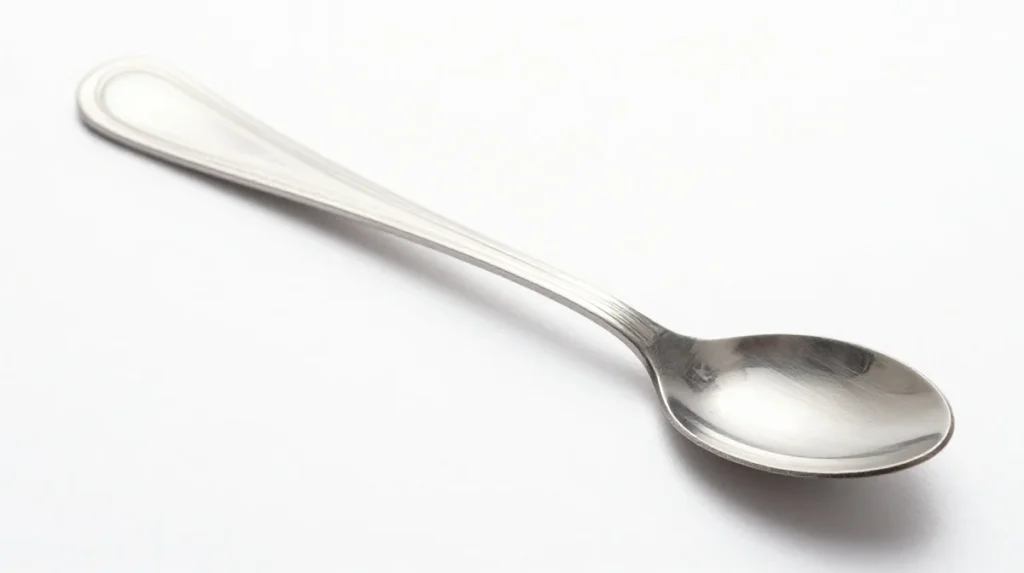
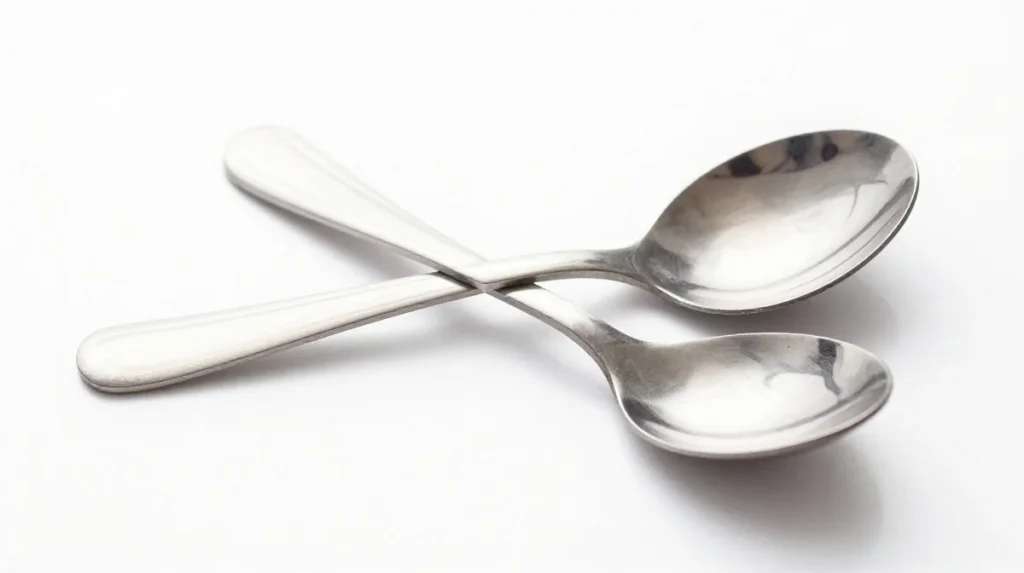
A small stainless steel teaspoon — the everyday cutlery piece used for stirring coffee and eating dessert — weighs approximately 10 grams (0.35 oz) on a kitchen scale. Cutlery manufacturers and flatware designers produce standard teaspoons within the 9 to 12 gram (0.32 to 0.42 oz) range, with lighter economy sets landing right at 10 grams (10,000 mg).
Teaspoons are used at every meal, in every coffee cup, and at every breakfast table in hundreds of millions of homes worldwide. Pick up a teaspoon from your cutlery drawer right now — that familiar piece of silverware in your grip weighs approximately 10 grams (0.35 oz).
Two Sheets of Standard Printer Paper
Two sheets of standard 80 gsm (grams per square meter) printer paper weigh approximately 10 grams (0.35 oz) combined each A4 (210 mm × 297 mm / 8.27 in × 11.69 in) sheet weighs approximately 5 grams (0.18 oz) at this standard paper weight. Paper engineers and printing industry professionals use the gsm rating to specify paper weight, and 80 gsm is the universal standard for office printing and photocopying worldwide.
Billions of sheets of 80 gsm printer paper run through office printers and photocopiers around the world every single day. Pick up two sheets from your printer’s paper tray right now those two lightweight pages together weigh exactly 10 grams (0.35 oz).
Large Strawberry
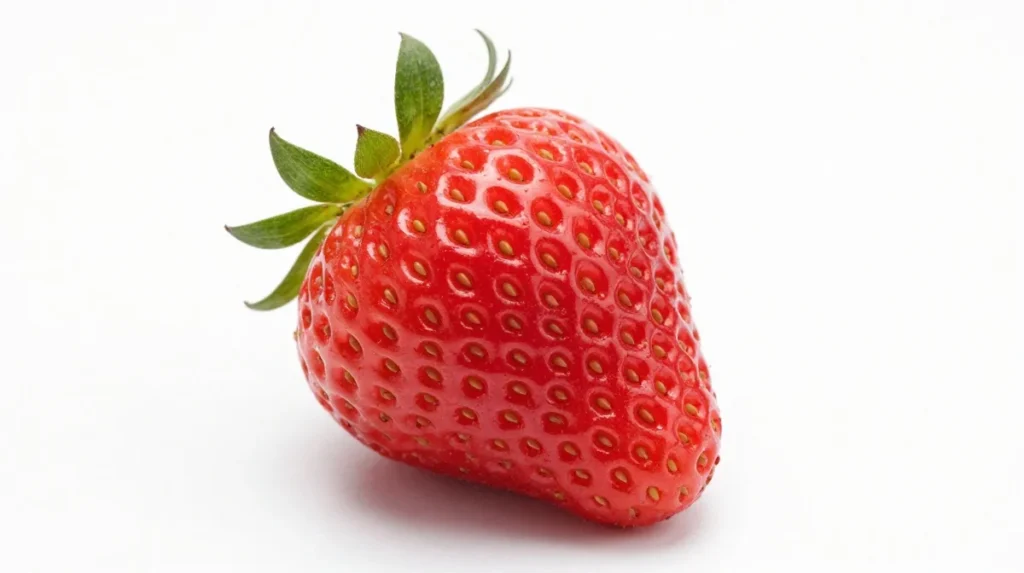
A small to medium fresh strawberry — the kind sold loose or in a punnet at any grocery store — weighs approximately 10 to 15 grams (0.35 to 0.53 oz), with smaller berries landing right at 10 grams (10,000 mg). Produce buyers, grocery distributors, and fruit sorting equipment manufacturers categorize strawberries by individual berry weight, with the smallest commercially sold grade sitting in this 10-gram (0.35 oz) range.
Strawberries are one of the most popular and widely consumed fruits in the world, appearing in homes, markets, and restaurants in every season. Pick out a small strawberry from your next punnet that single bright berry in your palm weighs approximately Ten grams (0.35 oz).
Small Key or Keychain
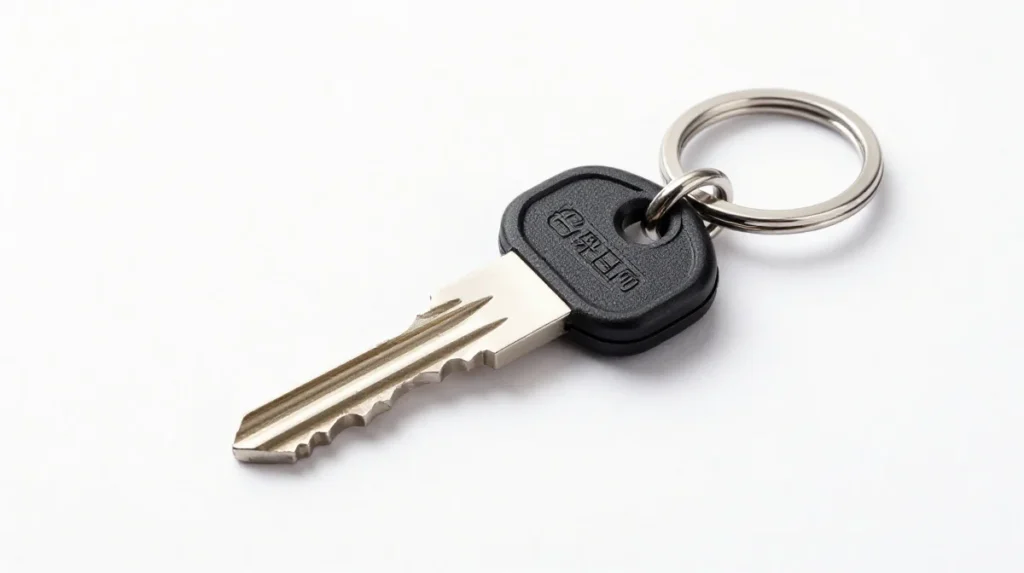
A standard house key or small keychain pendant weighs approximately 10 grams (0.35 oz) the brass or nickel-plated steel construction giving the small key its characteristic heft despite its compact size. Locksmiths and key manufacturers produce residential keys within the 8 to 12 gram (0.28 to 0.42 oz) range depending on key length and metal thickness, with standard door keys landing close to 10 grams (10,000 mg).
Keys are handled multiple times every single day by virtually every adult who lives in or accesses any building worldwide. Pull a single house key off your keyring right now that familiar metal shape in your fingers weighs approximately 10 grams (0.35 oz).
Half a AA Battery
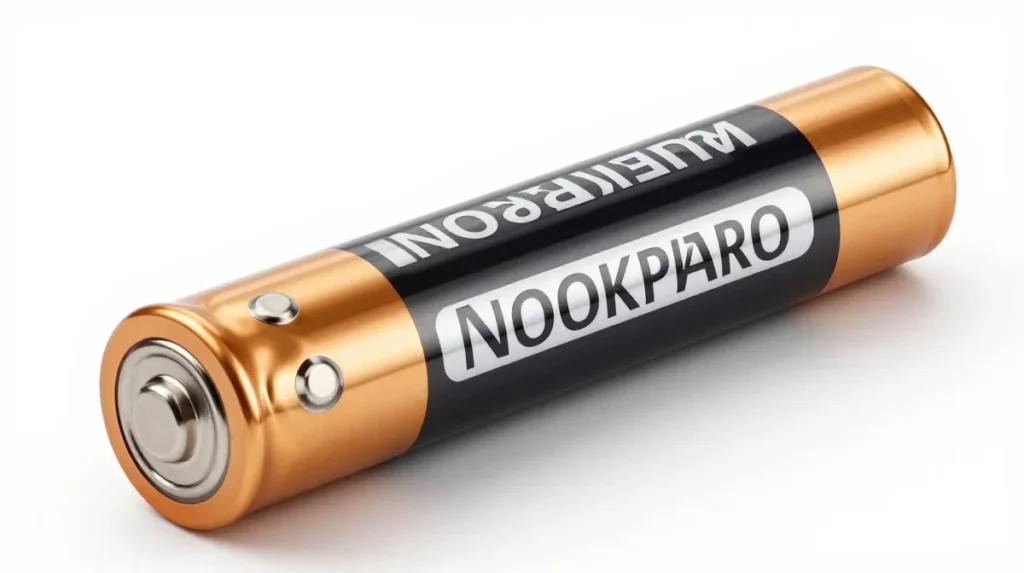
A standard AA battery weighs approximately 23 grams (0.81 oz) in total — meaning exactly half a AA battery in weight equals approximately 11.5 grams (0.41 oz), landing very close to the 10-gram (0.35 oz) reference. More usefully, lighter rechargeable NiMH AA batteries can weigh as little as 20 grams (0.71 oz), making half their weight land right at 10 grams (10,000 mg).
AA batteries power more household devices than any other battery size, appearing in remotes, toys, clocks, and cameras in virtually every home on earth. Hold a single AA battery and imagine half its weight that mental reference gives you a fast, reliable feel for exactly 10 grams (0.35 oz).
Two Level Teaspoons of Butter
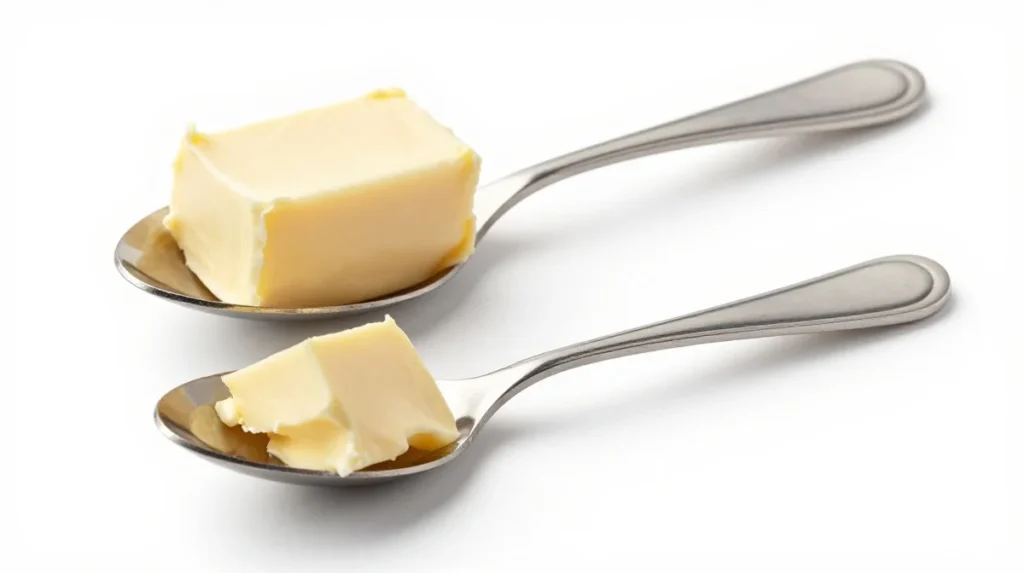
Two level teaspoons of softened butter weigh approximately 10 grams (0.35 oz) — a measurement that home bakers, toast spreaders, and recipe developers reach for constantly in everyday cooking. Each level teaspoon of butter weighs approximately 4.7 to 5 grams (0.17 to 0.18 oz), so two teaspoons lands almost exactly at 10 grams (10,000 mg).
Butter is spread, melted, and measured in kitchens worldwide at practically every meal of every day. Scoop two level teaspoons of butter from your dish right now — that small golden portion weighs almost exactly 10 grams (0.35 oz), a reference you can taste.
10 Grams at Home – 3 Simple Methods
You don’t need a precision lab scale to work with 10-gram estimates. These three methods give you a reliable reference using items you already own.
1. Four-Penny Stack
Stack exactly four US pennies in a column. Each penny weighs 2.5 grams (0.088 oz), so four pennies equal exactly 10 grams (0.35 oz) with mathematical precision. This is the fastest and most accurate coin-based weight reference for 10 grams — and you can repeat it anywhere you have access to US currency.
2. Teaspoon Estimation
Measure two level teaspoons of water into a small container using a standard kitchen measuring spoon. Two teaspoons equals approximately 10 ml (milliliters) of water, which weighs exactly Ten grams (10,000 mg) by the definition of the metric system. This method works for water and water-like liquids and gives you a laboratory-accurate result with nothing more than a measuring spoon.
3. Digital Kitchen Scale
Place a small kitchen bowl or plate on your digital kitchen scale and press the tare (zero) button. Add your substance slowly until the display reads Ten grams (0.35 oz). A digital kitchen scale accurate to 1 gram (0.035 oz) available for under $15 (approximately PKR 4,000) at most home goods stores — gives you the most reliable and repeatable method for confirming any 10-gram measurement in your kitchen.
Read: How Heavy is 1 Gram?
Read: How Heavy Is 20 Kg?
Read: How Heavy is 100 Grams?
Read: Beer Can Dimensions
Read: How Long Is 3 Feet?
Read: How Long Is 20 Feet?
Frequently Asked Questions
How heavy is 10 grams in everyday terms?
10 grams (0.35 oz) is the weight of four US pennies, two teaspoons of sugar, or a single AAA battery. It equals 0.01 kilograms (kg) or 10,000 milligrams (mg). Most people describe 10 grams as a noticeable but very light weight present in the hand but easy to forget you’re holding.
What is the most accurate home reference for 10 grams?
The most accurate home reference for 10 grams (0.35 oz) is exactly four US pennies each penny is officially minted at 2.5 grams (0.088 oz), making four pennies a mathematically exact 10-gram reference. Two teaspoons of water (10 ml) is the second most accurate reference, equal to exactly 10 grams by the metric system’s definition. Both methods work without any scale equipment at all.
How many teaspoons equal 10 grams?
For granulated sugar, two level teaspoons equal approximately 10 grams (0.35 oz). For water, exactly two teaspoons (10 ml) equal precisely 10 grams (10,000 mg). For butter, two level teaspoons equal approximately 9.4 to 10 grams (0.33 to 0.35 oz) close enough for most everyday cooking measurements.
Is 10 grams a lot or a little?
10 grams (0.35 oz) is a very small weight by everyday standards less than half an ounce and lighter than most coins you’d keep in your pocket. In cooking, however, 10 grams is a meaningful and precise amount it represents two teaspoons of sugar, two teaspoons of butter, or a significant pinch of spice that noticeably changes a recipe’s flavor. In medicine and supplements, 10 grams (10,000 mg) is a substantial dose that requires careful measurement.
Conclusion
10 grams appears constantly in your daily life through four US pennies, AAA batteries, teaspoons of sugar, and the teaspoon in your kitchen drawer. This practical measurement equals 0.35 ounces or the weight of ten standard paperclips laid side by side in your palm, a reference you can build from any desk drawer on earth.
Now that you recognize common Ten-gram items, you can estimate small weights without a scale, measure cooking ingredients more confidently, and understand supplement and medication dosages with greater clarity.