Calf Measurement: Size Complete Guide 2026
Your calf measurement is the circumference of your lower leg at its widest point the single most important number for finding boots, compression socks, and knee-high stockings that actually fit. Most people never measure their calf and end up with footwear that pinches, gaps, or slides down all day. One quick measurement fixes all of that permanently.
Whether you’re buying riding boots online, shopping for medical compression stockings, or sizing up a pair of knee-high fashion boots, knowing your exact calf size gives you an instant reference point.
What You Need to Measure Your Calf
Getting an accurate calf measurement takes about 60 seconds and requires only two things. Grab both before you start the process goes much faster when everything is ready.
You need:
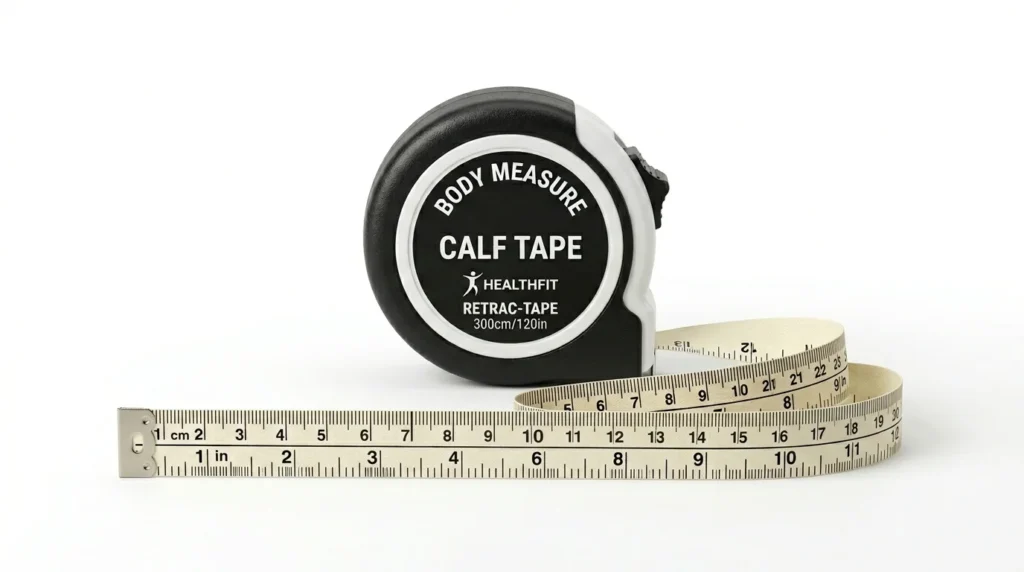
- A flexible measuring tape (cloth or soft plastic not a metal tape measure)
- A mirror or a friend to help read the number accurately
A cloth measuring tape costs less than $5 (around £4 or €5) at any fabric, craft, or pharmacy store. If you don’t have one, a strip of string or ribbon works just mark it with a pen and measure it against a ruler afterward.
How to Measure Your Calf Correctly
Getting the right calf measurement comes down to body position and tape placement. Follow these steps exactly and you’ll get a reliable number on the first try.
Step 1 Stand up straight. Put on the socks or thin tights you plan to wear with your boots or stockings. Stand on a flat floor with your weight evenly on both feet.
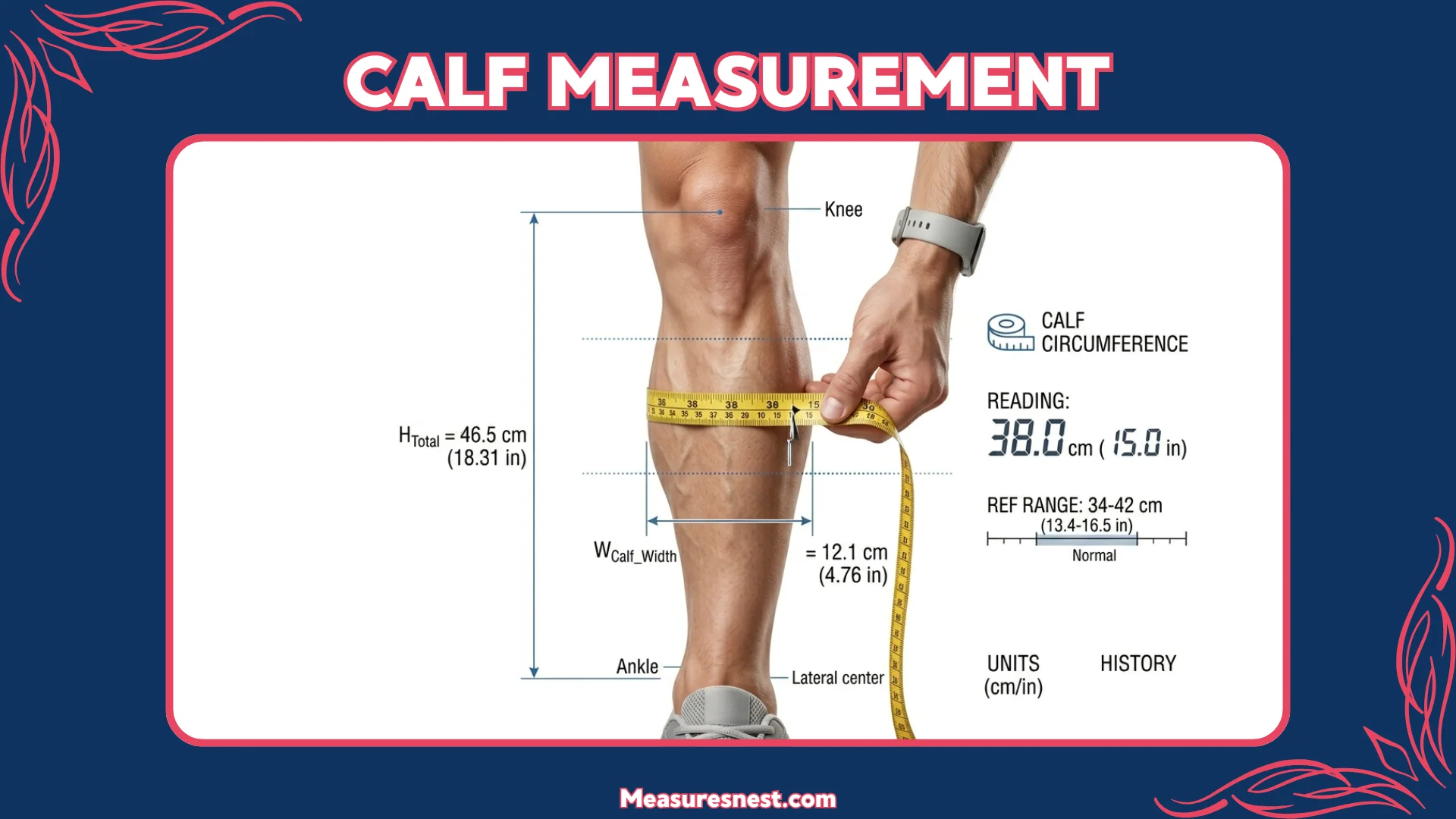
Step 2 Find the widest point. Run your fingers down the back of your lower leg. The widest, fullest part of your calf muscle is your measuring point usually located 4 to 6 inches (10.2 to 15.2 cm) below the back of your knee.
Step 3 Wrap the tape horizontally. Hold the measuring tape flat against your skin and wrap it around the widest point of your calf in a level, horizontal circle. Keep it snug but not tight you should be able to slide one finger underneath it easily.
Step 4 Read the number. Look at where the tape meets the zero mark. Read the number in inches or centimeters. Write it down immediately.
Step 5 Measure both legs. Most people have one calf that measures slightly larger than the other. Always record both numbers and use the larger measurement when buying footwear or compression garments.
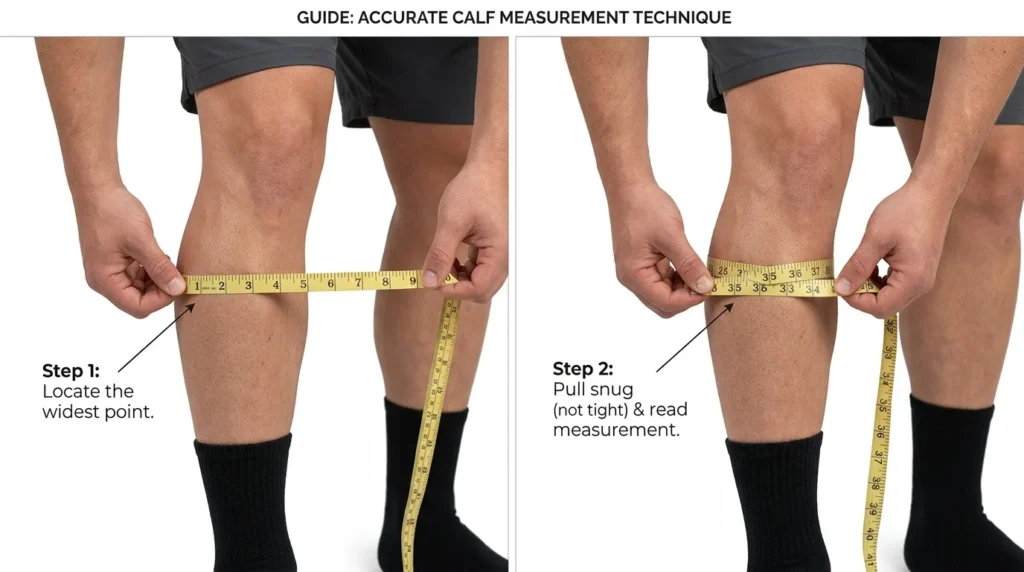
Pro tip from podiatrists: Measure your calf in the afternoon or evening. Your legs naturally swell slightly during the day, so an afternoon measurement gives you the most accurate fit for all-day wear.
Adjusting Your Calf Measurement for Boot Fit
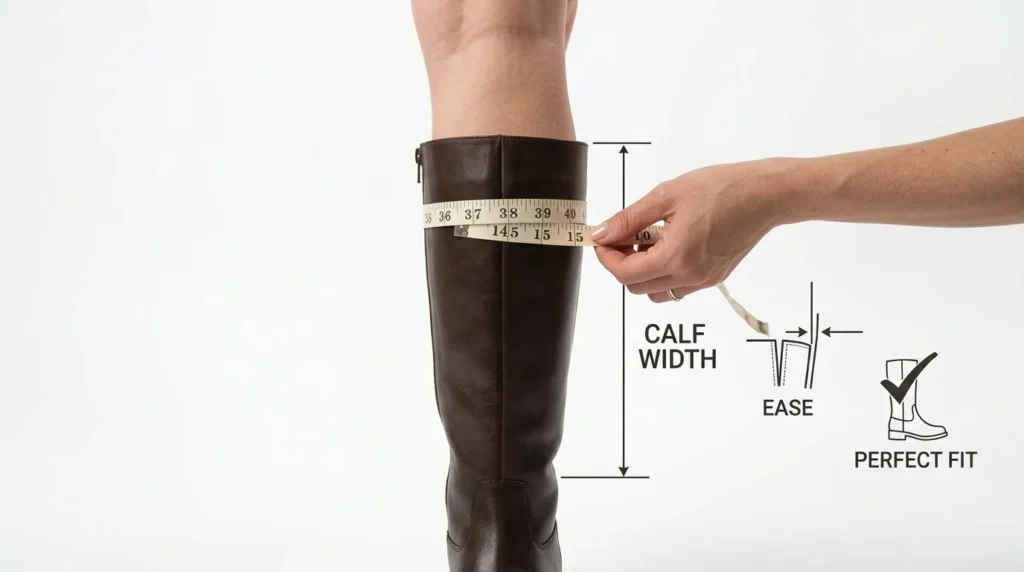
Your raw calf measurement number is a starting point not a final answer. Boot manufacturers build in different amounts of ease (extra room) depending on boot style and intended use.
Add 0.5 to 1 inch (1.3 to 2.5 cm) to your measurement for a comfortable everyday fit with room to move and layer socks. This is the right adjustment for most fashion boots, Chelsea boots, and casual knee-highs.
Add 1.5 to 2 inches (3.8 to 5.1 cm) for riding boots, equestrian footwear, and tall work boots where you need space for thick socks and full ankle movement. Equestrian outfitters and boot fitters always calculate this extra ease before recommending a size.
Use your exact measurement (zero ease) for compression socks, medical stockings, and therapeutic garments. These products are designed to fit snugly adding ease defeats the purpose and reduces their effectiveness.
Calf Size Categories
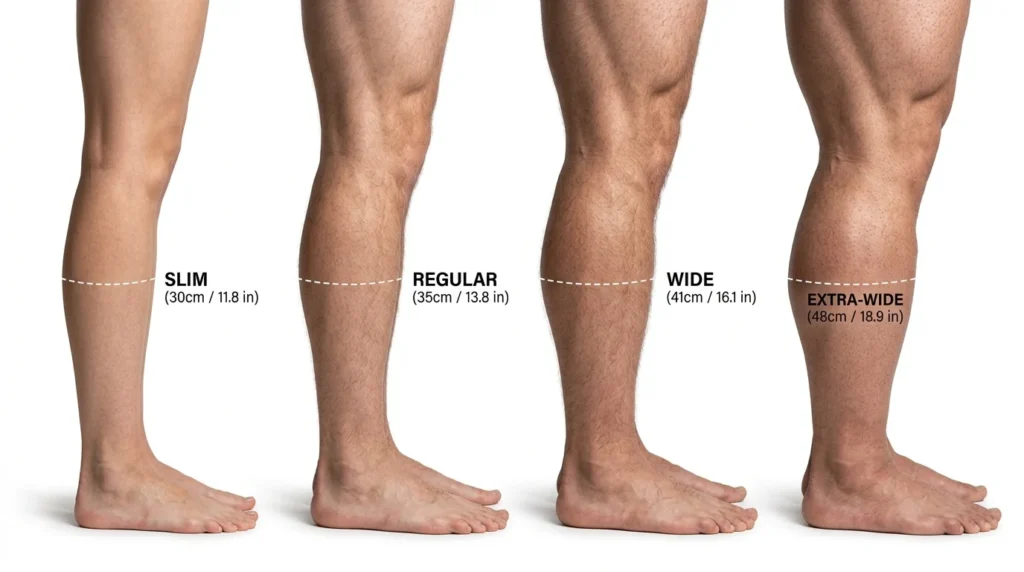
The boot and hosiery industry uses four standard calf size categories. Find the range your measurement falls into this tells you exactly which sizing column to check when reading any brand’s size chart.
| Category | Calf Circumference (Inches) | Calf Circumference (CM) | Common Label |
|---|---|---|---|
| Slim/Narrow | Under 13 inches | Under 33 cm | S / Slim |
| Regular/Standard | 13 to 15.5 inches | 33 to 39.4 cm | M / Regular |
| Wide | 15.5 to 18 inches | 39.4 to 45.7 cm | W / Wide |
| Extra Wide | Over 18 inches | Over 45.7 cm | XW / Extra Wide |
Slim/Narrow calves measure under 13 inches (33 cm) around. Slim-cut riding boots and fitted fashion boots are specifically tailored for this range. Many European boot brands design their standard cut for slim calves.
Regular/Standard calves fall between 13 and 15.5 inches (33 to 39.4 cm) the range that fits most off-the-shelf boot sizing without any modification. The majority of women’s boots in North America and Europe target this category.
Wide calves measure 15.5 to 18 inches (39.4 to 45.7 cm) and require boots specifically labeled “wide calf” or “W.” Many mainstream brands now carry wide-calf options as a standard line, not a specialty item.
Extra Wide calves exceed 18 inches (45.7 cm) and need extra-wide-calf boots or adjustable shaft designs. Brands like Torrid, Avenue, and Duo Boots specialize in this category with dedicated extended-width collections.
Calf Measurement Chart
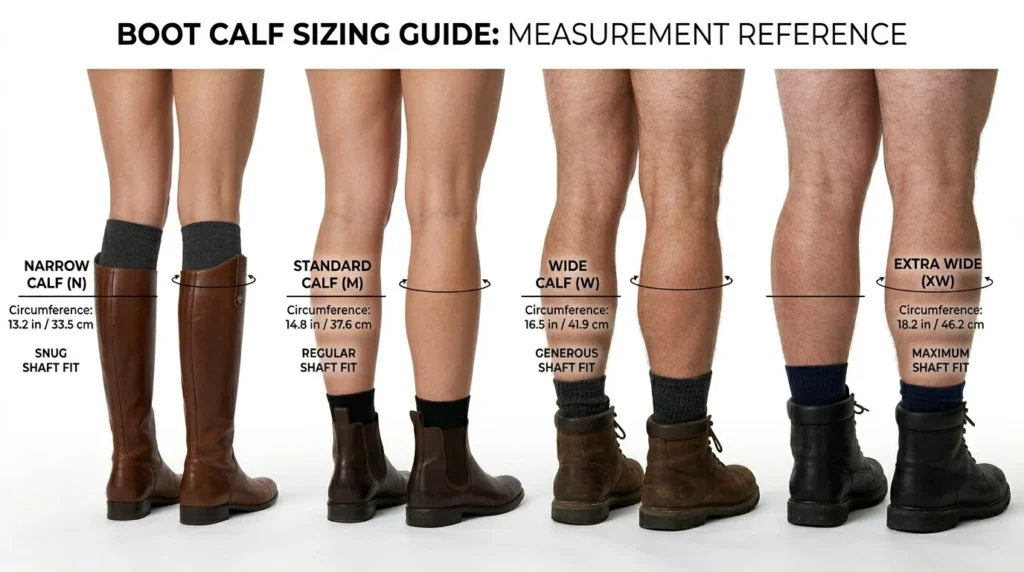
Use this reference chart to match your measurement to the correct boot shaft size across US, UK, and European sizing systems.
| Calf Circumference | US Boot Shaft Size | UK Equivalent | EU Equivalent | Category |
|---|---|---|---|---|
| Under 12 inches (30.5 cm) | XS / Slim | XS | XS | Slim |
| 12–13 inches (30.5–33 cm) | S / Slim | S | S | Slim |
| 13–14 inches (33–35.6 cm) | M / Regular | M | M | Regular |
| 14–15 inches (35.6–38.1 cm) | M–L / Regular | M–L | M–L | Regular |
| 15–15.5 inches (38.1–39.4 cm) | L / Regular | L | L | Regular |
| 15.5–16.5 inches (39.4–41.9 cm) | W / Wide | W | W | Wide |
| 16.5–18 inches (41.9–45.7 cm) | XW / Wide | XW | XW | Wide |
| Over 18 inches (45.7 cm) | XXW / Extra Wide | XXW | XXW | Extra Wide |
Important: Always check the specific brand’s own size chart before ordering. Calf shaft widths vary significantly between brands even within the same labeled category. Use this chart as your starting guide, not your final word.
Calf Measurement Matters for Health
Buying the right compression socks becomes effortless when you know your exact calf measurement. Compression garments sized to your calf deliver the correct pressure gradient which directly improves circulation and reduces swelling on long flights or work shifts.
Finding boots that fit perfectly online saves you time, money, and frustration. Returning ill-fitting boots costs shipping fees and delays knowing your calf size in inches and centimeters lets you shop any brand, anywhere, with confidence.
Tracking your calf measurement over time gives you useful health information. Sudden increases in calf circumference can signal fluid retention or swelling, which doctors and nurses use as an early indicator of circulation changes worth monitoring.
Getting accurate calf measurements helps athletes choose the right sports gear. Cycling leg warmers, ski boot liners, and athletic compression sleeves all rely on calf circumference for a performance fit the wrong size causes discomfort, slipping, and reduced effectiveness.
Read: Counter Measurement Guide
Read: Full Size Bed Measurements
Read: Buttload Measurements
Read: Twin Bed Measurement
Read: Measurement of Queen Bed
Read: How Long Is 2 Feet?
Frequently Asked Questions
How do I measure my calf at home?
Stand up straight and wrap a flexible cloth tape measure around the widest part of your lower leg. Keep the tape horizontal and snug but not tight one finger should slide underneath it. Read the number in inches or centimeters, and always measure both legs, using the larger number.
What is the average calf measurement for women?
The average calf circumference for adult women is approximately 14 to 15 inches (35.6 to 38.1 cm). This falls in the Regular/Standard category and fits most off-the-shelf fashion boots labeled as standard width. Individual measurements vary based on height, build, and muscle development.
What is the average calf measurement for men?
The average calf circumference for adult men is approximately 15 to 16.5 inches (38.1 to 41.9 cm). Men’s boots and compression garments typically account for this wider range in their standard sizing. Always measure your own calf rather than relying on averages for the most accurate fit.
How do I know if I have wide calves?
You have wide calves if your calf circumference measures 15.5 inches (39.4 cm) or more. Look specifically for boots and knee-highs labeled “Wide Calf” or “W” on the product page. Many retailers now filter by calf width in their search tools, making it easier to find your size quickly.
How much ease should I add to my calf measurement for boots?
Add 0.5 to 1 inch (1.3 to 2.5 cm) for standard fashion boots and everyday wear. Add 1.5 to 2 inches (3.8 to 5.1 cm) for riding boots or thick-sock layering. Use zero ease your exact measurement for compression socks and medical stockings that require a snug, therapeutic fit.
Can my calf measurement change over time?
Yes, your calf measurement can change due to weight changes, muscle gain from exercise, pregnancy, or leg swelling from medical conditions. Re-measure every time you buy new boots or compression garments especially if more than 6 to 12 months have passed since your last measurement.
Conclusion
Calf measurement appears constantly in your daily life through boot shopping, compression sock sizing, sports gear selection, and health monitoring. This practical number typically between 12 and 20 inches (30.5 to 50.8 cm) for most adults is the single most useful body measurement you can have ready before any footwear purchase.
Now that you understand how to take your calf measurement correctly, you can shop for boots online with confidence, choose the right compression garments without guessing, and track your leg health over time with a simple number.