Stair Dimensions: Size, Height & Diameter 2026
Stair dimensions define how safe, comfortable, and code-compliant your staircase is appearing in every home, office building, and public space you visit. A standard stair step is 7 inches tall (17.8 cm) and 11 inches deep (27.9 cm) roughly the height of a hardcover novel standing upright and about as deep as a standard sheet of paper.
Whether you’re building a new staircase, renovating your home, or checking a property for code compliance, knowing common stair dimensions gives you an instant reference point. Let’s explore the sizes, heights, and measurements that perfectly define this essential architectural element.
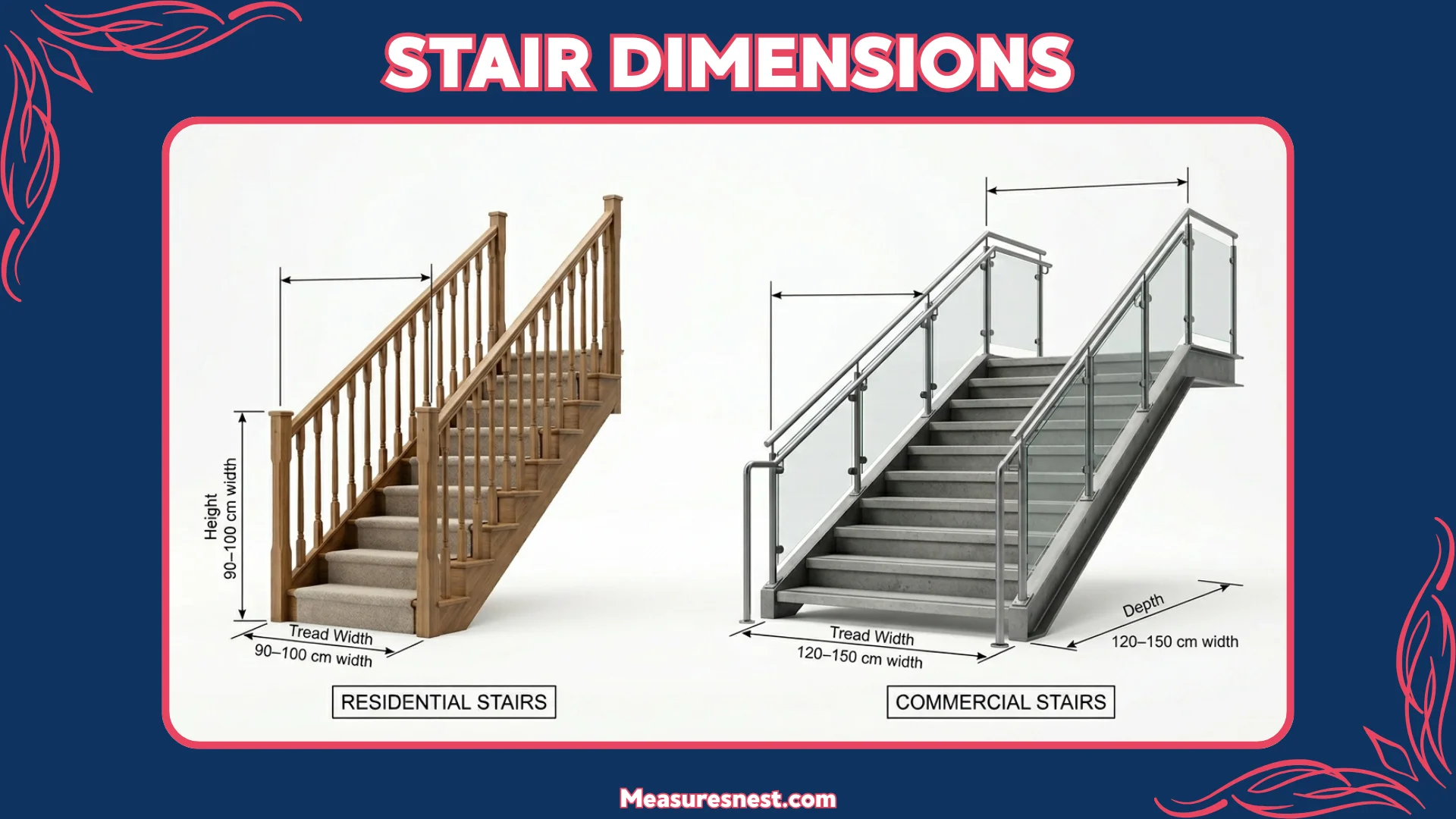
Quick Conversion Box
| Measurement | Value |
|---|---|
| 7 inches (standard riser height) | 17.78 centimeters |
| 11 inches (standard tread depth) | 27.94 centimeters |
| 36 inches (minimum stair width) | 91.44 centimeters |
| 6 feet 8 inches (headroom clearance) | 203.2 centimeters |
Standard Stair Height
Standard stair height refers to the riser the vertical face of each step. Building codes in the USA set the maximum riser height at 7.75 inches (19.7 cm) for residential stairs under the International Residential Code (IRC). The minimum riser height is 4 inches (10.2 cm). Most builders target exactly 7 inches (17.8 cm) as the comfortable sweet spot.
Your leg naturally lifts about 7 inches (17.8 cm) when climbing stairs at a comfortable pace. A riser taller than 8 inches (20.3 cm) starts to feel steep and tiring like climbing a ladder. Anything shorter than 4 inches (10.2 cm) causes people to shuffle awkwardly and trip.
| Riser Type | Height | Centimeters |
|---|---|---|
| Minimum (IRC) | 4 in | 10.2 cm |
| Ideal Residential | 7 in | 17.8 cm |
| Maximum (IRC) | 7.75 in | 19.7 cm |
| Maximum (IBC Commercial) | 7 in | 17.8 cm |
Standard Stair Size
A complete stair step combines two measurements: the riser (height) and the tread (depth). The standard tread depth measures 11 inches (27.9 cm) under the IRC about the length of a standard US letter-sized sheet of paper. The riser and tread together follow the rule: riser + tread = 17 to 18 inches (43.2 to 45.7 cm) for the most comfortable climb.
Builders and architects use the 7-11 rule as a reliable starting point. A 7-inch (17.8 cm) riser paired with an 11-inch (27.9 cm) tread gives you exactly 18 inches (45.7 cm) — perfectly within the comfort zone. This combination suits most adults with average stride lengths.
| Dimension | Standard Size | Centimeters | Millimeters |
|---|---|---|---|
| Riser Height | 7 in | 17.8 cm | 178 mm |
| Tread Depth | 11 in | 27.9 cm | 279 mm |
| Riser + Tread | 18 in | 45.7 cm | 457 mm |
| Minimum Tread (IRC) | 10 in | 25.4 cm | 254 mm |
Stair Diameter for Spiral and Curved Stairs
Spiral and curved stairs use diameter as their key measurement instead of width. A standard spiral staircase has a diameter of 60 inches (152.4 cm) about the length of a standard bathtub. Compact residential spiral stairs can go as small as 42 inches (106.7 cm) in diameter, while commercial models reach 72 inches (182.9 cm) or wider.
The diameter of a spiral stair determines how much floor space it uses and how comfortable the climb feels. A 48-inch (121.9 cm) diameter works for occasional use like attic access. A 60-inch (152.4 cm) or larger diameter is required when spiral stairs serve as a primary staircase under most building codes.
| Spiral Stair Type | Diameter | Centimeters |
|---|---|---|
| Compact/Loft Access | 42–48 in | 106.7–121.9 cm |
| Standard Residential | 60 in | 152.4 cm |
| Comfortable Primary Use | 64–72 in | 162.6–182.9 cm |
| Commercial/Public | 72+ in | 182.9+ cm |
Stair Width Dimensions
Ideal Stair Width for Comfort and Accessibility
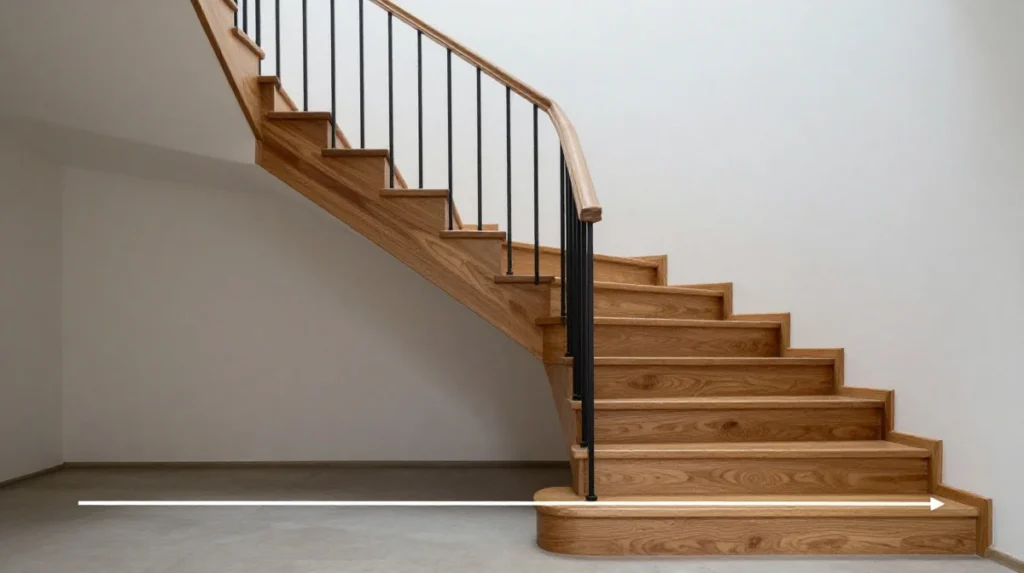
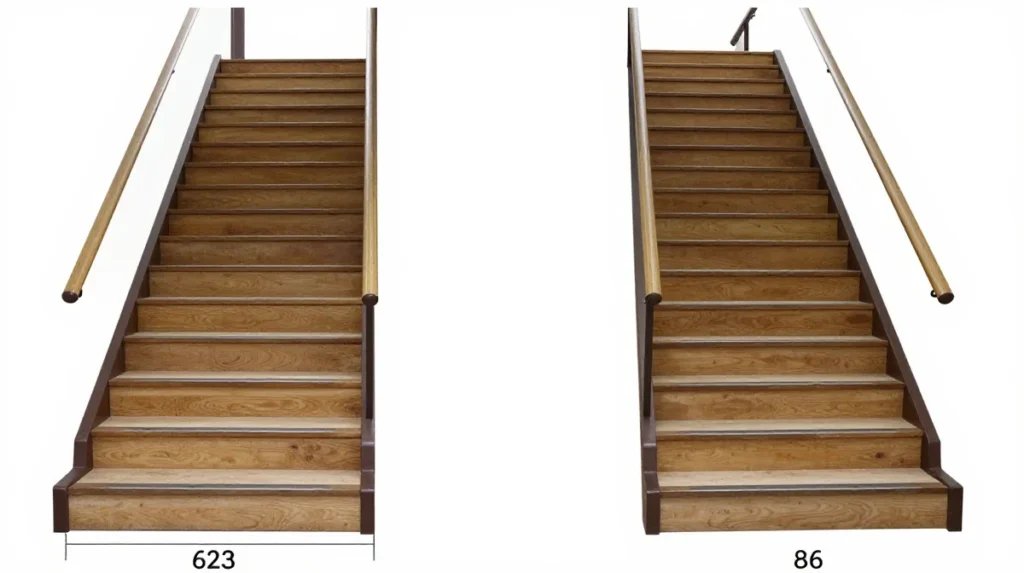
The minimum stair width for residential use is 36 inches (91.4 cm) under the IRC. This allows one adult to walk comfortably while gripping the handrail. For two people to pass each other safely, you need at least 48 inches (121.9 cm) — about the width of a standard double door.
Wheelchair-accessible ramps and commercial stairs require a minimum of 44 inches (111.8 cm) of clear width under the ADA. Most comfortable home staircases measure 42 to 48 inches (106.7 to 121.9 cm) wide. Designers and architects recommend 48 inches (121.9 cm) as the ideal width for new residential builds.
Factors Influencing Stair Width Dimensions
Several factors determine what stair width you need. The number of users matters most a private basement stair can stay at 36 inches (91.4 cm), while a main entry stair in a family home benefits from 48 inches (121.9 cm). Building type, local codes, and budget all play a role in the final measurement.
Handrails reduce the usable width of your staircase. Each handrail projects about 4.5 inches (11.4 cm) into the walking space. The IRC requires the clear width — the space between handrails to be at least 31.5 inches (80 cm), even if the overall stair is 36 inches wide.
| Stair Use | Minimum Width | Centimeters |
|---|---|---|
| Service/Attic/Basement | 36 in | 91.4 cm |
| Primary Residential | 36–48 in | 91.4–121.9 cm |
| Commercial (IBC) | 44 in | 111.8 cm |
| ADA Accessible | 44–60 in | 111.8–152.4 cm |
| Grand/Monumental | 60+ in | 152.4+ cm |
Additional Stair Dimension Elements
Headroom in Stair Dimensions
Headroom is the vertical clearance above your head as you climb the stairs. The IRC requires a minimum of 6 feet 8 inches (203.2 cm) of headroom measured vertically from the stair nosing. This equals the height of a standard US interior door — if you can walk through a door comfortably, you understand this clearance.
Commercial buildings under the IBC require 7 feet (213.4 cm) of headroom. Attic stairs, alternating tread stairs, and ship’s ladders may be exempt from standard headroom rules in some codes. Always measure your ceiling slope carefully before designing stairs under a slanted roof.
Nosing and Overhang in Stair Sizes
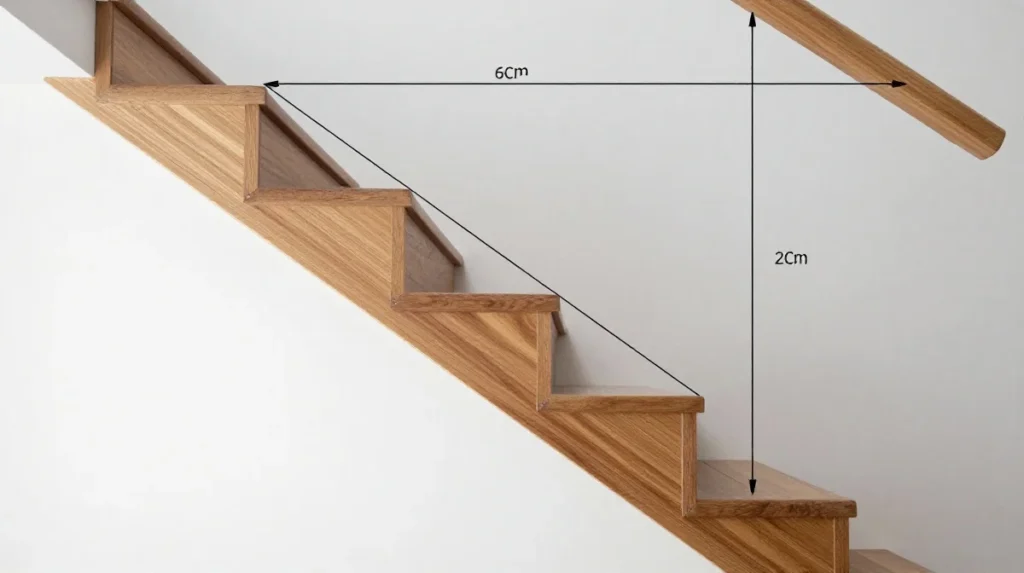
The nosing is the edge of the tread that extends beyond the riser face. The IRC requires a nosing projection of 0.75 to 1.25 inches (1.9 to 3.2 cm). This small overhang helps your foot land more securely on each step. It’s roughly the thickness of a typical pencil eraser.
Nosing must be consistent across all steps in a flight — you can’t mix different overhang depths. Rounded nosing edges are required when the nosing exceeds 0.5 inches (1.3 cm) in depth. Sharp square edges create a tripping hazard and fail code inspection.
Landing Dimensions for Safe Stair Heights
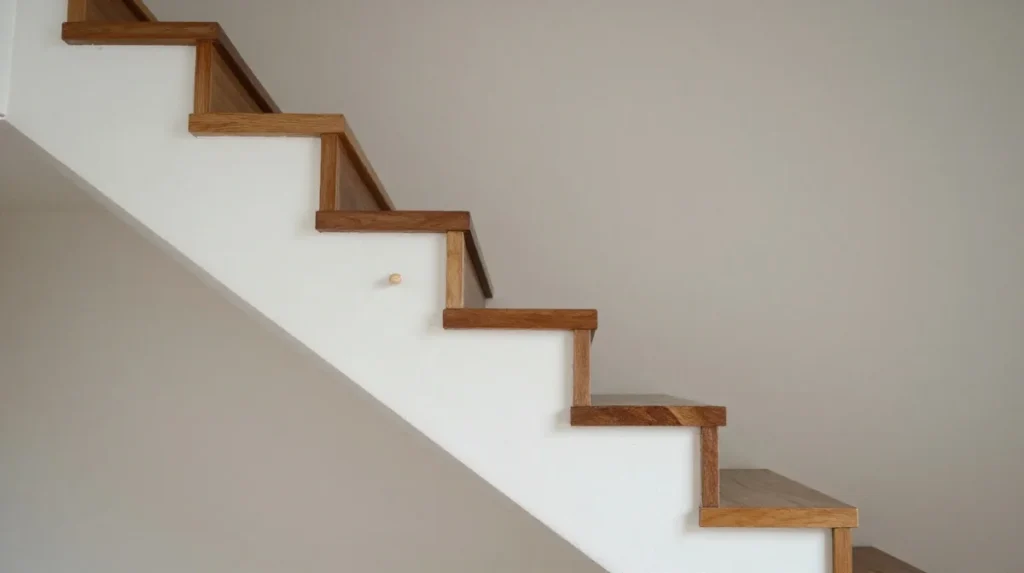
A landing is the flat platform at the top, bottom, or mid-point of a staircase. The IRC requires landings to be at least as wide as the stair itself and at least 36 inches (91.4 cm) deep in the direction of travel. A standard landing measures 36 × 36 inches (91.4 × 91.4 cm) — about the size of a large floor tile.
Landings break up long stair runs and give users a safe place to rest or change direction. You need a landing every 12 feet (3.66 m) of vertical rise. Without a landing, a long stair flight becomes dangerous — especially for elderly users and children.
Building Codes and Regulations for Stair Dimensions
IRC vs. IBC: Key Differences in the USA
The International Residential Code (IRC) governs single-family homes and small residential buildings. The International Building Code (IBC) covers commercial buildings, apartments, and public spaces. Both are widely adopted across US states, but they set different limits on stair dimensions.
| Dimension | IRC (Residential) | IBC (Commercial) |
|---|---|---|
| Max Riser Height | 7.75 in (19.7 cm) | 7 in (17.8 cm) |
| Min Tread Depth | 10 in (25.4 cm) | 11 in (27.9 cm) |
| Min Stair Width | 36 in (91.4 cm) | 44 in (111.8 cm) |
| Min Headroom | 6 ft 8 in (203.2 cm) | 7 ft (213.4 cm) |
| Max Nosing | 1.25 in (3.2 cm) | 1.25 in (3.2 cm) |
Common Code Violations in Stair Sizes and Heights
The most common stair code violation in the USA is inconsistent riser heights. The IRC allows a maximum variation of only 0.375 inches (9.5 mm) between the tallest and shortest riser in a single flight. Even a small inconsistency causes people to trip their body expects a uniform step every time.
Other frequent violations include treads that are too shallow (under 10 inches / 25.4 cm) and missing or improperly positioned handrails. A handrail must sit between 34 and 38 inches (86.4 to 96.5 cm) above the stair nosing. Home inspectors flag these issues on nearly every older home they evaluate.
Variations by State: USA-Specific Stair Dimension Rules
Most US states adopt either the IRC or IBC with local amendments. California uses the California Building Code (CBC), which generally matches the IBC but adds stricter seismic and fire safety rules. New York City uses its own NYC Building Code, which requires a 44-inch (111.8 cm) minimum width even in residential buildings.
Some states require non-slip nosing on all exterior stairs. Florida’s high-humidity environment leads to specific requirements for stair materials and slip resistance. Always check your local jurisdiction’s amendments before designing or building any staircase.
Designing Stairs
Calculating Stair Rise and Run
Calculating your stair dimensions starts with the total rise — the vertical distance from floor to floor. Measure this number accurately in inches first. A typical single-story floor-to-floor height in the USA is 8 to 9 feet (96 to 108 inches / 243.8 to 274.3 cm).
Divide your total rise by your target riser height to find the number of steps. For a 9-foot (108-inch / 274.3 cm) floor-to-ceiling height with 7-inch (17.8 cm) risers, you need exactly 15.4 steps — round up to 16 steps and recalculate your riser to 6.75 inches (17.1 cm). Multiply your number of treads by 11 inches (27.9 cm) to find the total run (horizontal length) of your staircase.
Simple Stair Formula:
- Total Rise ÷ Riser Height = Number of Risers
- Number of Treads = Number of Risers − 1
- Total Run = Number of Treads × Tread Depth
Ergonomic Considerations in Stair Heights and Sizes
Ergonomics means designing stairs that fit the human body naturally. The Blondel Formula — used by architects for over 300 years — states that 2 × riser + tread = 24 to 25 inches (61 to 63.5 cm). A 7-inch (17.8 cm) riser and 11-inch (27.9 cm) tread gives you 25 inches (63.5 cm) — exactly within the ergonomic sweet spot.
Your body uses the least energy when the stair angle sits between 30 and 35 degrees. A steeper stair works your muscles harder and increases fall risk. A shallower stair wastes floor space and makes you feel like you’re walking on a ramp rather than climbing stairs.
Types of Stairs and Their Unique Dimensions
These stair types demonstrate exactly how different stair dimensions can be in real life. From compact spiral designs to sweeping grand staircases, the size variety appears constantly in architecture.
Straight Stairs: Standard Size and Height
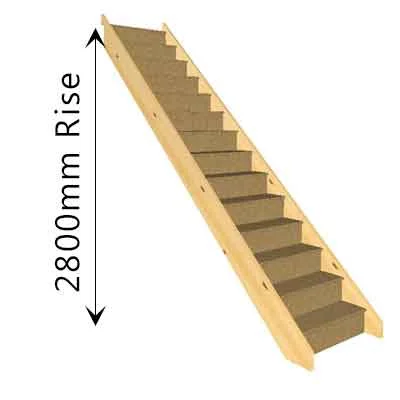
Straight stairs run in a single direction from bottom to top with no turns. They typically measure 36 to 42 inches wide (91.4 to 106.7 cm), use 7-inch (17.8 cm) risers, and 11-inch (27.9 cm) treads. The total horizontal run for a standard 9-foot ceiling straight stair is about 14 feet (4.3 m) — roughly the length of a mid-size car plus a bicycle.
Straight stairs are the most common stair type in US homes used in roughly 60% of residential buildings. Contractors prefer them because they are the simplest and fastest to build. The 36-inch (91.4 cm) minimum width keeps costs manageable while meeting code requirements everywhere.
Spiral Stairs: Focus on Diameter and Compact Sizes
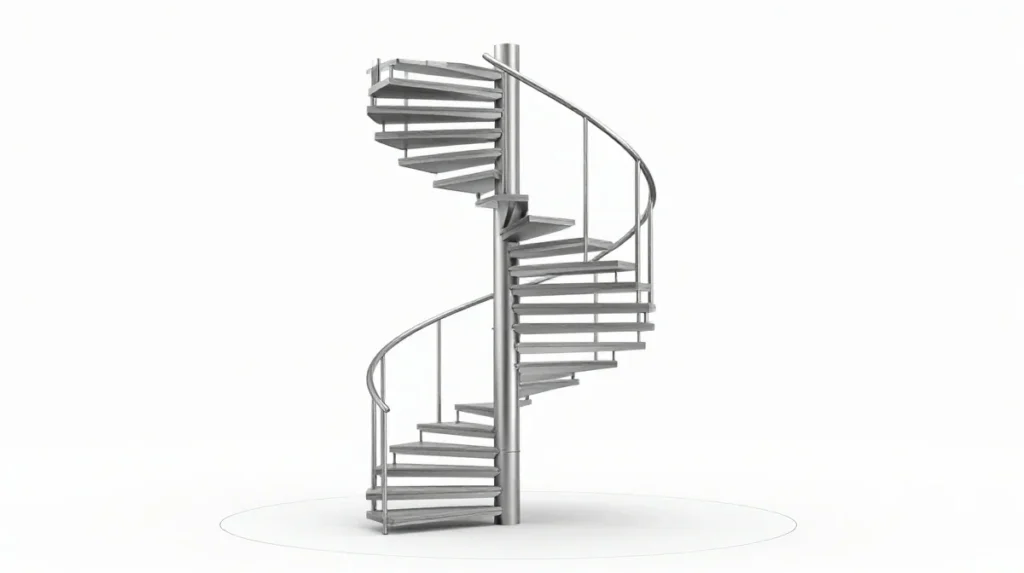
Spiral stairs fit into a circular footprint defined by their diameter. A standard residential spiral stair uses a 60-inch (152.4 cm) diameter and individual treads that measure about 7.5 to 9.5 inches (19 to 24.1 cm) deep at the walking line — the point 12 inches (30.5 cm) from the center post. The center post diameter is typically 4 to 5 inches (10.2 to 12.7 cm).
Interior designers and space-saving renovation specialists recommend spiral stairs for lofts, libraries, and tight spaces. A spiral stair uses only 16 to 25 square feet (1.5 to 2.3 square meters) of floor space — compared to 50 to 75 square feet (4.6 to 7 square meters) for a straight stair. The 60-inch (152.4 cm) diameter model remains the most popular choice for homes across the USA.
L-Shaped and U-Shaped: Adjusting Width and Height
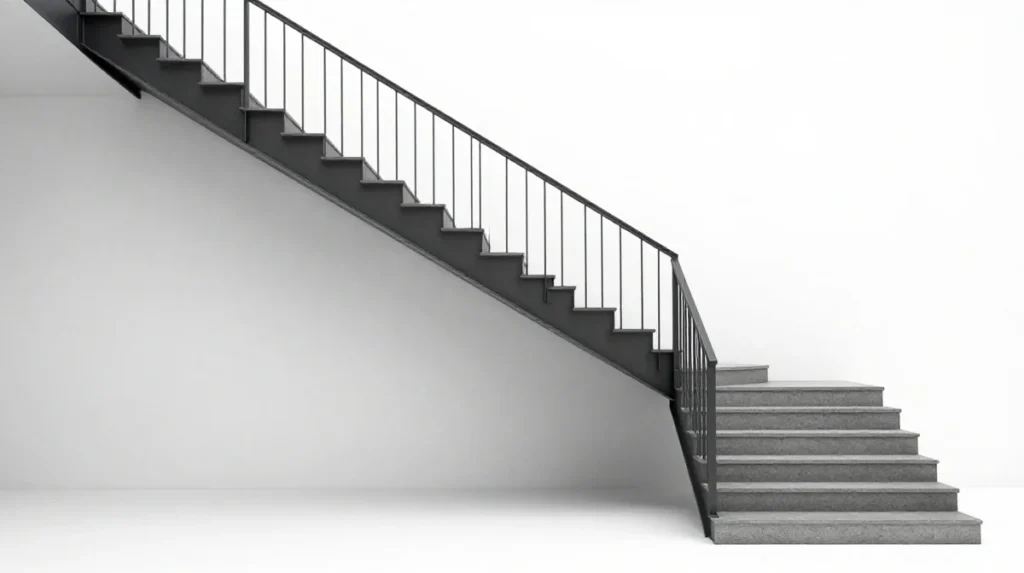
L-shaped stairs turn 90 degrees at a landing, while U-shaped stairs turn 180 degrees. Both designs use the same standard riser height of 7 inches (17.8 cm) and tread depth of 11 inches (27.9 cm). The landing in an L-shaped stair typically measures 36 × 36 inches (91.4 × 91.4 cm), while a U-shaped landing is usually 36 × 48 inches (91.4 × 121.9 cm) or wider.
These stair types fit well in homes where a straight stair would be too long for the available floor space. Architects use L-shaped stairs in roughly 25% of new home designs as a practical space management tool. The turn also adds safety a slip on an L-shaped stair stops at the landing rather than continuing all the way to the bottom.
Stair Dimensions Anywhere (No Ruler Needed!)
📏 Your Forearm Length The average adult forearm from elbow to wrist measures about 10 to 11 inches (25.4 to 27.9 cm). Lay your forearm along a stair tread it should match almost perfectly. This body reference helps you instantly check if a tread depth feels right without any tools.
📦 Standard Sheet of Paper A US letter-size sheet of paper is exactly 11 inches (27.9 cm) long and 8.5 inches (21.6 cm) wide. Place one on a stair tread — it should fit the depth almost perfectly. The width of the paper also closely matches the 7.75-inch (19.7 cm) maximum riser height allowed by the IRC.
🍕 A Medium Pizza Box A medium pizza box measures about 12 inches (30.5 cm) square. Set it flat on a stair tread and the box should nearly fill the surface. This comparison helps you visualize both tread depth and width in a single familiar object.
🚗 A Parking Space A standard US parking space is 8.5 feet (2.6 m) wide and 18 feet (5.5 m) long. A typical 16-step straight staircase with an 11-inch (27.9 cm) tread has a total run of about 14 feet (4.3 m) close to the length of that parking space. Use this when planning how much floor space your stairs will need.
Stair Dimensions Matter in Everyday Life
Home renovation planning becomes easier when you understand stair dimensions. Knowing your riser and tread size upfront saves you from expensive structural changes after construction begins.
Shopping online for prefab stair kits goes more smoothly when you know your floor-to-floor height and preferred stair width. You can filter products instantly and avoid ordering the wrong size.
Construction projects finish on budget when you calculate rise and run accurately before ordering materials. A single miscalculation in riser height forces you to rebuild the entire flight — a costly and time-consuming mistake.
Safety at home improves significantly when your stair dimensions follow code. Consistent riser heights reduce tripping accidents by up to 50% — the most important reason to measure carefully every single time.
Frequently Asked Questions
How high is a standard stair step?
A standard stair step riser measures 7 inches tall (17.8 cm) in most US homes. The IRC allows a maximum of 7.75 inches (19.7 cm) for residential stairs. Commercial stairs under the IBC must keep risers at 7 inches (17.8 cm) maximum.
What is the standard tread depth for stairs?
The standard tread depth is 11 inches (27.9 cm) under the IRC. The absolute minimum allowed is 10 inches (25.4 cm). Most comfortable staircases use exactly 11 inches (27.9 cm) — the length of a standard piece of printer paper.
How wide should stairs be?
Residential stairs must be at least 36 inches (91.4 cm) wide under the IRC. Commercial stairs require 44 inches (111.8 cm) minimum under the IBC. For comfortable two-way traffic, aim for 48 inches (121.9 cm) in your home.
What is the minimum headroom for stairs?
The IRC requires 6 feet 8 inches (203.2 cm) of vertical headroom above the stair nosing. Commercial buildings under the IBC need 7 feet (213.4 cm). Measure from the nosing of each tread straight up to the ceiling or soffit above.
How do you calculate stair rise and run?
Divide your total floor-to-floor height by your desired riser height to find the number of steps. For a 9-foot (108-inch / 274.3 cm) ceiling with 7-inch (17.8 cm) risers, you get 15.4 steps — round up to 16. Multiply the number of treads (always one less than risers) by 11 inches (27.9 cm) to find your total run.
What diameter does a spiral staircase need?
A spiral staircase used as a primary staircase must have a minimum diameter of 60 inches (152.4 cm) in most US residential codes. Compact spiral stairs for secondary access like lofts can use 42 to 48 inches (106.7 to 121.9 cm) in diameter. Larger diameters of 64 to 72 inches (162.6 to 182.9 cm) provide the most comfortable climb.
Read: How Long Is 40 Inches?
Read: How Long Is 13 Inches?
Read: How Long Is a Centimeter?
Read: How Long Is 5 Inches?
Read: Pringles Can Dimensions
Conclusion
Stair dimensions appear constantly in your daily life through riser heights, tread depths, stair widths, and headroom clearances. This practical measurement system from a 7-inch (17.8 cm) standard riser to a 36-inch (91.4 cm) minimum width determines how safe, comfortable, and code-compliant every staircase around you truly is.
Now that you recognize common stair dimensions, you can design safer staircases, check your home for code compliance, and plan renovations with confidence. Use these familiar measurements riser height, tread depth, and stair width when building new stairs, evaluating an existing staircase, or planning an accessible home for better accuracy and confident decisions.