
Wheelchair Dimensions: Size, Height & Diameter 2026
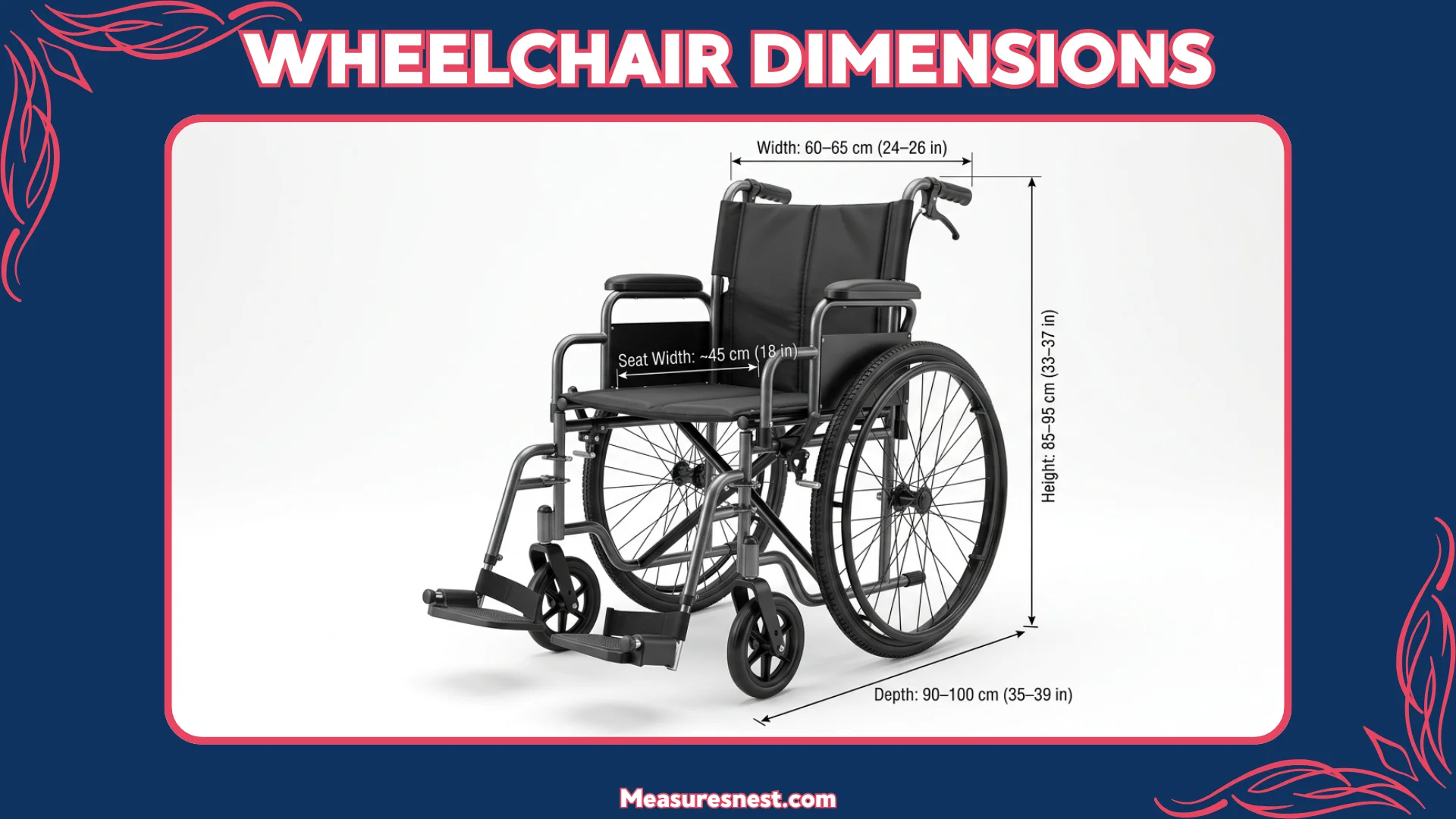
Wheelchair dimensions define how well the chair fits you and your space. A standard manual wheelchair is 25 inches wide (63.5 cm) and 42 inches tall (106.7 cm) roughly the width of a standard doorway and the height of a ten-year-old child. It’s similar in footprint to a standard office chair, wider than a bicycle handlebar, and about as tall as a kitchen countertop plus six inches.
Whether you’re choosing a wheelchair for the first time, helping a loved one find the right fit, or renovating a home for accessibility, knowing common wheelchair dimensions gives you an instant reference point.
Quick Conversion Box
| Measurement | Value |
|---|---|
| 25 inches (standard width) | 63.5 centimeters |
| 42 inches (seat-back height) | 106.7 centimeters |
| 24 inches (rear wheel diameter) | 60.96 centimeters |
| 5 inches (front caster diameter) | 12.7 centimeters |
Standard Wheelchair Size Breakdown
A standard adult wheelchair measures 25 inches wide (63.5 cm), 42 inches tall (106.7 cm), and 42 inches long (106.7 cm). Picture the width of a typical front door that’s nearly exactly how wide a standard wheelchair sits.
Your seated position inside the chair determines everything. The seat width is typically 16 to 18 inches (40.6 to 45.7 cm), the seat depth runs 16 to 17 inches (40.6 to 43.2 cm), and the seat height from the floor measures 19.5 inches (49.5 cm) on average.
| Dimension | Inches | Centimeters | Millimeters |
|---|---|---|---|
| Overall Width | 25 in | 63.5 cm | 635 mm |
| Overall Length | 42 in | 106.7 cm | 1067 mm |
| Overall Height | 42 in | 106.7 cm | 1067 mm |
| Seat Width | 16–18 in | 40.6–45.7 cm | 406–457 mm |
| Seat Depth | 16–17 in | 40.6–43.2 cm | 406–432 mm |
| Seat Height | 19.5 in | 49.5 cm | 495 mm |
Variations in Wheelchair Height
Wheelchair height is not one fixed number it varies based on the user’s body and the chair’s design. The backrest height typically ranges from 16 to 20 inches (40.6 to 50.8 cm).
The armrest height sits at about 9 inches (22.9 cm) above the seat. That puts your elbows at a natural, relaxed position similar to resting your arms on a standard desk. Footrest clearance from the ground is usually 2 inches (5.1 cm) to prevent scraping on ramps and uneven surfaces.
| Height Component | Inches | Centimeters |
|---|---|---|
| Backrest Height | 16–20 in | 40.6–50.8 cm |
| Armrest Height (above seat) | 9 in | 22.9 cm |
| Seat-to-Floor Height | 17.5–19.5 in | 44.5–49.5 cm |
| Footrest Clearance | 2 in | 5.1 cm |
Wheelchair Diameter
Rear Wheel Diameter
The rear wheels are the biggest and most visible part of your wheelchair. Standard rear wheels measure 24 inches in diameter (60.96 cm) about the same size as a standard bicycle wheel for a child’s 24-inch bike. These large wheels give you the leverage to self-propel with less effort.
Lightweight sport and everyday chairs use this 24-inch (60.96 cm) standard almost universally. Many wheelchair users and physical therapists recommend this size because it balances speed, control, and ease of grip.
Front Caster Diameter
Front casters are the small swiveling wheels at the front of your wheelchair. They typically measure 5 to 6 inches in diameter (12.7 to 15.2 cm) about the size of a large orange. Larger casters handle rough terrain better, while smaller ones are more responsive and compact.
Rehabilitation specialists often recommend 6-inch (15.2 cm) casters for outdoor use. Smaller 4-inch (10.2 cm) casters work best on smooth indoor floors, like hospital hallways or office environments. Your terrain type should guide your caster size choice.
Diameter Variations by Wheelchair Type
Different wheelchair types use very different wheel sizes. Here’s how diameter changes across the main types you’ll find in 2026:
| Wheelchair Type | Rear Wheel Diameter | Front Caster Diameter |
|---|---|---|
| Standard Manual | 24 in (60.96 cm) | 5–6 in (12.7–15.2 cm) |
| Sport/Ultralight | 25–26 in (63.5–66 cm) | 3–4 in (7.6–10.2 cm) |
| Power Wheelchair | 12–14 in (30.5–35.6 cm) | 8–10 in (20.3–25.4 cm) |
| Pediatric | 16–20 in (40.6–50.8 cm) | 4–5 in (10.2–12.7 cm) |
| Bariatric | 24–26 in (60.96–66 cm) | 6–8 in (15.2–20.3 cm) |
Types of Wheelchairs and Their Dimensions
These everyday mobility devices demonstrate exactly how different wheelchair dimensions can be in real life. From compact pediatric chairs to heavy-duty power models, the size variety appears constantly.
Manual Wheelchair Dimensions
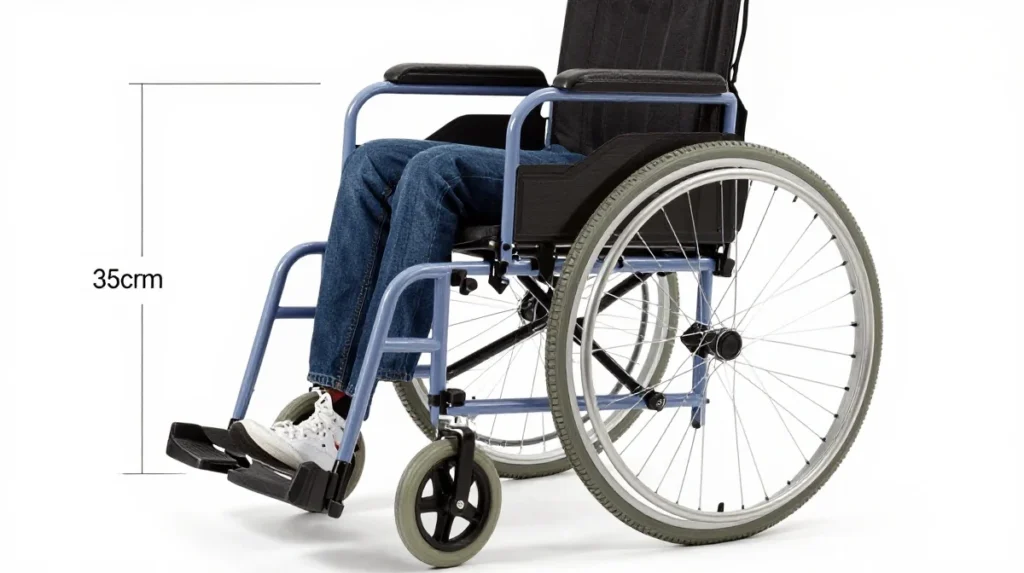
A standard manual wheelchair measures 25 inches wide (63.5 cm), 42 inches long (106.7 cm), and 36 to 42 inches tall (91.4 to 106.7 cm). The folded width drops to about 11 inches (27.9 cm) narrow enough to fit in a car trunk. Physical therapists, caregivers, and occupational therapists use these measurements daily when fitting patients.
Manual wheelchairs are the most common type used worldwide. Studies show that 70% of all wheelchair users rely on a manual model for daily mobility. The 25-inch (63.5 cm) overall width is your key number when checking if a chair fits through a doorway.
Power Wheelchair Dimensions
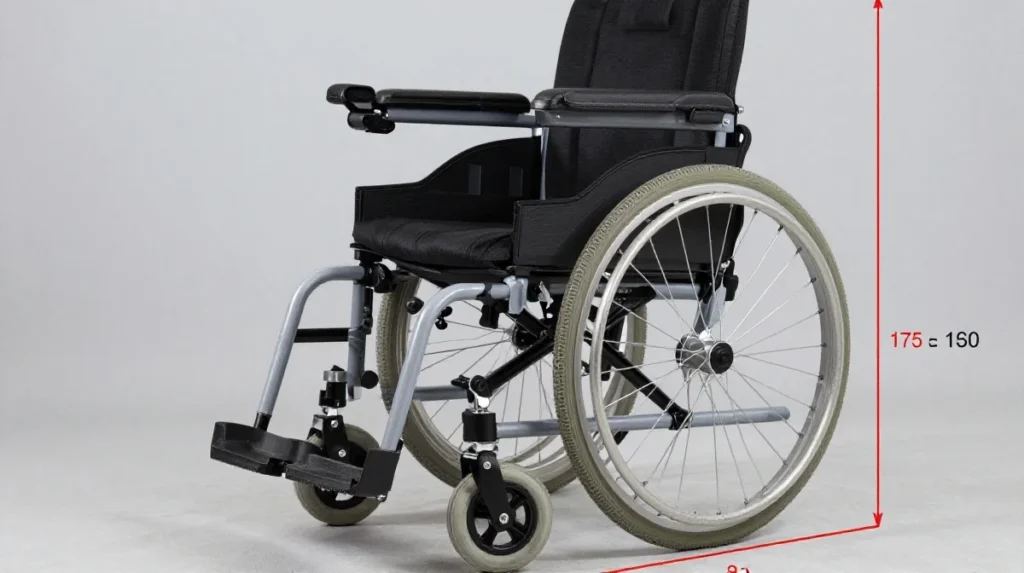
Power wheelchairs are larger and heavier than manual chairs. They typically measure 25 to 30 inches wide (63.5 to 76.2 cm), 42 to 48 inches long (106.7 to 121.9 cm), and weigh between 100 to 300 pounds (45.4 to 136 kg). The extra length comes from the battery pack and motor housing at the rear.
Many power wheelchair users navigate both indoor and outdoor environments daily. These chairs require a turning radius of 20 to 30 inches (50.8 to 76.2 cm) to maneuver around furniture. Seating specialists and assistive technology professionals use these dimensions when planning accessible home layouts.
Pediatric and Bariatric Wheelchair Sizes
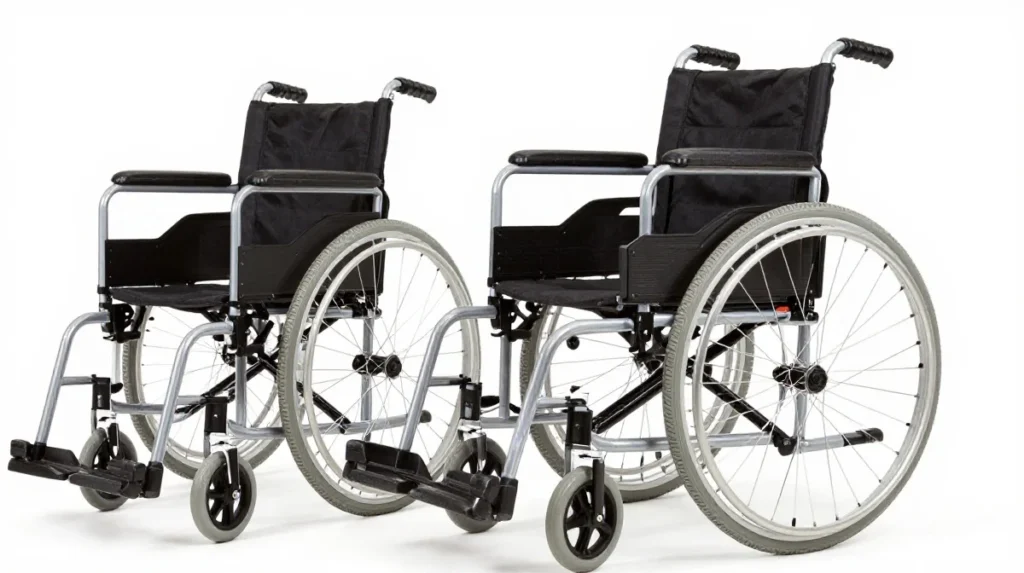
Pediatric wheelchairs are built smaller seat widths range from 10 to 14 inches (25.4 to 35.6 cm), with an overall width of 18 to 22 inches (45.7 to 55.9 cm). Bariatric models go the opposite direction, with seat widths from 20 to 30 inches (50.8 to 76.2 cm) and overall widths reaching 34 to 40 inches (86.4 to 101.6 cm).
Pediatric chairs serve children from ages 3 to 18, so sizes change as children grow. Bariatric chairs support users weighing 300 to 700 pounds (136 to 317.5 kg), with reinforced frames and wider seats. Certified rehabilitation engineers design both types to meet specific weight and size tolerances.
Custom vs. Standard Wheelchair Heights and Diameters
Standard wheelchair dimensions work for most adults, but custom sizing matters more than people realize. A standard seat height of 19.5 inches (49.5 cm) suits users who are 5 feet 4 inches to 5 feet 10 inches tall. Taller or shorter users often need adjustments of 1 to 3 inches (2.5 to 7.6 cm) to avoid posture problems.
Custom wheelchairs can be configured with seat heights from 14 to 25 inches (35.6 to 63.5 cm). Rear wheel diameters can be swapped between 20 and 26 inches (50.8 to 66 cm) to match your arm length and push style. An experienced seating specialist measures 12+ body points to build the right configuration.
| Feature | Standard | Custom Range |
|---|---|---|
| Seat Height | 19.5 in (49.5 cm) | 14–25 in (35.6–63.5 cm) |
| Seat Width | 16–18 in (40.6–45.7 cm) | 10–30 in (25.4–76.2 cm) |
| Rear Wheel Diameter | 24 in (60.96 cm) | 20–26 in (50.8–66 cm) |
| Backrest Height | 16–18 in (40.6–45.7 cm) | 8–24 in (20.3–60.96 cm) |
Key Considerations for Wheelchair Dimensions in the USA
Doorway and Space Requirements
The Americans with Disabilities Act (ADA) sets the minimum clear doorway width at 32 inches (81.3 cm) for passage, with 36 inches (91.4 cm) preferred. A standard wheelchair at 25 inches (63.5 cm) wide fits through a 32-inch door with about 3.5 inches (8.9 cm) to spare on each side. Always measure your narrowest doorway before choosing a chair width.
Turning space is equally important. The ADA recommends a 60-inch (152.4 cm) turning diameter for a standard 180-degree turn. Power wheelchairs often need more up to 72 inches (182.9 cm) of clear floor space. Plan your home layout around these numbers to move freely in every room.
User Fit and Comfort
Your wheelchair dimensions should match your body, not the other way around. The seat width should be 1 to 2 inches (2.5 to 5.1 cm) wider than your hips — enough for comfort, but not so wide that you lose control of your posture. Your feet should rest flat on the footrests with your knees at a 90-degree angle.
The seat depth should leave 2 to 3 inches (5.1 to 7.6 cm) of space between the front edge of the seat and the back of your knee. Too deep and you lose circulation; too shallow and you lose support. A certified seating specialist can measure your exact body proportions in under 30 minutes.
Accessibility in Homes and Public Spaces
Standard US hallways in older homes measure 36 inches (91.4 cm) wide just barely enough for a standard wheelchair. New construction standards require 42 inches (106.7 cm) minimum for accessibility. Public restrooms must provide a 60-inch (152.4 cm) turning radius by ADA law.
Kitchen counters sit at 36 inches (91.4 cm) from the floor — the same as most wheelchair armrest height. Lowered counters at 28 to 34 inches (71.1 to 86.4 cm) allow wheelchair users to reach and work comfortably. These small adjustments make a major difference in daily independence.
Measure Without a Tape — Wheelchair Dimensions Anywhere (No Ruler Needed)
🤚 Your Hand Span The average adult hand span from thumb tip to pinky tip measures about 8 to 9 inches (20.3 to 22.9 cm). Span your hand twice side by side that’s roughly the width of a standard wheelchair seat at 16 inches (40.6 cm). This body reference works perfectly when you need a quick estimate.
📏 Standard Door Frame A typical interior door frame in the USA measures 32 to 36 inches wide (81.3 to 91.4 cm). If your wheelchair fits comfortably within the door frame with visible space on both sides, you have enough clearance. Use any doorway in your home as your reference tool.
🍕 A Large Pizza Box A large pizza box measures about 16 inches (40.6 cm) square exactly matching a standard wheelchair seat width. Lay one on the floor to visualize seat size. Two pizza boxes side by side show you the 25-inch (63.5 cm) overall wheelchair width.
🚗 Car Trunk Width The average car trunk opening measures about 40 to 45 inches (101.6 to 114.3 cm) wide. A folded manual wheelchair at 11 inches (27.9 cm) wide fits easily in the trunk of most sedans. This comparison helps caregivers and family members plan transportation before purchasing a chair.
Wheelchair Dimensions Matter in Everyday Life
Choosing the right seat depth improves your posture and long-term spinal health. A poorly fitted seat causes pressure sores within hours the right dimensions prevent this completely.
Shopping online for a wheelchair becomes easier when you know your exact measurements. You can filter models instantly by seat width, height, and wheel size to find your perfect match.
Home renovations for accessibility go more smoothly when you know your wheelchair’s turning radius. Planning doorways and hallways around your chair’s 25-inch (63.5 cm) width saves costly rework later.
Safety improves significantly when your wheelchair dimensions match your environment. A chair that is too wide for your hallways creates fall risks — the right sizing keeps you moving confidently and independently every day.
Read: Coffee Can Dimensions
Read: Stair Dimensions
Read: Image Measurement
Read: Badminton Court Dimensions
Read: Bowling Lane Dimensions
Read: Can Koozie Dimensions
Frequently Asked Questions
How wide is a standard wheelchair?
A standard adult wheelchair measures 25 inches wide (63.5 cm) overall. The seat itself is narrower at 16 to 18 inches (40.6 to 45.7 cm). The ADA minimum doorway clearance of 32 inches (81.3 cm) gives you about 3.5 inches of space on each side.
What is the standard wheelchair seat height?
The standard seat height is 19.5 inches (49.5 cm) from the floor. This suits users roughly 5 feet 4 inches to 5 feet 10 inches (162.6 to 177.8 cm) tall. You can customize seat height between 14 and 25 inches (35.6 to 63.5 cm) for a better fit.
How big is the rear wheel on a standard wheelchair?
Standard rear wheels measure 24 inches in diameter (60.96 cm) about the same as a child’s 24-inch bicycle wheel. Sport and ultralight chairs sometimes use 25 to 26-inch (63.5 to 66 cm) wheels for faster rolling. Power wheelchairs use smaller rear wheels at 12 to 14 inches (30.5 to 35.6 cm).
How much space does a wheelchair need to turn around?
A standard manual wheelchair needs 60 inches (152.4 cm) of clear floor space for a full 180-degree turn. Power wheelchairs need up to 72 inches (182.9 cm). This equals the length of a full-size bed plan your room layout with this in mind.
What is the difference between pediatric and adult wheelchair dimensions?
Pediatric wheelchairs have seat widths of 10 to 14 inches (25.4 to 35.6 cm) and overall widths of 18 to 22 inches (45.7 to 55.9 cm). Adult standard chairs have seat widths of 16 to 18 inches (40.6 to 45.7 cm). Pediatric chairs also use smaller rear wheels at 16 to 20 inches (40.6 to 50.8 cm) in diameter.
Can I fit a standard wheelchair through any door in my home?
Most modern interior doors measure 32 to 36 inches (81.3 to 91.4 cm) wide. A standard wheelchair at 25 inches (63.5 cm) wide fits through these doors with room to spare. Older homes may have 28 to 30-inch (71.1 to 76.2 cm) doors — you may need a narrower chair or door widening for those.
Conclusion
Wheelchair dimensions appear constantly in your daily life through seat sizing, doorway planning, wheel selection, and home accessibility design. This practical measurement system from a 25-inch (63.5 cm) overall width to a 24-inch (60.96 cm) rear wheel diameter defines your independence, comfort, and freedom of movement every single day.