Brake Pad Measurement: Safe Thickness, Chart 2026
A new brake pad measures 12 mm (0.47 inches) thick and knowing exactly when that thickness becomes unsafe could save your life on the road. Your brake pads wear down gradually from 12 mm (0.47 inches) to a dangerous minimum of just 2 mm (0.08 inches), the thickness of two stacked pennies.
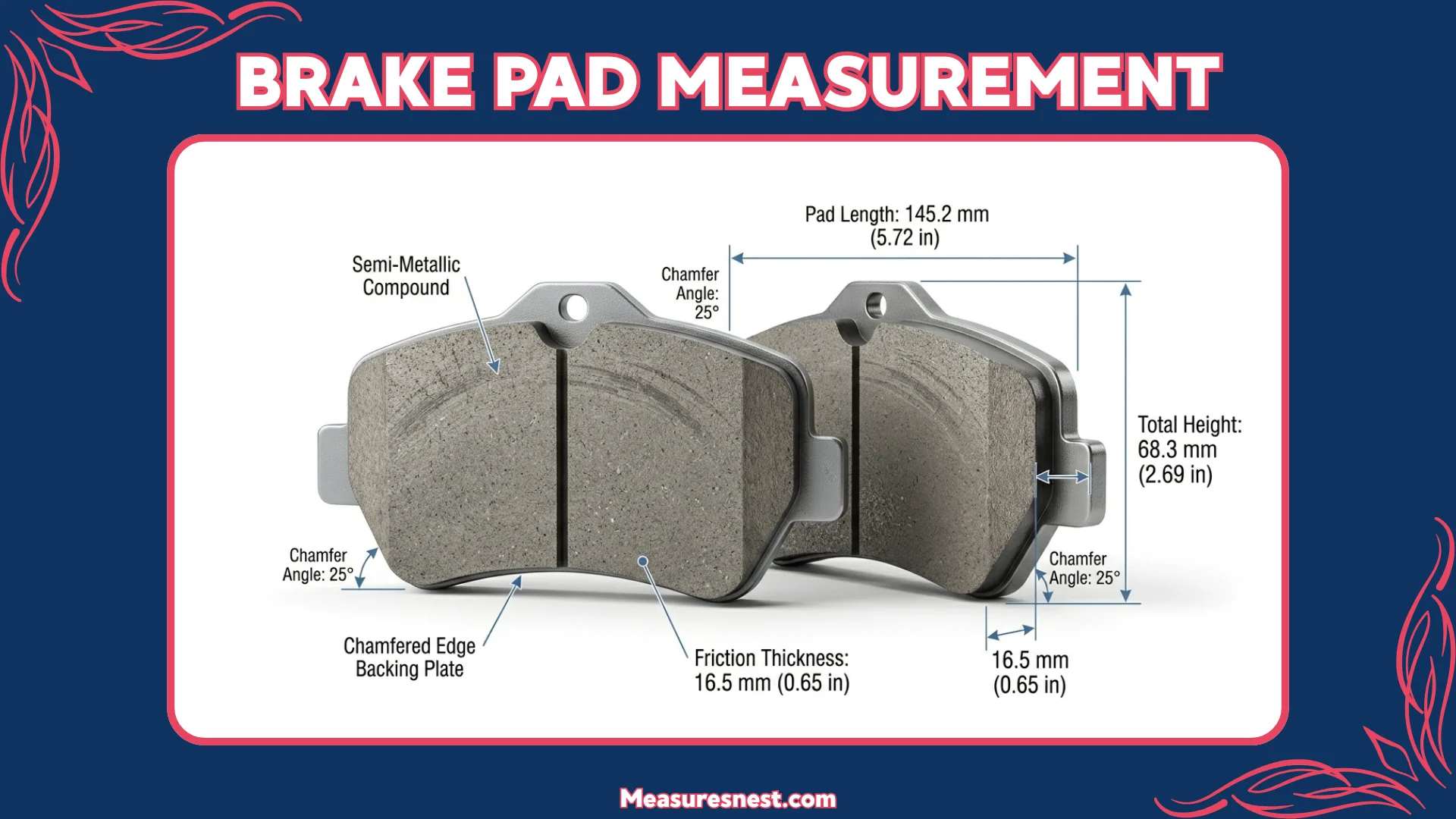
Whether you’re checking your car during a routine service, shopping for replacement brake pads, or trying to understand what your mechanic is telling you, understanding brake pad measurement gives you an instant reference point.
Quick Conversion Box
12 mm (new pad) = 0.47 inches
6 mm (service threshold) = 0.24 inches
3 mm (replace soon) = 0.12 inches
2 mm (minimum safe limit) = 0.08 inches
Brake Pad Thickness
A brand-new brake pad measures between 10 mm and 12 mm (0.39 to 0.47 inches) thick depending on the vehicle type. That’s roughly the thickness of a standard stack of 10 credit cards. Automotive engineers design brake pads at this thickness to give you plenty of braking material before the pad wears down to a dangerous level.
The minimum safe brake pad thickness is 2 to 3 mm (0.08 to 0.12 inches). At this point, you must replace your pads immediately. Most mechanics and vehicle safety inspectors recommend replacing brake pads when they reach 3 mm (0.12 inches) before they hit the absolute minimum to keep your stopping power consistent and safe.
Half-worn brake pads measure approximately 5 to 6 mm (0.20 to 0.24 inches) thick. At this stage, your brakes still function well, but you should start planning a replacement within the next few months. Brake pads typically last between 25,000 and 65,000 miles (40,000 to 105,000 km) depending on driving style, pad material, and vehicle weight.
How to Measure Brake Pad Thickness
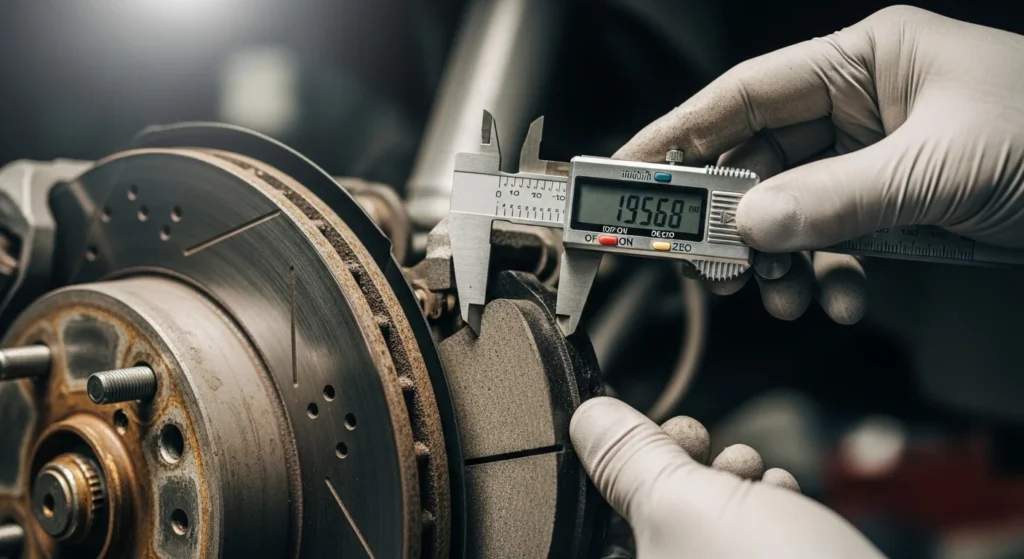
You can measure brake pad thickness in three reliable ways visually, with a ruler, or with a digital caliper. Each method gives you accurate information about when to replace your pads.
Method 1 Visual Inspection Through the Wheel. Look through the spokes of your wheel at the brake caliper. You’ll see the brake pad pressed against the rotor. If the pad looks thinner than 3 mm (0.12 inches) roughly the thickness of two stacked pennies you need immediate replacement. Most experienced drivers learn to spot this thickness level by eye after checking a few times.
Method 2 Remove the Wheel and Use a Ruler. For a precise reading, remove the wheel and hold a standard ruler against the pad’s friction material the soft, dark layer that contacts the rotor. Measure only the friction material, not the metal backing plate behind it. A reading below 3 mm (0.12 inches) means you need new pads now. A reading between 3 and 6 mm (0.12 to 0.24 inches) means plan a replacement soon.
Method 3 Digital Caliper (Most Accurate). A digital caliper gives you the most precise brake pad measurement. Slide the caliper jaws over the friction material and read the display in millimeters. Automotive technicians, brake specialists, and vehicle safety inspectors use digital calipers as their standard measurement tool. A precise reading removes all guesswork and tells you exactly how many miles of pad life you have remaining.
Reading the Wear Indicator Groove. Most brake pads include a small groove or slot in the friction material called a wear indicator groove. This groove sits at exactly 2 to 3 mm (0.08 to 0.12 inches) depth from the surface. When the groove disappears meaning the pad has worn flush you’ve reached the replacement threshold. Brake pad manufacturers build this groove in specifically so you can monitor wear without any tools at all.
Brake Pad Thickness Chart
Use this chart to understand exactly where your brake pads stand and what action to take at every thickness level.
| Thickness | Inches | Condition | Action Required |
|---|---|---|---|
| 10–12 mm | 0.39–0.47 in | New / Excellent | No action needed |
| 8–9 mm | 0.31–0.35 in | Good | Monitor normally |
| 6–7 mm | 0.24–0.28 in | Moderate | Plan replacement |
| 4–5 mm | 0.16–0.20 in | Worn | Schedule replacement soon |
| 3 mm | 0.12 in | Low — Warning Zone | Replace within weeks |
| 2 mm | 0.08 in | Minimum Safe Limit | Replace immediately |
| Below 2 mm | Below 0.08 in | Dangerous | Stop driving — replace now |
Thickness by Vehicle Type
Different vehicles use different pad thicknesses at the factory. Here’s how new pad thickness varies by vehicle class:
| Vehicle Type | New Pad Thickness | Minimum Safe Thickness |
|---|---|---|
| Compact Car | 10–11 mm (0.39–0.43 in) | 2–3 mm (0.08–0.12 in) |
| Sedan / Family Car | 11–12 mm (0.43–0.47 in) | 2–3 mm (0.08–0.12 in) |
| SUV / Crossover | 12–14 mm (0.47–0.55 in) | 3–4 mm (0.12–0.16 in) |
| Pickup Truck | 14–16 mm (0.55–0.63 in) | 3–4 mm (0.12–0.16 in) |
| Performance / Sports Car | 12–15 mm (0.47–0.59 in) | 3–4 mm (0.12–0.16 in) |
| Motorcycle | 5–7 mm (0.20–0.28 in) | 1–2 mm (0.04–0.08 in) |
Heavier vehicles need thicker pads because they generate more heat and force during braking. Mechanics and brake specialists always check the vehicle manufacturer’s specific minimum thickness listed in the owner’s manual or workshop manual before signing off on a brake inspection.
Brake Pad Thickness by Material Type
The material your brake pad is made from also affects how it wears and how thick it starts:
| Pad Material | Starting Thickness | Wear Rate | Best For |
|---|---|---|---|
| Organic (NAO) | 10–12 mm (0.39–0.47 in) | Fast | City driving, light vehicles |
| Semi-Metallic | 11–13 mm (0.43–0.51 in) | Moderate | Mixed driving, most vehicles |
| Ceramic | 11–12 mm (0.43–0.47 in) | Slow | Highway, luxury, daily commute |
| High-Performance | 12–15 mm (0.47–0.59 in) | Variable | Sports cars, track use |
Ceramic pads last the longest and produce less dust. Semi-metallic pads offer strong braking performance for most everyday drivers. Organic pads are the softest and quietest but wear out fastest in stop-and-go city traffic.
Warning Signs Your Brake Pads Need Replacement
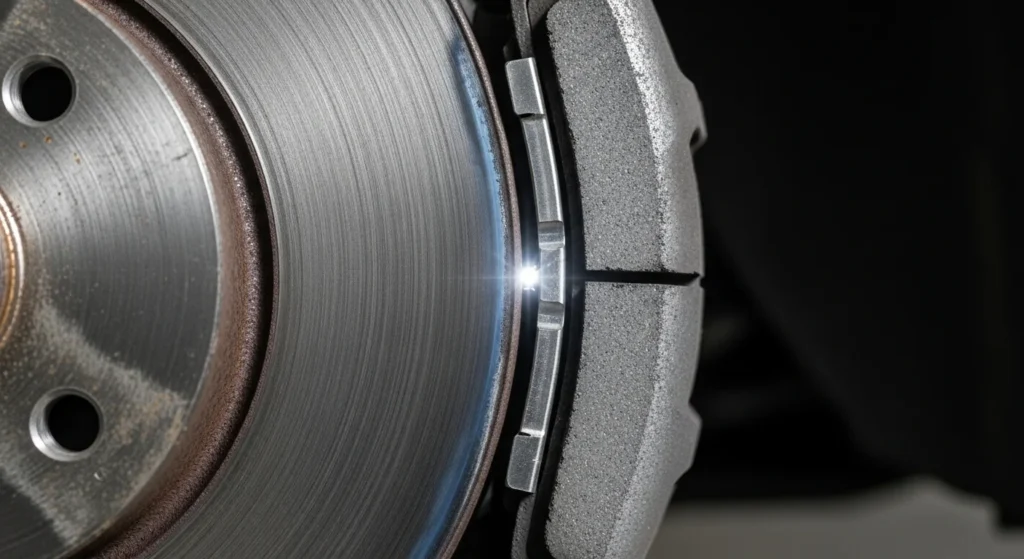
Your car tells you when brake pads are dangerously thin if you know the signals. Never ignore these warning signs. Driving on worn pads risks your safety, damages your rotors, and turns a simple pad replacement into an expensive repair.
Squealing or Screeching Noise
A high-pitched squeal when you press the brake pedal is the most common warning sign. Brake pad manufacturers build a small metal tab called a wear indicator into the pad. When the pad wears down to approximately 2 to 3 mm (0.08 to 0.12 inches), this metal tab contacts the rotor and creates the squealing sound. This noise is your built-in early warning system take it seriously the first time you hear it.
Metal Grinding Sound
A grinding or growling sound when braking means your pad friction material has worn completely through. Metal is now scraping directly against your brake rotor. At this stage, your pad is below 2 mm (0.08 inches) and possibly completely gone. Stop driving immediately and have your brakes inspected. A grinding brake always means rotor damage is happening in real time.
Vibration or Pulsing in the Brake Pedal
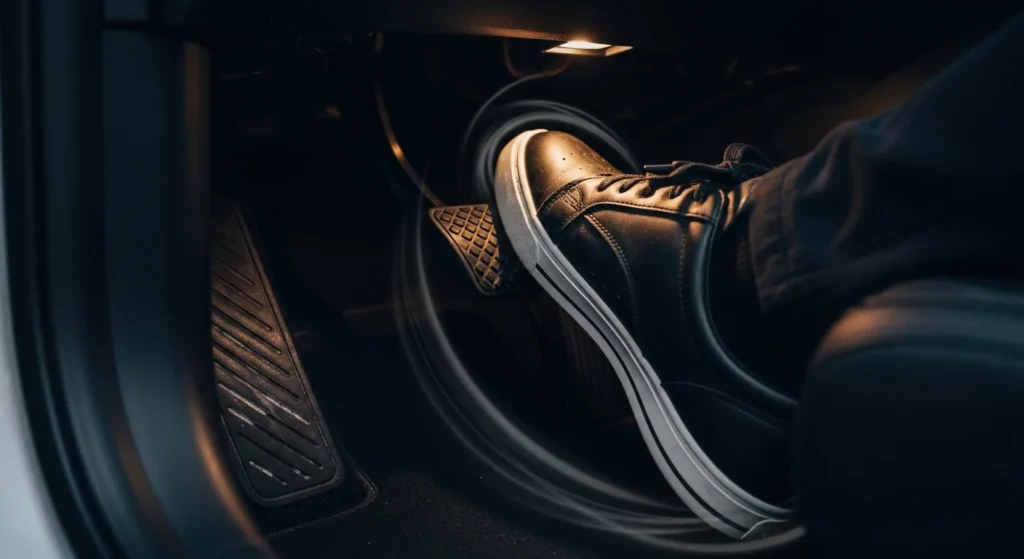
If your brake pedal vibrates or pulses when you press it, your rotors may have become uneven due to overheated or worn pads. Uneven rotor surfaces cause the pedal to pulse as the irregular spots pass under the pads. Brake technicians call this rotor “runout” a wobble in the rotor surface that becomes measurable at over 0.05 mm (0.002 inches) of variation.
Car Pulls to One Side When Braking
If your car pulls left or right during braking, one brake pad is wearing faster than the other. This uneven wear creates unequal braking force on each side of the axle. Wheel alignment specialists and brake technicians check pad thickness on both sides of each axle to diagnose this issue. Ignoring it increases stopping distance and makes the car unpredictable in emergency braking situations.
Brake Warning Light
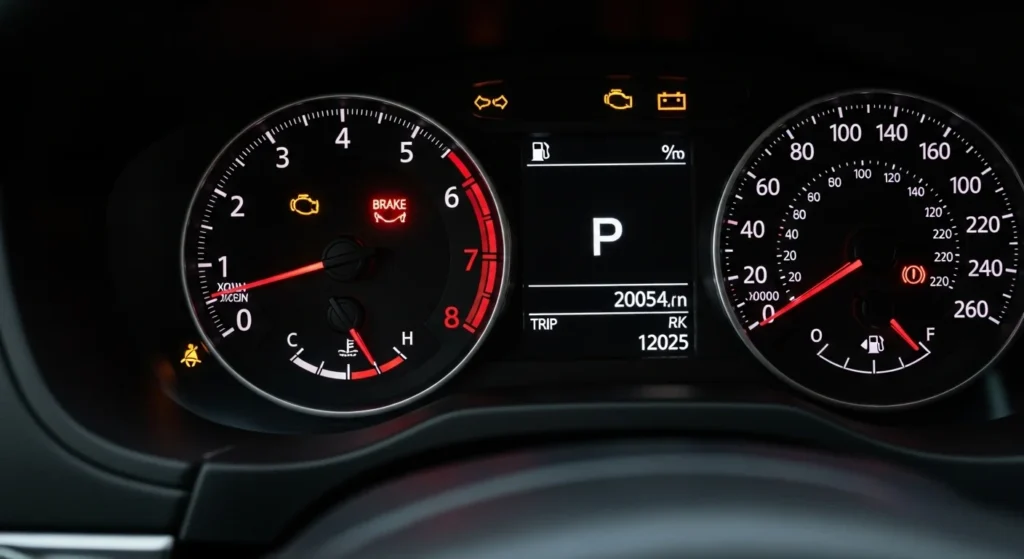
Most modern vehicles have a brake pad wear sensor connected to the dashboard warning light. When the pad wears down to the manufacturer’s minimum thickness usually 2 to 3 mm (0.08 to 0.12 inches) the sensor triggers the warning light. Some sensors are one-time-use and must be replaced along with the pads. Check your owner’s manual to confirm what your specific brake warning light means.
Longer Stopping Distance
If your car takes noticeably longer to stop than it used to, your brake pads have likely worn significantly. Thin pads have less friction material to convert braking force into heat, reducing their stopping power. Automotive safety standards require a car to stop from 60 mph (96.6 km/h) in approximately 120 to 140 feet (36.6 to 42.7 meters) worn pads can push this distance well beyond the safe limit.
Brake Pad Measurement Best Practices and Safety Tips
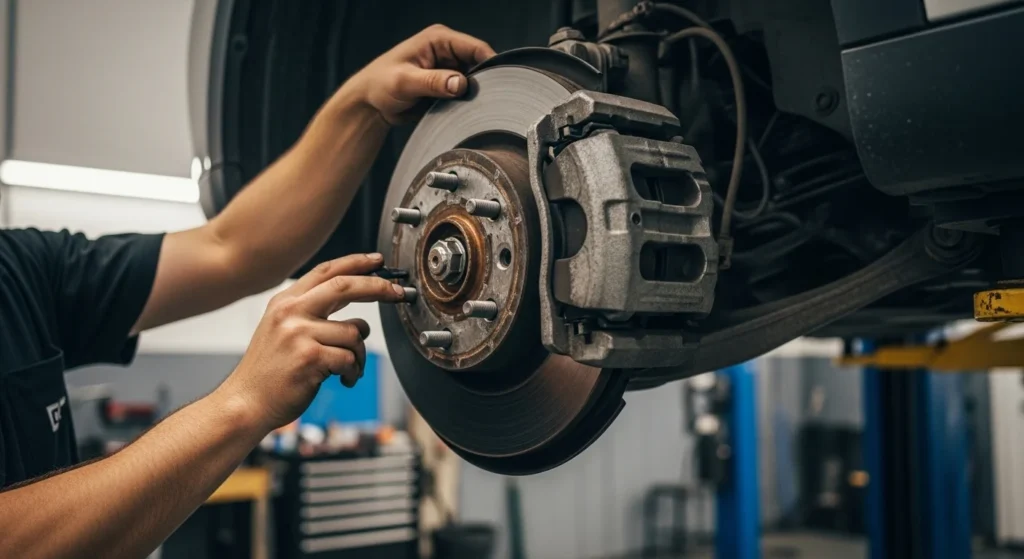
Following the right habits when measuring and maintaining brake pads keeps you safe and saves you money. Here are the most important practices every driver should know.
Check brake pad thickness every 12,000 miles (19,312 km) or once a year whichever comes first. Most mechanics include a visual brake check during every oil change, but you can also do a quick visual inspection yourself through the wheel spokes.
Always replace brake pads in axle pairs. When one pad needs replacing, replace both pads on the same axle both front pads together, or both rear pads together. Replacing only one side creates uneven braking force and causes the car to pull during stops.
Check rotor thickness at the same time. Brake rotors also wear down over time, just like pads. A standard rotor starts at approximately 28 to 30 mm (1.10 to 1.18 inches) thick and must be replaced when it wears below its minimum thickness usually around 22 to 24 mm (0.87 to 0.94 inches). Replacing worn pads on a worn rotor wastes your new pads and reduces braking performance.
Use the correct pad material for your driving style. If you drive mostly in city traffic with frequent stops, semi-metallic or organic pads suit your needs. If you drive long highway distances, ceramic pads last longer and generate less heat.
Never wait until pads are completely gone. The cost of replacing brake pads ranges from $100 to $300 (£80 to £240) per axle depending on your vehicle and pad type. Replacing a damaged rotor caused by metal-on-metal contact costs $300 to $600 (£240 to £480) per axle three to four times more. Replacing pads on time is always the less expensive and safer choice.
Record your brake pad measurements. Keep a simple log of your brake pad thickness readings at each service. Tracking how fast your pads wear helps you predict when they’ll need replacing next and plan for the cost.
Read: How Long Is 5 Inches?
Read: Calf Measurement
Read: Counter Measurement Guide
Read: Full Size Bed Measurements
Read: Buttload Measurements
Read: Twin Bed Measurement
Frequently Asked Questions
How thick should brake pads be for safe driving?
New brake pads measure 10 to 12 mm (0.39 to 0.47 inches) thick. The minimum safe thickness is 2 to 3 mm (0.08 to 0.12 inches). Most mechanics recommend replacing pads at 3 mm (0.12 inches) before they reach the absolute minimum to maintain full stopping power and protect your rotors from damage.
How do I measure brake pad thickness at home?
You can check your brake pad thickness in three ways. First, look through your wheel spokes at the pad pressed against the rotor if it looks thinner than two stacked pennies, replace it now. Second, remove the wheel and use a standard ruler to measure the friction material only, not the metal backing.
What happens if I drive with brake pads below 2 mm?
Driving on pads below 2 mm (0.08 inches) is extremely dangerous. The metal backing plate contacts the rotor directly, destroying the rotor surface and dramatically reducing your stopping power. Rotor replacement costs $300 to $600 (£240 to £480) per axle far more than a simple pad replacement.
How often should I replace brake pads?
Most brake pads last between 25,000 and 65,000 miles (40,000 to 105,000 km) depending on your driving style, vehicle weight, and pad material. City drivers who brake frequently will wear pads faster than highway drivers. Check your pad thickness every 12,000 miles (19,312 km) or annually whichever comes first to stay ahead of wear.
Why are my brake pads wearing unevenly?
Uneven brake pad wear usually points to a sticking brake caliper, misaligned wheels, or a brake system imbalance. If one pad is significantly thinner than its pair on the same axle, have a mechanic inspect the caliper immediately.
What is the minimum legal brake pad thickness?
Legal minimum brake pad thickness varies by country. In the UK, the minimum is 1.5 mm (0.06 inches). In the US, most states require at least 1/16 inch (1.6 mm). However, safety experts and brake manufacturers recommend replacing pads at 3 mm (0.12 inches) well above the legal minimum to maintain safe stopping distances in all road conditions.
Conclusion
Brake pad measurement appears constantly in your vehicle’s safety through thickness readings, wear indicator grooves, dashboard warning lights, and service intervals. This critical measurement ranges from 12 mm (0.47 inches) when new down to a dangerous minimum of 2 mm (0.08 inches) a difference roughly equal to the thickness of eight stacked credit cards.
Now that you understand brake pad thickness levels, warning signs, and measurement methods, you can check your pads confidently at home, communicate clearly with your mechanic, and replace pads before they become dangerous.