Counter Measurement Guide: Precision Counting 2026
Counter measurement tracks, records, and displays exact counts of events, signals, or material lengths used in factories, labs, and electronics worldwide. A reliable counter can measure thousands of pulses per second, track meters of fabric, or monitor production line output in real time. Think of it like a digital scoreboard that never misses a beat.
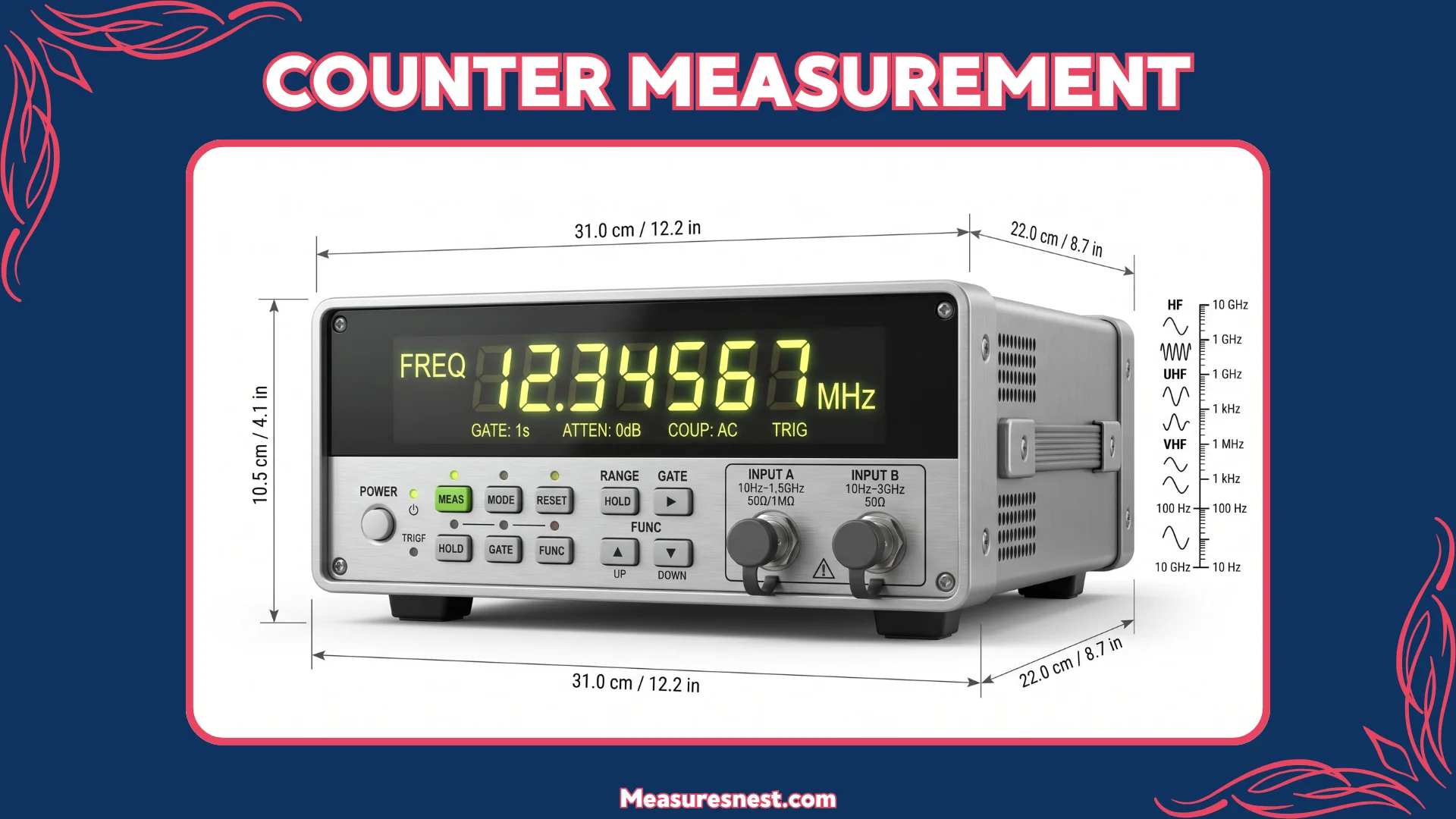
Whether you’re managing a production line, testing electronic signals, or cutting fabric to exact lengths, understanding common counter measurement devices gives you an instant reference point. Let’s explore the tools that perfectly demonstrate this precise and practical technology.
Quick Conversion Reference
| Measurement | Value |
|---|---|
| 1 meter (fabric counter) | 100 cm / 39.37 inches |
| 1 Hz (frequency) | 1 cycle per second |
| 1 kHz | 1,000 Hz |
| 1 MHz | 1,000,000 Hz |
What is Counter Measurement
Counter measurement is the process of detecting and recording a specific quantity. It counts events, cycles, lengths, or pulses with exact precision.
Your smartphone screen refreshes 60 times every second. A counter measurement device captures each one of those cycles without missing a single refresh.
Counter measurement devices work across industries. Factories use them to track parts. Labs use them to test signals. Textile mills use them to cut materials to exact lengths.
Types of Counter Measurement Devices and Their Applications
These specialized tools demonstrate exactly how counter measurement works in real life. From factory floors to electronics labs, this technology appears constantly.
Length Counters for Material Measurement
A length counter measures the exact distance of moving material passing through it. Most length counters measure in meters (m) or feet (ft), with accuracy down to 1 millimeter (0.04 inches). Textile engineers, cable manufacturers, and paper mill operators rely on these devices every day.
A standard length counter wheel has a circumference of exactly 1 meter (3.28 feet). Each full rotation equals precisely 1 meter counted. This makes it easy to cut materials without a tape measure.
Over 70% of textile factories globally use rotary length counters on their production lines. These counters ensure every spool of fabric measures exactly the right length before cutting.
Frequency Counters for Electronic Signal Analysis
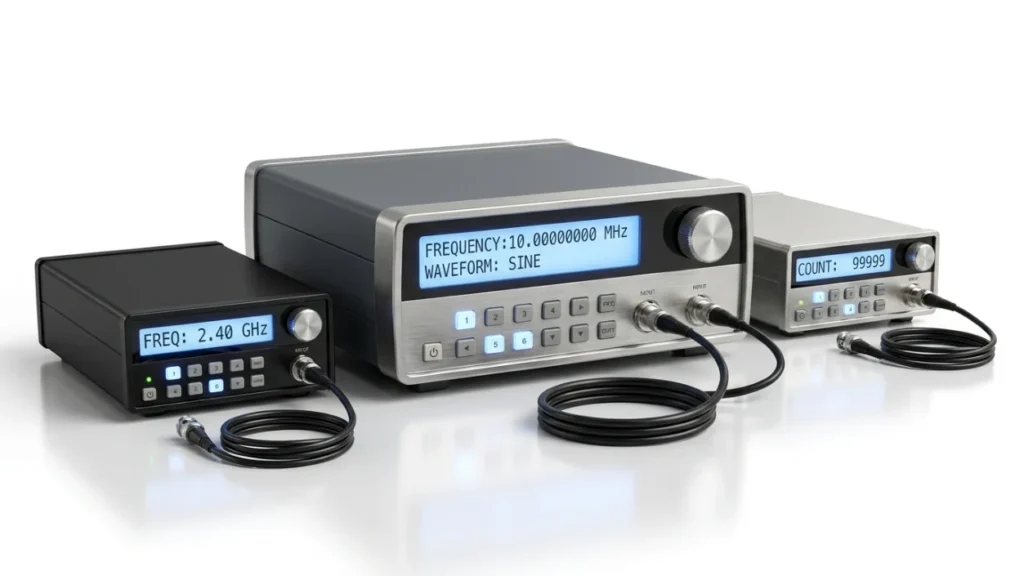
A frequency counter measures how many cycles a signal completes in one second. Entry-level models measure up to 10 MHz (10,000,000 Hz), while professional-grade counters reach 15 GHz (15,000,000,000 Hz). Electronics engineers use these to test radio transmitters, oscillators, and communication circuits.
Your home Wi-Fi router operates at 2.4 GHz or 5 GHz. A frequency counter can verify that signal exactly, down to a few hertz. This level of accuracy matters in aerospace, medical devices, and telecommunications.
Frequency counters are standard equipment in over 90% of professional electronics labs worldwide. Engineers trust them to confirm signal accuracy before any device ships to customers.
Event Counters for Production and Process Monitoring
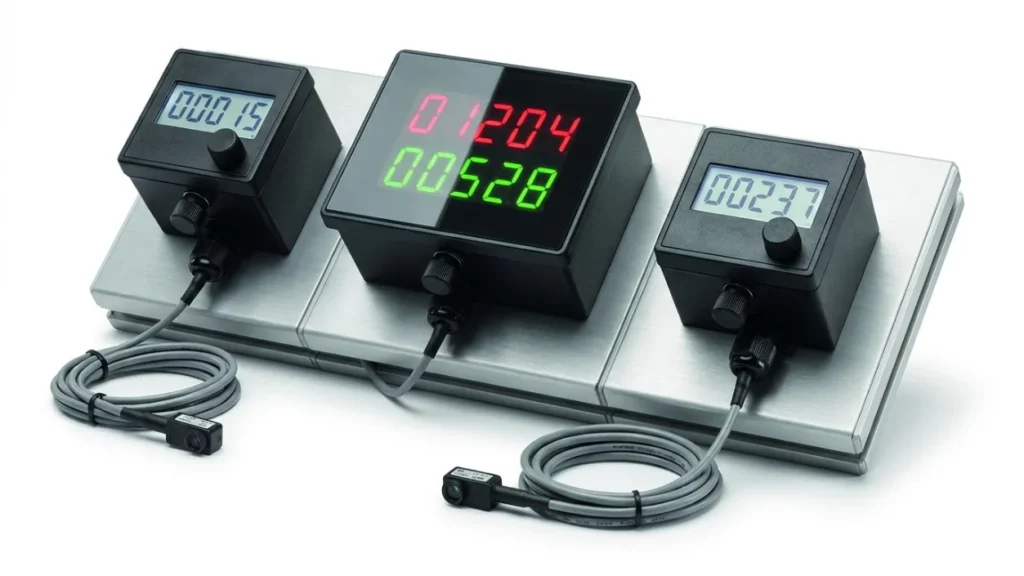
An event counter records every time a specific action happens a bottle filling, a part stamping, or a gate opening. Most industrial event counters handle up to 100,000 events per minute (roughly 1,667 events per second). Production managers and quality control teams use them to track output in real time.
Imagine a bottling plant that fills 500 bottles per minute. An event counter logs every single bottle without human oversight. This data helps managers spot slowdowns or errors instantly.
Leading manufacturers like Omron, Autonics, and Red Lion supply event counters to over 50,000 factories globally. These devices reduce human counting errors and improve production accuracy consistently.
How Counter Measurement Technology Works
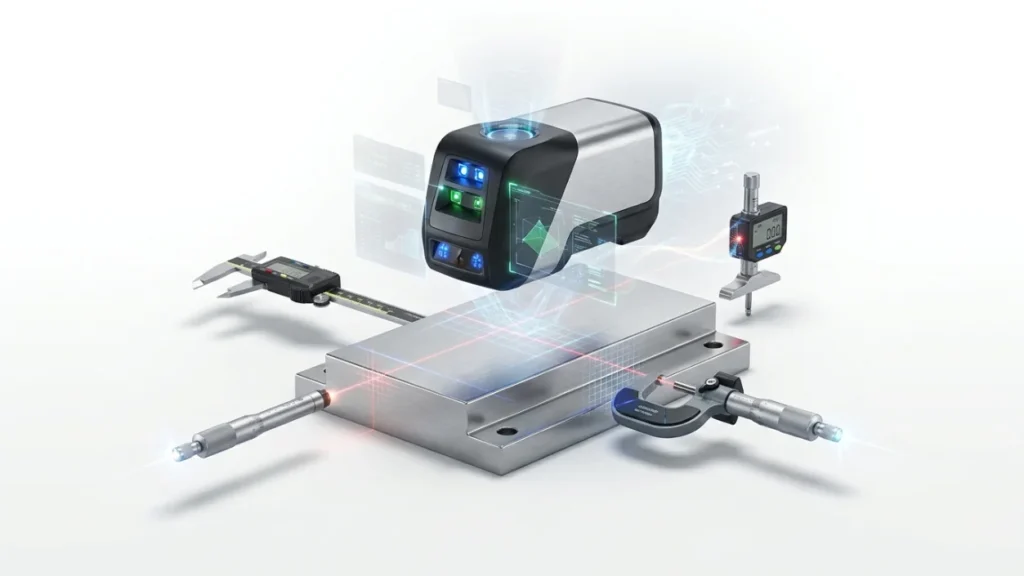
Every counter measurement device follows the same basic process. It detects an input signal, counts each occurrence, and displays the total.
The input can be mechanical (a wheel turning), electrical (a voltage pulse), or optical (a light beam breaking). The counter’s internal clock timestamps each event with precision.
Modern digital counters store totals in non-volatile memory. Even if the power cuts out, your count stays saved. This feature matters in critical manufacturing and safety monitoring applications.
Counter Measurement Chart
Use this quick-reference chart to compare key specifications across counter measurement devices.
Counting Speed
| Device Type | Counting Speed | Typical Application |
|---|---|---|
| Mechanical Counter | Up to 5 Hz | Manual tallying |
| Basic Digital Counter | Up to 30 kHz | Light industrial use |
| Mid-Range Counter | Up to 1 MHz | Electronics testing |
| High-Speed Counter | Up to 15 GHz | RF and microwave labs |
Counting speed tells you how fast a device can register each event. A mechanical counter handles 5 clicks per second (5 Hz). A high-speed frequency counter handles 15 billion cycles per second (15 GHz) that’s 3 billion times faster.
Your application decides which speed you need. For counting boxes on a conveyor, 30 kHz is more than enough. For testing radio transmitters, you need at least 1 GHz of counting speed.
Display Types
| Display Type | Visibility | Power Use | Common Use |
|---|---|---|---|
| Mechanical Drum | Outdoor / Any light | Zero power | Water meters, gas meters |
| LED | High brightness | Moderate | Factory floors |
| LCD | Indoor / Low light | Very low | Handheld instruments |
| TFT Touchscreen | Indoor | Higher | Advanced lab counters |
Your display choice depends on where you use the counter. A LED display stays visible from 3 to 5 meters (10 to 16 feet) away even in bright factory lighting. An LCD display uses less power but may be harder to read in direct sunlight.
Touchscreen displays on modern counters let you set presets, alarms, and targets directly. Some industrial models offer screens as large as 7 inches (17.8 cm) for easy reading at distance.
Input Sensitivity
| Input Type | Voltage Range | Signal Type |
|---|---|---|
| NPN Transistor | 5–30V DC | Sinking |
| PNP Transistor | 5–30V DC | Sourcing |
| Voltage Pulse | 5–240V AC/DC | Universal |
| Optical Sensor | Infrared / Laser | Non-contact |
Input sensitivity defines what signals your counter can detect. Most industrial counters accept inputs between 5V and 30V DC. Some universal models handle up to 240V AC, letting you wire them directly into mains-powered sensor circuits.
Lower sensitivity thresholds mean the counter detects weaker signals accurately. High-frequency counters often need signals as precise as ±50 mV (millivolts) to count correctly at high speeds.
Power Requirements
| Power Source | Voltage | Best For |
|---|---|---|
| Battery (AA/AAA) | 1.5V × 2–4 | Portable handheld counters |
| DC Adapter | 5V–24V DC | Bench and lab instruments |
| Industrial Supply | 24V DC / 100–240V AC | Factory-mounted units |
| Solar Assist | 5–12V DC | Outdoor remote locations |
Most panel-mounted industrial counters run on 24V DC or 100–240V AC. This makes them easy to power from standard factory electrical panels. Portable counters run on 4 AA batteries (6V DC total), lasting up to 200 hours of continuous use.
Choosing the right power source reduces downtime. Always match the counter’s power rating exactly to your supply voltage. Running a 24V DC counter on 12V DC will cause inaccurate readings or no display at all.
Environmental Ratings
| IP Rating | Dust Protection | Water Protection | Typical Location |
|---|---|---|---|
| IP40 | Protected from solids >1mm | No water protection | Indoor office/lab |
| IP54 | Dust-protected | Splash from any direction | Light industrial |
| IP65 | Fully dust-tight | Water jets resistant | Factory wash-down |
| IP67 | Fully dust-tight | Immersion to 1m (3.28 ft) | Outdoor / wet areas |
IP (Ingress Protection) ratings tell you exactly how tough your counter is. A counter rated IP65 handles full dust exposure and direct water jets common in food processing plants. An IP67-rated device survives temporary submersion up to 1 meter (3.28 feet) deep for up to 30 minutes.
For outdoor or washdown environments, always choose IP65 or higher. A lower-rated counter in a wet area will fail within weeks and require costly replacement.
Read: How Heavy is 100 Grams?
Read: How Long is 2 Inches?
Read: How Long Is 3 Meters?
Read: Full Size Bed Measurements
Read: Buttload Measurements
Read: Twin Bed Measurement
Frequently Asked Questions
How does a counter measurement device work?
A counter measurement device detects an input signal electrical, mechanical, or optical and adds 1 to its total each time. It displays the running count on a screen or mechanical drum. Most devices can count up to 99,999,999 events before resetting. High-end models count even higher with extended memory registers.
What is the difference between a frequency counter and an event counter?
A frequency counter measures how many signal cycles happen per second (Hz, kHz, MHz, GHz). An event counter simply adds 1 for each individual event like a part passing a sensor. Frequency counters suit electronics testing. Event counters suit production and process monitoring.
How fast can a digital counter measure?
Basic digital counters measure up to 30 kHz (30,000 counts per second). High-speed industrial counters reach 1 MHz (1,000,000 counts per second). Advanced frequency counters used in labs measure up to 15 GHz (15,000,000,000 cycles per second).
What IP rating do I need for a factory counter?
For standard factory environments, choose at least IP54. For washdown areas or food processing, select IP65 or IP67. Outdoor applications with rain exposure also need IP65 minimum to protect the internal electronics reliably.
Can I use a counter measurement device without a computer?
Yes, most industrial and lab counters operate as standalone units. They display counts directly on their built-in screen. Some advanced models also offer USB, RS-232, or Ethernet outputs so you can log data to a computer or factory network when needed.
What is the best counter measurement device for a production line?
An industrial event counter with IP65 protection, 24V DC power, and NPN/PNP input compatibility suits most production lines. Look for a model with a preset function it triggers an output signal when your target count is reached, automating batch control without extra programming.
Conclusion
Counter measurement appears constantly in your daily operations through length counters, frequency counters, event counters, and smart digital display units. This precise technology handles everything from measuring 1 millimeter (0.04 inches) of cable to verifying 15 GHz (15,000,000,000 Hz) signals in electronics labs.
Now that you understand common counter measurement devices, you can choose the right tool for your application, match the correct IP rating for your environment, and select the counting speed your process actually needs. Use these device comparisons when shopping for industrial counters, setting up production monitoring, or testing electronic circuits for consistently accurate and confident results.