Magazine Dimensions: Size, Height & Width 2026
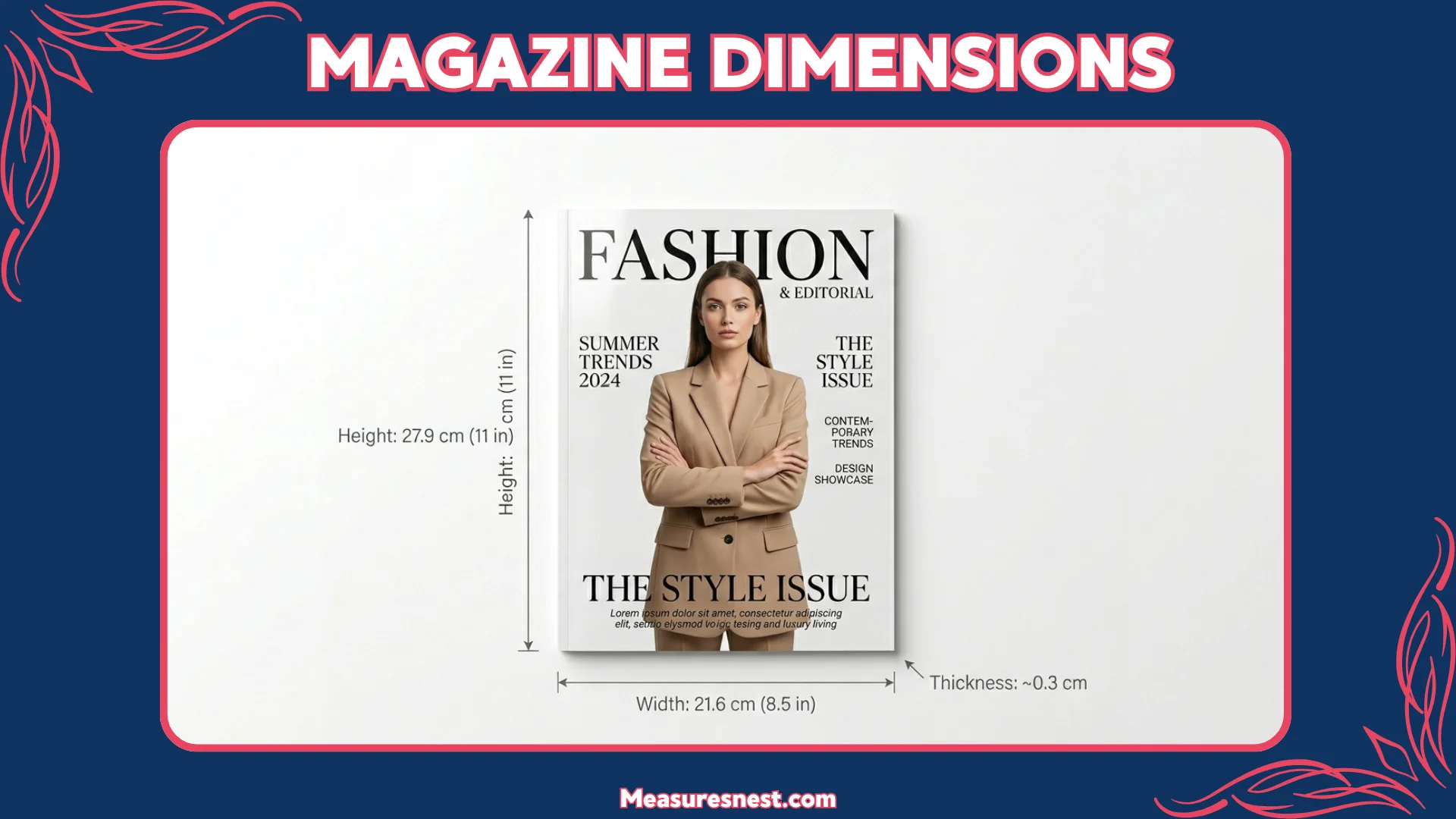
A standard US magazine measures 8.5 inches (21.6 cm) wide by 11 inches (27.9 cm) tall the same size as a standard sheet of printer paper, the most recognized print format in America. It fits perfectly in a magazine rack, slides into most mailing envelopes, and stacks cleanly on any coffee table or shelf.
Whether you’re designing your first publication layout, ordering print runs from a commercial printer, or comparing your magazine format to industry standards, knowing exact magazine dimensions gives you an instant reference point.
Quick Conversions
| Measurement | Equivalent Value |
|---|---|
| 8.5 inches | 21.59 centimeters |
| 11 inches | 27.94 centimeters |
| 8.5 inches | 215.9 millimeters |
| 11 inches | 279.4 millimeters |
What Are Standard Magazine Dimensions?
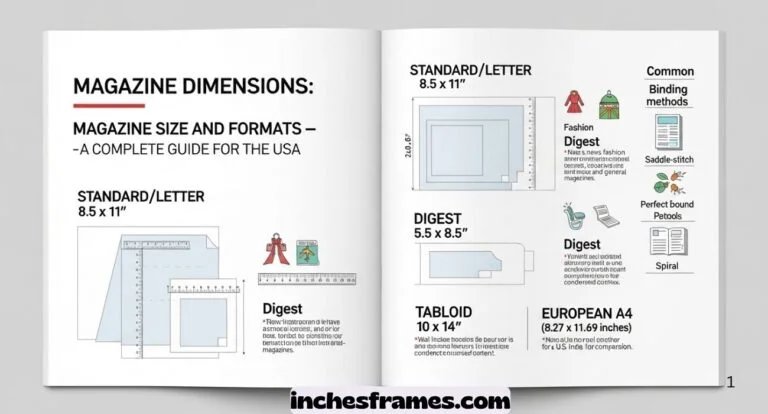
A standard US magazine measures exactly 8.5 × 11 inches (21.6 × 27.9 cm). That is the same footprint as a standard piece of copy paper the sheet you load into a home printer every day.
Hold a standard magazine next to your forearm. For most adults, the forearm from elbow to wrist measures about 10 to 11 inches (25.4 to 27.9 cm) almost exactly the height of the magazine. The width of 8.5 inches (21.59 cm) lines up closely with a standard 8-inch (20.3 cm) chef’s knife laid flat.
Common Magazine Sizes in the USA
The US magazine industry uses five main size formats. Each format serves a different purpose — from mass-market newsstand distribution to high-end fashion publishing. Here is a complete reference table:
| Format Name | Width × Height (in) | Width × Height (cm) | Width × Height (mm) | Common Use |
|---|---|---|---|---|
| Standard / US Letter | 8.5 × 11 in | 21.6 × 27.9 cm | 216 × 279 mm | News, lifestyle, general |
| Digest | 5.5 × 8.5 in | 14 × 21.6 cm | 140 × 216 mm | Reader’s Digest, pocket guides |
| Tabloid / Oversized | 11 × 14 in | 27.9 × 35.6 cm | 279 × 356 mm | Art, fashion, photography |
| Slim / European | 8.27 × 11.69 in (A4) | 21 × 29.7 cm | 210 × 297 mm | International, EU publishers |
| Square | 8.5 × 8.5 in | 21.6 × 21.6 cm | 216 × 216 mm | Music, lifestyle, modern brands |
Height and Width Variations
Magazine dimensions vary by just a few inches across formats, but those inches matter enormously to printers and designers. A digest magazine at 5.5 × 8.5 inches (14 × 21.6 cm) fits in a coat pocket. An oversized format at 11 × 14 inches (27.9 × 35.6 cm) demands a dedicated display stand.
Publishers pick their format based on distribution channel, audience, and budget. Mailing costs increase with size the US Postal Service charges more to mail magazines larger than 10.5 × 15 inches (26.7 × 38.1 cm). Most publishers stay within the standard 8.5 × 11 inch (21.6 × 27.9 cm) format to control printing and postage costs.
Popular Magazine Sizes and Their Measurements

These real-world format examples demonstrate exactly how magazine dimensions work in practice. From mass-market newsstand titles to specialized niche publications, size choices appear consistently across the industry.
Standard Magazine Size: Width and Height Breakdown
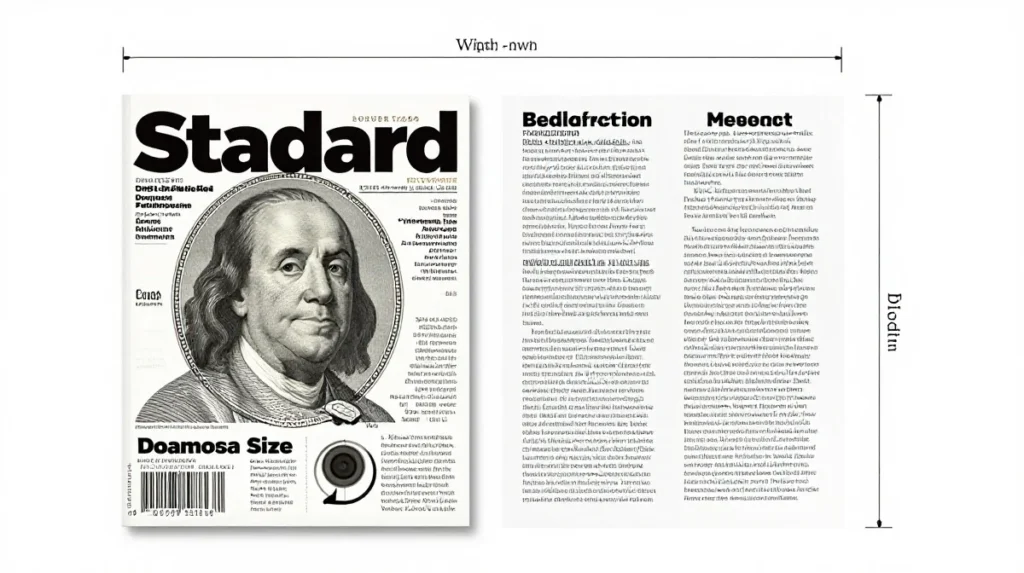
The standard magazine size measures 8.5 inches (21.59 cm) wide by 11 inches (27.94 cm) tall. This format gives designers a generous canvas — roughly 93.5 square inches (603.2 sq cm) of printable area per page. Graphic designers, art directors, and magazine layout professionals use this size as their default starting point.
The standard format fits every commercial magazine rack, newsstand slot, and subscription mailer designed in the US market. Publishers printing in this size get the best pricing from commercial print houses because it aligns with standard paper sheet sizes.
Every printer, postal rate chart, and distribution rack in America is built around this 8.5 × 11 inch (21.6 × 27.9 cm) footprint. It is the most cost-efficient format for mass-market magazine publishing. If you are starting your first magazine and want the lowest barrier to distribution, this is exactly the size to use.
Oversized and Custom Magazine Dimensions
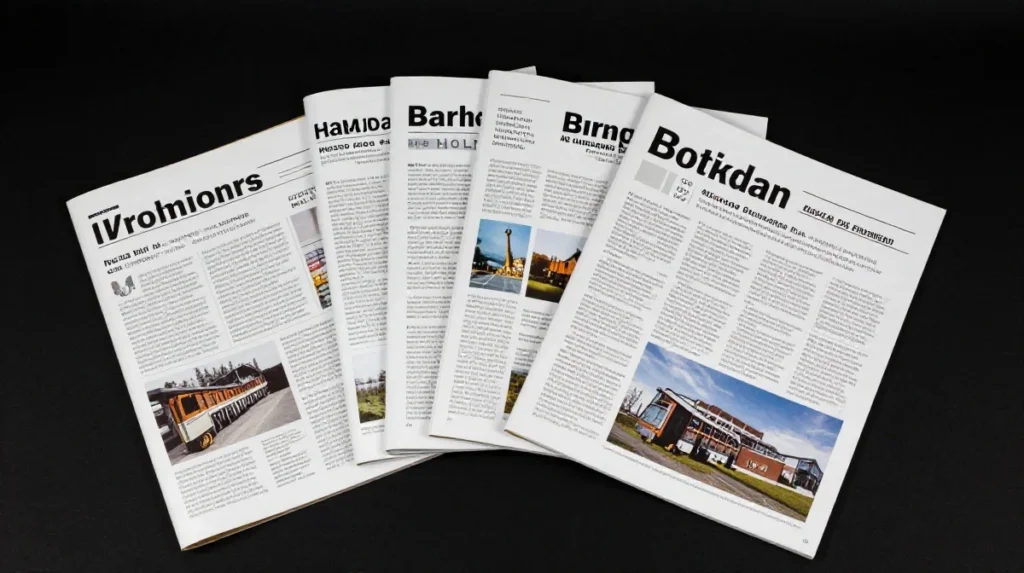
Oversized magazines sometimes called tabloid or broadsheet format — typically measure 11 × 14 inches (27.9 × 35.6 cm). That width is the same as a standard laptop screen’s width on a 15-inch (38.1 cm) notebook computer.
Vogue’s international editions, Dazed & Confused, and various art-focused titles use oversized formats ranging from 10 × 13 inches (25.4 × 33 cm) to 12 × 15 inches (30.5 × 38.1 cm). Printing and mailing costs run 30 to 50% higher than the standard format, so most oversized titles are premium-priced.
Custom dimensions sit outside standard printer specifications and require custom paper cutting. Custom widths between 9 and 10 inches (22.9 and 25.4 cm) are the most popular departure from the standard format noticeable on the shelf without dramatically increasing print costs.
Small Format Magazines: Digest and Pocket Sizes
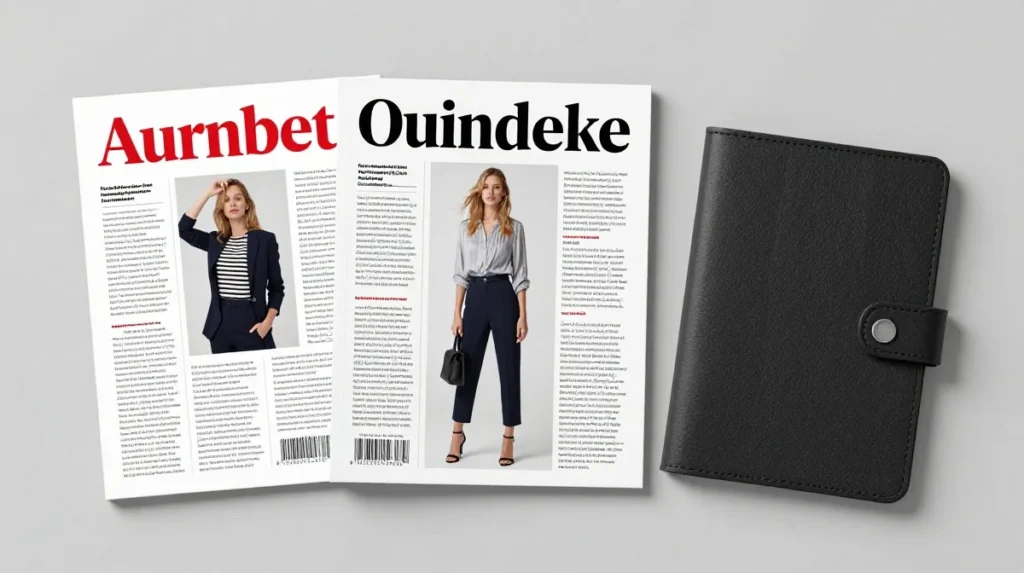
Digest magazines measure 5.5 × 8.5 inches (14 × 21.6 cm) exactly half the size of a standard US letter sheet. Reader’s Digest, TV Guide, and many specialty hobby magazines use this compact format. It fits in a coat pocket, purse, or the seat pocket on an airplane perfectly.
The digest format costs significantly less to print and mail than standard size. A digest magazine weighs about 40 to 60% less than a standard magazine of the same page count.
Pocket-size magazines shrink even further to approximately 4.25 × 6.75 inches (10.8 × 17.1 cm). That is slightly larger than a standard index card at 4 × 6 inches (10.2 × 15.2 cm).
Comparing Magazine Sizes to International Standards
US and international magazine standards differ in one fundamental way. American publishers use the US Letter system based on inches. Most of the world uses the ISO A-series system based on millimeters. The two systems produce similar but not identical dimensions.
A side-by-side comparison shows the gap clearly. The US standard at 8.5 × 11 inches (21.6 × 27.9 cm) is wider and shorter than the international A4 standard. Publishers distributing in both markets must choose one format or produce two separate print runs.
A4 vs. US Standard Magazine Dimensions
The A4 format measures 8.27 × 11.69 inches (21 × 29.7 cm). Compare that to the US standard at 8.5 × 11 inches (21.6 × 27.9 cm). The A4 page is 0.23 inches (5.8 mm) narrower and 0.69 inches (17.5 mm) taller than the US standard.
Here is a direct comparison:
| Measurement | US Standard | A4 International |
|---|---|---|
| Width | 8.5 in / 21.6 cm | 8.27 in / 21.0 cm |
| Height | 11 in / 27.9 cm | 11.69 in / 29.7 cm |
| Width difference | — | 0.23 in / 5.8 mm narrower |
| Height difference | — | 0.69 in / 17.5 mm taller |
| Total page area | 93.5 sq in | 96.7 sq in |
That difference seems small, but it creates real problems for designers. A layout built for US standard will have text and images cut off when printed on A4 paper — and vice versa. European publishers like Condé Nast UK and Hearst Germany use A4 exclusively. US publishers exporting to Europe must reformat every page.
A5 and Other Compact Sizes
A5 measures 5.83 × 8.27 inches (14.8 × 21 cm) — almost identical to the US digest format at 5.5 × 8.5 inches (14 × 21.6 cm). The two formats are close enough that most readers cannot tell the difference by eye. European publishers use A5 for exactly the same publications that US publishers produce in digest size.
A3 — used for oversized European publications measures 11.69 × 16.54 inches (29.7 × 42 cm). That is significantly larger than the US tabloid format at 11 × 14 inches (27.9 × 35.6 cm). Very few consumer magazines use A3 because the printing and handling costs are extremely high.
Here is a complete comparison of US and international formats side by side:
| Format | US Name | Dimensions (in) | Dimensions (cm) | Common Use |
|---|---|---|---|---|
| US Letter | Standard | 8.5 × 11 | 21.6 × 27.9 | Mass-market US magazines |
| A4 | EU Standard | 8.27 × 11.69 | 21 × 29.7 | European consumer magazines |
| Digest / A5 | Compact | 5.5 × 8.5 / 5.83 × 8.27 | 14 × 21.6 / 14.8 × 21 | Pocket magazines, digests |
| Tabloid | Oversized | 11 × 14 | 27.9 × 35.6 | Art, fashion, photography |
| A3 | EU Oversized | 11.69 × 16.54 | 29.7 × 42 | Large-format art publications |
| Square | Custom | 8.5 × 8.5 | 21.6 × 21.6 | Music, lifestyle brands |
Tips for Choosing the Perfect Magazine Dimensions
Picking the right magazine size affects your printing cost, mailing cost, newsstand placement, and reader experience. Use these practical guidelines before committing to a format.
Match your format to your distribution channel. If you sell through US newsstands and subscription mail, use the 8.5 × 11 inch (21.6 × 27.9 cm) standard. Newsstands and postal systems are built around it. Choosing a non-standard size costs more and creates display problems.
Match your format to your content type. Photography-heavy publications benefit from an oversized format at 11 × 14 inches (27.9 × 35.6 cm). Text-heavy publications like guides and literary journals work well in digest at 5.5 × 8.5 inches (14 × 21.6 cm). The format should serve your content not the other way around.
Account for bleed and trim. Every printer adds 0.125 inches (3.175 mm) of bleed area around each page edge. Your design canvas is actually slightly larger than the final trim size. A standard 8.5 × 11 inch (21.6 × 27.9 cm) magazine requires a design file of 8.75 × 11.25 inches (22.2 × 28.6 cm) including bleed. Always confirm bleed specifications with your specific printer before finalizing your layout.
Consider your reader’s environment. Readers who commute by train or plane prefer compact sizes that fit in a bag without folding. Readers who enjoy magazines at home or in waiting rooms handle larger formats easily. Understanding where your reader consumes your content is the most practical guide to choosing your format.
Magazine Dimensions in Practice: Case Studies
Real publishers make deliberate size choices that directly affect their brand identity and business model. These examples show exactly how magazine dimensions work in the real world.
National Geographic uses a slightly non-standard size of 7.25 × 10 inches (18.4 × 25.4 cm). This makes it slightly narrower and shorter than the standard format. The distinctive size makes it instantly recognizable on any shelf — a deliberate brand choice the publication has maintained for decades.
The New Yorker prints at 8.25 × 10.875 inches (21 × 27.6 cm) marginally smaller than the US standard in both dimensions. This modest size reduction lowers paper costs across millions of copies per print run. Over a full year, that fraction-of-an-inch difference saves the publisher significant production budget.
Vogue US uses 8.875 × 10.875 inches (22.5 × 27.6 cm) slightly wider than standard but the same height. The extra width gives fashion spreads more horizontal room for full-width photography. Premium advertisers pay higher rates specifically because their ads appear in this distinctive slightly-wider format.
Magazine Dimensions Matter in Everyday Life
Designing a publication layout becomes far simpler when you understand standard magazine dimensions. Setting your document to 8.5 × 11 inches (21.6 × 27.9 cm) from the start means every text box, image, and margin aligns with printer-ready specifications automatically.
Ordering print runs online improves dramatically when you know your format’s exact measurements. Submitting files at the wrong size — even by 0.25 inches (6.35 mm) causes reprints, delays, and additional costs that you can easily avoid.
Comparison shopping between printers gets much easier when you use standard dimensions. Printers quote instantly on standard formats but charge custom setup fees for non-standard sizes —knowing this saves you time and negotiation effort.
Planning your mailing strategy depends entirely on your magazine’s final trim size. The USPS rates for periodicals change at specific size thresholds, and staying within the 8.5 × 11 inch (21.6 × 27.9 cm) standard keeps your postage at the most competitive rate.
Read: Wheelchair Dimensions
Read: Coffee Can Dimensions
Read: Stair Dimensions
Read: Image Measurement
Read: Badminton Court Dimensions
Read: Bowling Lane Dimensions
Frequently Asked Questions
What are the standard magazine dimensions in the USA?
The standard US magazine size is 8.5 × 11 inches (21.6 × 27.9 cm). This format matches the US Letter paper size and fits every American newsstand display and postal rate category. Most major US magazines — including Time, People, and Sports Illustrated — use this exact size.
What is the difference between digest and standard magazine sizes?
A digest magazine measures 5.5 × 8.5 inches (14 × 21.6 cm) exactly half the size of a standard US Letter page. The standard format measures 8.5 × 11 inches (21.6 × 27.9 cm). Digest magazines cost less to print and mail, making them ideal for high-volume subscription publications.
How does A4 compare to the US standard magazine size?
A4 measures 8.27 × 11.69 inches (21 × 29.7 cm). The US standard measures 8.5 × 11 inches (21.6 × 27.9 cm). A4 is 0.23 inches (5.8 mm) narrower and 0.69 inches (17.5 mm) taller. Publishers distributing in both the US and Europe must maintain separate layout files for each format.
What size bleed should I add to my magazine layout?
Add 0.125 inches (3.175 mm) of bleed on all four sides of every page. For a standard 8.5 × 11 inch (21.6 × 27.9 cm) magazine, your design file should measure 8.75 × 11.25 inches (22.2 × 28.6 cm). Always confirm the exact bleed requirement with your printer before submitting files.
What dimensions do fashion magazines use?
Most US fashion magazines like Vogue use a slightly wider format around 8.875 × 10.875 inches (22.5 × 27.6 cm). Oversized fashion publications use tabloid format at 11 × 14 inches (27.9 × 35.6 cm). The larger format allows full-bleed fashion photography to display at near-life-size scale.
How do I choose the right magazine size for my publication?
Match your format to your content and distribution channel. Use 8.5 × 11 inches (21.6 × 27.9 cm) for US newsstand and subscription distribution. Use 5.5 × 8.5 inches (14 × 21.6 cm) digest for text-heavy content targeting commuters. Use 11 × 14 inches (27.9 × 35.6 cm) oversized format for photography or art-driven publications with premium pricing.
Conclusion
Magazine dimensions appear constantly in your daily life through newsstand displays, subscription mailings, coffee table stacks, and digital layout software. This practical measurement system ranges from the compact 5.5 × 8.5 inch (14 × 21.6 cm) digest all the way to the sweeping 11 × 14 inch (27.9 × 35.6 cm) oversized format a size range roughly equal to the difference between a paperback novel and an open laptop screen.
Now that you understand magazine dimensions across every format and market, you can design publication layouts with printer-ready accuracy, compare US and international standards confidently, choose the right size for your distribution channel, and avoid costly reprints from incorrect file setup.