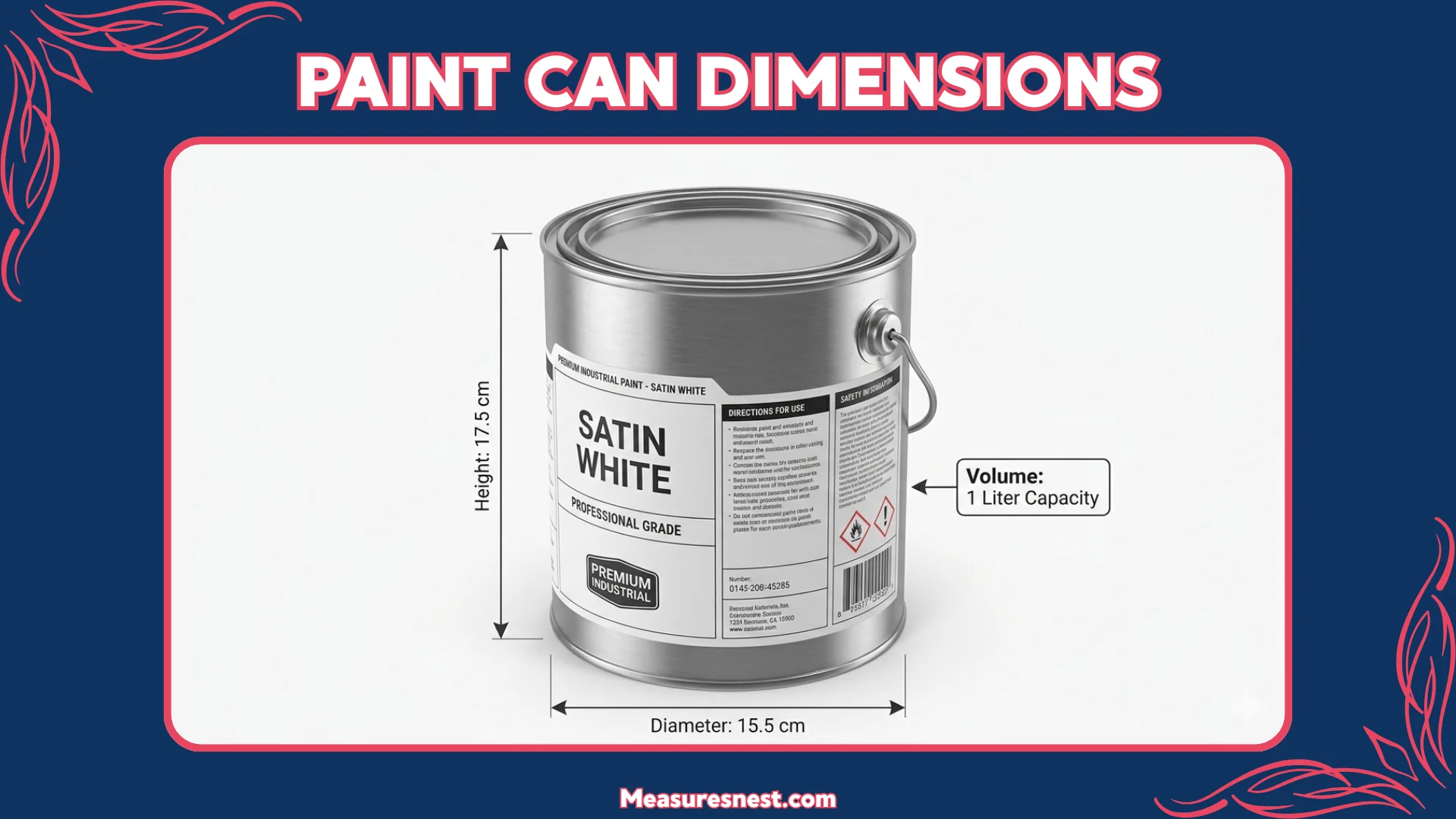
Paint Can Dimensions: Sizes, Width, Heights & Diameters 2026
Paint cans come in a precise range of standard sizes from tiny 1/4 pint sample cans to massive 5-gallon buckets and knowing the exact dimensions helps you store, ship, and use paint correctly every time. Whether you’re a homeowner grabbing a quart for a touch-up, a contractor ordering a pallet of gallons, or a designer planning shelf and storage space, recognizing common paint can dimensions gives you an instant reference point.
Paint Can Diameter Chart
| Paint Can Size | Diameter (Inches) | Diameter (cm) | Diameter (mm) |
|---|---|---|---|
| 1/4 Pint | 2.06 in | 5.23 cm | 52.3 mm |
| 1/2 Pint | 2.69 in | 6.83 cm | 68.3 mm |
| 1 Pint | 3.36 in | 8.53 cm | 85.3 mm |
| 1 Quart | 4.06 in | 10.31 cm | 103.1 mm |
| 1/2 Gallon | 5.40 in | 13.72 cm | 137.2 mm |
| 1 Gallon | 6.50 in | 16.51 cm | 165.1 mm |
| 5 Quart | 6.88 in | 17.48 cm | 174.8 mm |
| 5 Gallon | 11.91 in | 30.25 cm | 302.5 mm |
Standard Paint Can Sizes & Dimensions
Standard paint cans follow industry specifications set by the Metal Packaging Manufacturers Association. Every major paint brand from Sherwin-Williams to Benjamin Moore uses these exact dimensions so their cans fit standard store shelving, shipping pallets, and mixing equipment.
The table below gives you every key measurement for each standard size in inches, centimeters, and millimeters.
| Size | Volume | Height (in) | Height (cm) | Diameter (in) | Diameter (cm) |
|---|---|---|---|---|---|
| 1/4 Pint | 4 fl oz (118 ml) | 2.25 in | 5.72 cm | 2.06 in | 5.23 cm |
| 1/2 Pint | 8 fl oz (237 ml) | 2.88 in | 7.32 cm | 2.69 in | 6.83 cm |
| 1 Pint | 16 fl oz (473 ml) | 4.00 in | 10.16 cm | 3.36 in | 8.53 cm |
| 1 Quart | 32 fl oz (946 ml) | 4.88 in | 12.40 cm | 4.06 in | 10.31 cm |
| 1/2 Gallon | 64 fl oz (1.89 L) | 6.50 in | 16.51 cm | 5.40 in | 13.72 cm |
| 1 Gallon | 128 fl oz (3.79 L) | 7.50 in | 19.05 cm | 6.50 in | 16.51 cm |
| 5 Quart | 160 fl oz (4.73 L) | 8.19 in | 20.80 cm | 6.88 in | 17.48 cm |
1/4 Pint Paint Can Dimensions
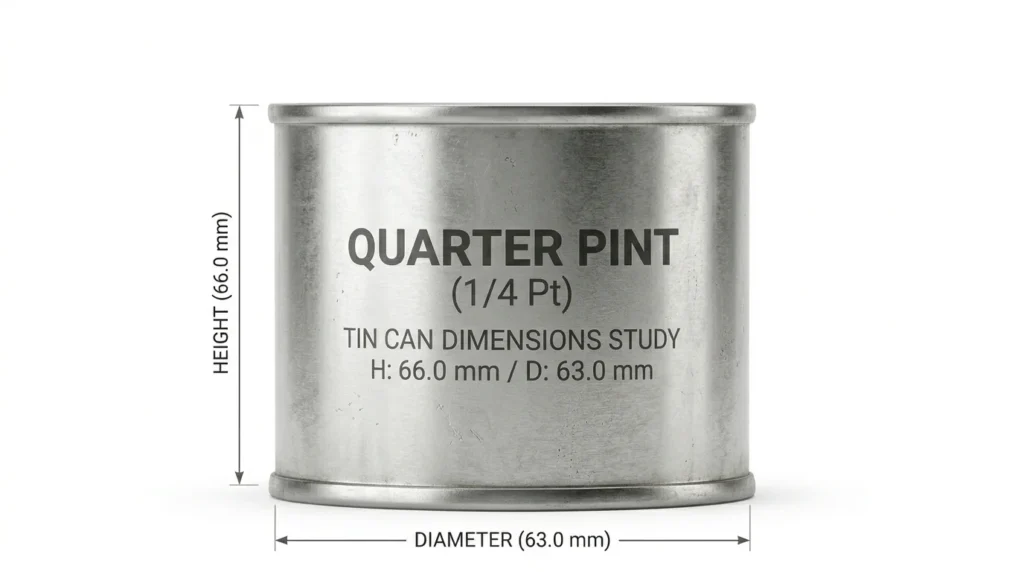
The 1/4 pint paint can holds 4 fluid ounces (118 ml) of paint the smallest standard size in the industry. It stands 2.25 inches (5.72 cm) tall and measures 2.06 inches (5.23 cm) in diameter. Paint retailers and hardware stores stock this size specifically for small sample swatches, touch-up kits, and craft projects where you need just a splash of color.
Sample can programs at major paint chains sell millions of these tiny containers every year. The 1/4 pint (118 ml) size is the go-to choice for anyone who wants to test a color on the wall before committing to a full gallon.
1/2 Pint Paint Can Dimensions
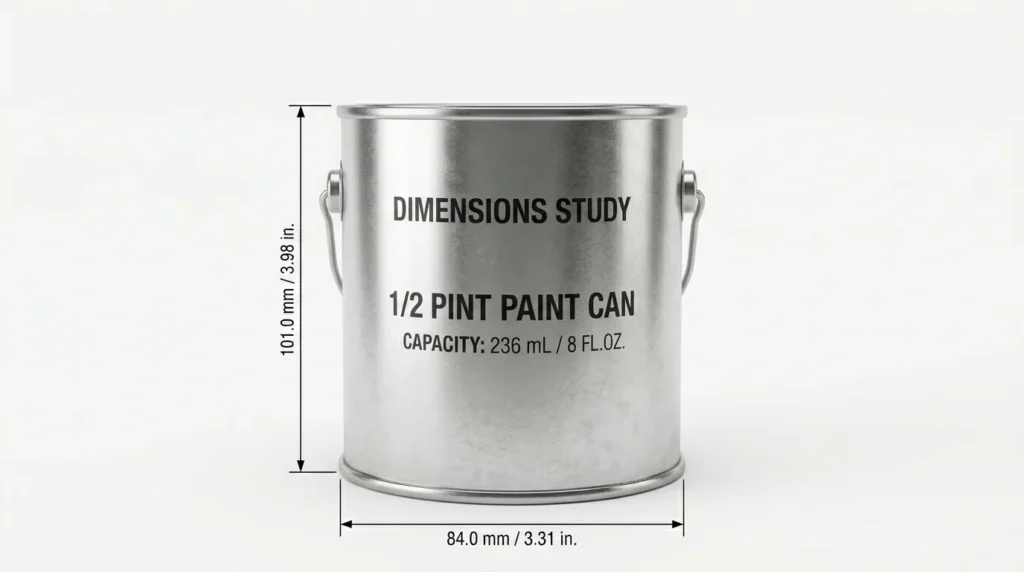
The 1/2 pint paint can holds 8 fluid ounces (237 ml) and stands 2.88 inches (7.32 cm) tall with a diameter of 2.69 inches (6.83 cm). This size is roughly as tall as a standard egg easy to picture in your hand. Hobby painters, model builders, and furniture restorers use this size when they need more coverage than a sample but far less than a full pint.
Craft stores and hardware retailers consistently stock 1/2 pint (237 ml) cans in a wide range of trim colors and specialty finishes. It’s the preferred size for small accent projects and touch-up work on furniture or cabinetry.
1 Pint Paint Can Dimensions
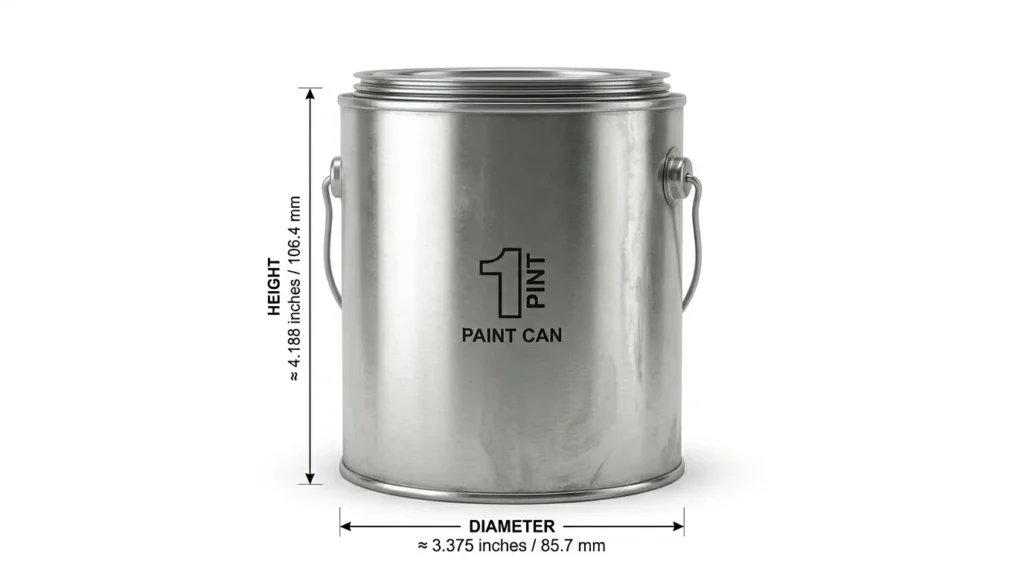
The 1 pint paint can holds 16 fluid ounces (473 ml) — enough to cover approximately 75 square feet (6.97 sq m) of surface with one coat. It stands exactly 4.00 inches (10.16 cm) tall and measures 3.36 inches (8.53 cm) in diameter. Interior designers and contractors use pint cans for accent walls, small rooms, and decorative detail work where a quart would leave too much leftover paint.
The 1 pint size is one of the most popular formats at specialty paint boutiques and custom color studios. At 4 inches (10.16 cm) tall, it fits easily in a hand and stores neatly on any shelf.
1 Quart Paint Can Dimensions
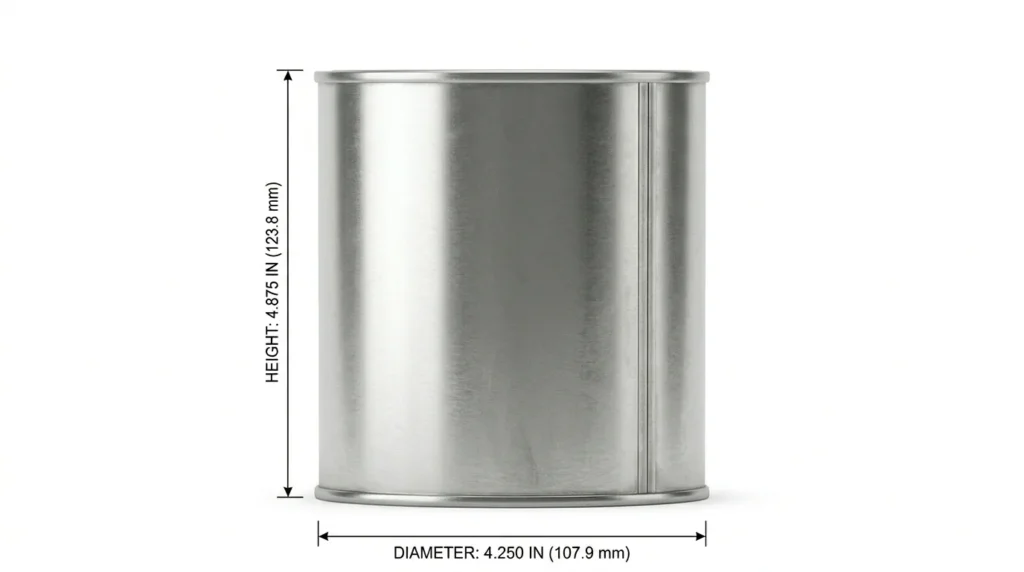
The 1 quart paint can holds 32 fluid ounces (946 ml) and covers approximately 100 square feet (9.29 sq m) per coat. It stands 4.88 inches (12.40 cm) tall close to the height of a standard soda can with a diameter of 4.06 inches (10.31 cm). Paint professionals recommend this size for single-room trim work, closets, and small accent walls where a full gallon would go to waste.
Hardware stores sell quart cans in nearly every color from every major brand year-round. The 1 quart (946 ml) format is one of the most versatile sizes a homeowner can keep on hand for ongoing touch-ups and small projects.
1/2 Gallon Paint Can Dimensions
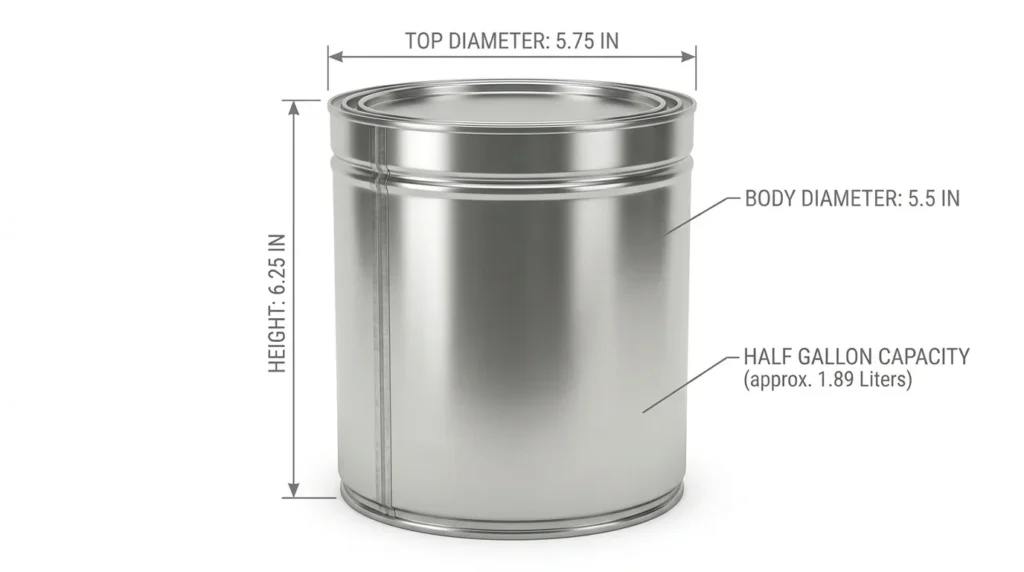
The 1/2 gallon paint can holds 64 fluid ounces (1.89 liters) and stands 6.50 inches (16.51 cm) tall with a diameter of 5.40 inches (13.72 cm). This size covers approximately 200 square feet (18.58 sq m) per coat enough for a medium-sized room’s trim or a single feature wall. Painting contractors and property managers use the half-gallon format when they need more than a quart but want better portability than a full gallon.
The 1/2 gallon (1.89 L) can is slightly less common on retail shelves than quarts or gallons, but specialty paint stores consistently carry it. At 6.5 inches (16.51 cm) tall, it’s easy to carry with one hand and manageable on a ladder.
1 Gallon Paint Can Dimensions
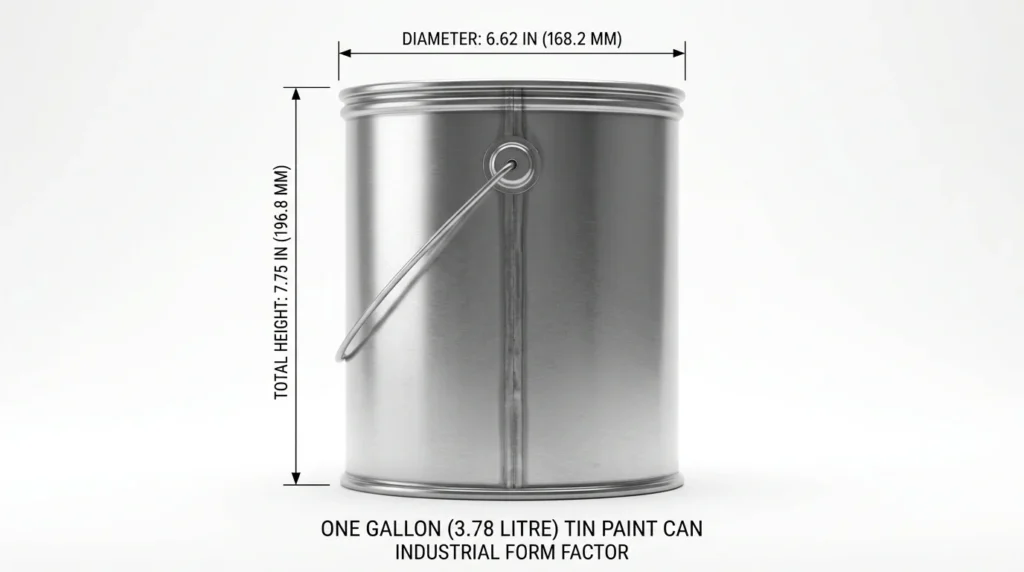
The 1 gallon paint can the most recognizable format in the paint industry — holds 128 fluid ounces (3.79 liters) and covers approximately 400 square feet (37.16 sq m) per coat. It stands 7.50 inches (19.05 cm) tall and measures 6.50 inches (16.51 cm) in diameter. Every major paint brand, hardware store, and paint department in the world stocks the standard 1-gallon can because it perfectly balances coverage, portability, and value for typical room painting jobs.
The 1-gallon (3.79 L) format is the single best-selling paint container worldwide, used by homeowners, professional painters, and contractors daily. Its 7.5-inch (19.05 cm) height makes it one of the easiest sizes to lift, carry, and pour from without mess.
5 Quart Paint Can Dimensions
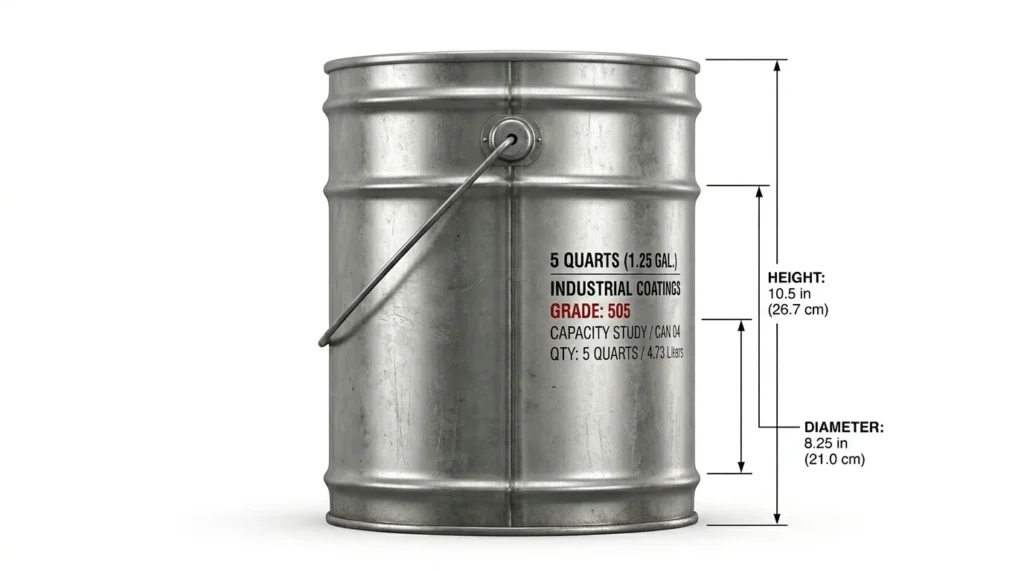
The 5 quart paint can holds 160 fluid ounces (4.73 liters) slightly more than a standard gallon and stands 8.19 inches (20.80 cm) tall with a diameter of 6.88 inches (17.48 cm). Paint manufacturers introduced this size to give professional painters a little extra coverage cushion over the standard gallon without jumping all the way to a 5-gallon bucket. Interior painting contractors and property renovation teams use the 5-quart format to reduce the number of can changes on larger wall sections.
The 5 quart (4.73 L) can has become increasingly popular at home improvement chains and paint specialty retailers over the past decade. Its 8.19-inch (20.80 cm) height keeps it manageable and stackable while providing more paint per container than a standard gallon.
Non-Standard Paint Can Sizes & Dimensions
Some paint projects go far beyond a standard gallon. Industrial painting, large-scale construction, and commercial manufacturing require formats that dwarf the typical hardware store can. These three non-standard sizes cover the most common large-volume formats you’ll encounter in professional and industrial settings.
5 Gallon Paint Bucket Dimensions
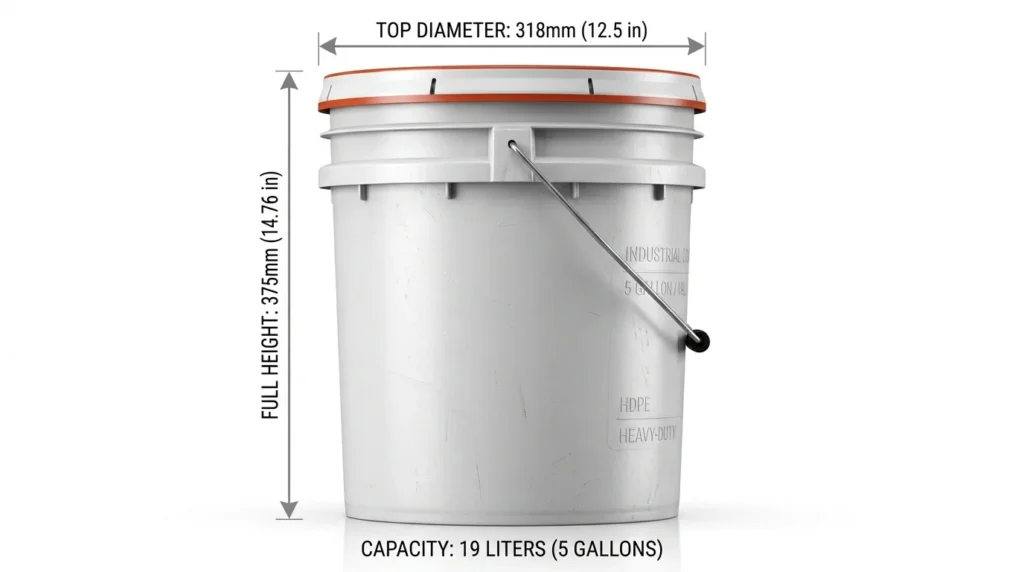
The 5 gallon paint bucket holds 640 fluid ounces (18.93 liters) and stands approximately 14.50 inches (36.83 cm) tall with a diameter of 11.91 inches (30.25 cm). It covers approximately 1,800 to 2,000 square feet (167.2 to 185.8 sq m) per coat enough for an entire house interior in a single container. Professional painting crews, general contractors, and commercial facility managers use 5-gallon buckets because they dramatically reduce per-gallon cost and minimize the number of containers on a job site.
Big-box hardware stores like Home Depot and Lowe’s sell 5-gallon buckets of every major paint line in stock. At 14.5 inches (36.83 cm) tall and nearly 12 inches (30.48 cm) wide, the bucket is heavy when full most professional painters use a bucket grid and keep it on the floor rather than on a ladder.
Aerosol Spray Paint Can Dimensions
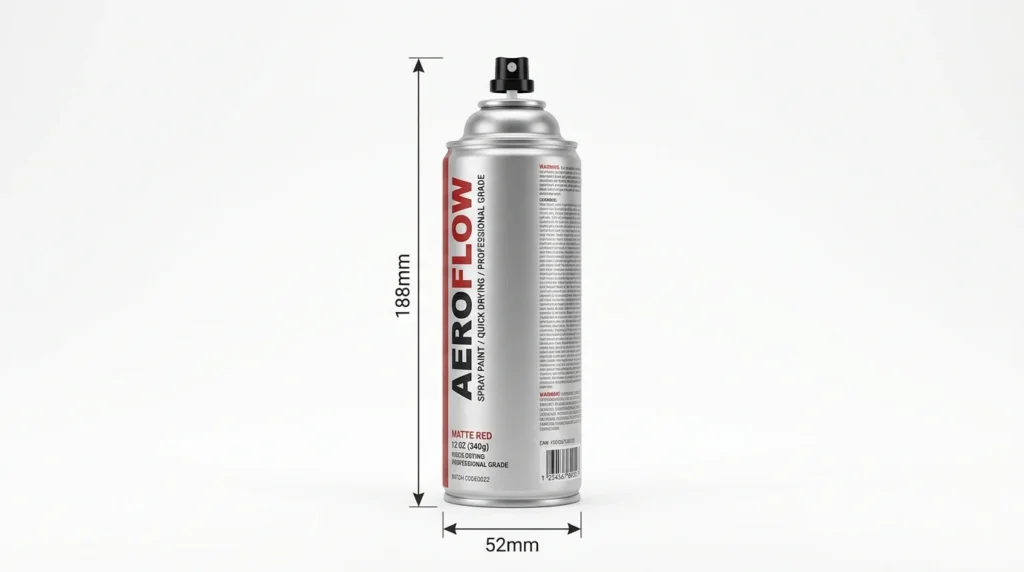
A standard aerosol spray paint can the kind sold for graffiti art, automotive touch-up, and crafts holds approximately 11 to 12 fluid ounces (325 to 355 ml) of paint and propellant combined. The typical can stands 7.88 inches (20.02 cm) tall with a diameter of 2.60 inches (6.60 cm).
Aerosol spray paint cans appear in hardware stores, art supply shops, and auto parts retailers worldwide. The slim 2.6-inch (6.60 cm) diameter fits perfectly in one hand, giving painters precise control during detailed spray work.
205-Liter Drum (Industrial)
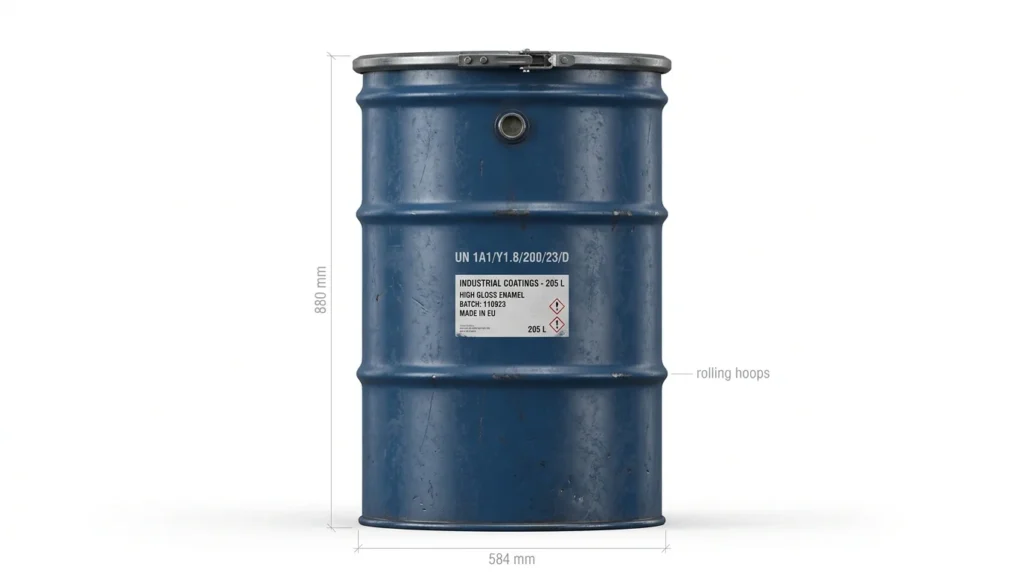
The 205-liter industrial drum also called a 55-gallon drum (208 liters) is the largest standard paint container used in industrial manufacturing and large-scale coating operations. It stands approximately 34.50 inches (87.63 cm) tall with a diameter of 22.50 inches (57.15 cm).
A full 205-liter (54.1 gallon) drum of paint weighs over 500 pounds (226.8 kg) and requires forklift handling and drum pumps for dispensing. Industrial paint buyers and procurement managers specify drum quantities because the per-liter cost is dramatically lower than any smaller format.
Material Impact on Paint Can Dimensions
The material a paint can is made from directly affects its wall thickness, weight, and therefore its outer dimensions. Most standard paint cans use one of three materials.
Steel (tinplate) cans are the most common for oil-based and alkyd paints. Steel walls add approximately 0.008 to 0.010 inches (0.20 to 0.25 mm) of thickness to the can body. This small amount doesn’t meaningfully change outer dimensions but makes the can significantly more durable for solvent-based contents.
Tin-free steel (TFS) cans appear in many water-based latex paint containers. They weigh slightly less than traditional tinplate and resist corrosion from water-based formulas. Wall thickness stays within the same 0.008 to 0.010 inch (0.20 to 0.25 mm) range as standard steel.
Plastic (HDPE) containers show up in some latex paint formats, especially quart and gallon sizes. HDPE walls are thicker approximately 0.050 to 0.090 inches (1.27 to 2.29 mm) which makes the outer diameter slightly larger than a same-volume steel can. When measuring shelf or shipping space for plastic paint containers, always add approximately 0.1 to 0.2 inches (2.5 to 5.1 mm) to standard dimension tables.
Aerosol cans use thin aluminum walls measured at approximately 0.006 to 0.010 inches (0.15 to 0.25 mm) thick. The pressurized contents require a precise wall thickness to maintain safety ratings, so aerosol can dimensions are tightly controlled across the industry.
How to Measure a Paint Can (Step-by-Step)
You don’t need special tools to measure a paint can accurately. A standard tape measure or digital caliper handles every measurement you need.
Step 1 Measure the Height Set the can on a flat surface. Place your tape measure at the base of the can and extend it straight up to the top rim. Do not include the lid in your measurement unless the spec you’re working from specifies overall height with lid. Record the number in inches (cm) for reference.
Step 2 Measure the Outer Diameter Wrap a flexible tape measure around the widest point of the can body. Divide the circumference by 3.1416 (π) to get the outer diameter. Alternatively, use a digital caliper across the widest point of the can opening for a direct diameter reading.
Step 3 Calculate the Radius Divide your diameter measurement by 2 to get the radius. For example, a 1-gallon can with a 6.50-inch (16.51 cm) diameter has a radius of 3.25 inches (8.26 cm). You need the radius whenever you calculate can volume or fit specifications for round storage racks.
Step 4 Verify Against Standard Tables Compare your measurements to the standard dimension table in this article. A slight variation of 0.05 to 0.10 inches (1.3 to 2.5 mm) is normal due to manufacturing tolerances. If your measurement falls outside that range, you may have a non-standard or private-label container.
Step 5 Measure the Lid Separately (If Needed) Lid diameters run slightly larger than the can body to create a friction seal. For most standard cans, the lid adds 0.10 to 0.20 inches (2.5 to 5.1 mm) to the overall diameter. Measure the lid on its own if you need total outer dimensions for packaging or storage calculations.
Read: Jerry Can Dimensions
Read: Beverage Can Dimensions
Read: Food Can Dimensions
Read: Beer Can Dimensions
Read: Soup Can Dimensions
Read: Brake Pad Measurement
Frequently Asked Questions
What are the dimensions of a standard 1-gallon paint can?
A standard 1-gallon paint can stands 7.50 inches (19.05 cm) tall and measures 6.50 inches (16.51 cm) in diameter. It holds 128 fluid ounces (3.79 liters) of paint and covers approximately 400 square feet (37.16 sq m) per coat. This is the most common paint can size sold worldwide.
How tall is a 5-gallon paint bucket?
A standard 5-gallon paint bucket stands approximately 14.50 inches (36.83 cm) tall with a diameter of 11.91 inches (30.25 cm). It holds 640 fluid ounces (18.93 liters) and covers up to 2,000 square feet (185.8 sq m) per coat. Full buckets are very heavy and require two hands or a paint grid for safe use.
What is the diameter of a 1-quart paint can?
A standard 1-quart paint can has a diameter of 4.06 inches (10.31 cm) and stands 4.88 inches (12.40 cm) tall. It holds 32 fluid ounces (946 ml) enough to cover approximately 100 square feet (9.29 sq m) per coat. The quart is one of the most versatile sizes for small room projects and trim work.
How big is an aerosol spray paint can?
A standard aerosol spray paint can stands 7.88 inches (20.02 cm) tall with a diameter of 2.60 inches (6.60 cm). It holds approximately 11 to 12 fluid ounces (325 to 355 ml) of paint and propellant combined. The slim diameter makes it easy to hold and control for detailed spraying work.
Does the can material affect paint can dimensions?
Yes material affects wall thickness and therefore outer dimensions. Steel and aluminum cans have walls of 0.006 to 0.010 inches (0.15 to 0.25 mm), while HDPE plastic containers use walls of 0.050 to 0.090 inches (1.27 to 2.29 mm). For tight storage or shipping calculations, add 0.1 to 0.2 inches (2.5 to 5.1 mm) to standard dimension specs when working with plastic paint containers.
How do I measure a paint can diameter at home?
Wrap a flexible tape measure around the widest point of the can body and record the circumference. Then divide that number by 3.1416 to get the outer diameter. For a faster method, use a digital caliper placed directly across the can opening for an instant, precise diameter reading.
Conclusion
Paint can dimensions appear constantly in your projects through gallon cans on your shelf, quart cans in your touch-up kit, spray cans in your garage, and 5-gallon buckets on job sites. This practical size system ranges from a tiny 2.25-inch (5.72 cm) tall quarter-pint sample all the way up to a 34.5-inch (87.63 cm) industrial drum giving you exactly the right volume for every painting task.
Now that you recognize common paint can dimensions, you can plan storage space more accurately, order the right size for every project, and measure any can yourself in under five minutes. Use these familiar sizes the gallon can in your garage, the quart on your shelf, or the spray can in your workshop when planning, ordering, or storing paint for better accuracy and confident decisions every time.